Introduction: Best oils for weight loss,
Why Oil Choice Matters for Your Weight:
Choosing the best oils for weight loss or the correct type of fat affects calories, hormones, satiety, and even how much you eat later, because all oils deliver approximately 120 kcal per tablespoon; small swaps add up.
Yet composition matters more than you think. Understanding the types of fats (MUFA/PUFA) tends to support metabolic health and fullness, while excessive saturated fat may have the opposite effect.
Therefore, in this guide on best oils for weight loss and the worst oils for weight gain, you’ll see clear comparisons, daily intake tips, and research-backed reasoning so you can cook smarter without giving up flavour.

The Function of Cooking Oil in Our Body:
Energy, Hormones, and Satiety:
First, oils provide dense energy for movement and cellular work. Second, fats help build hormones and cell membranes. Third, they slow gastric emptying, which can increase fullness and reduce snacking.
Consequently, the right fats can make a calorie-controlled plan easier to follow.
Vitamins and Nutrient Absorption: Best oils for weight loss
Additionally, oils help you absorb fat-soluble vitamins A, D, E, and K from vegetables.
Extra virgin oils also contain polyphenols and other minor bioactives that may reduce oxidative stress, thereby indirectly supporting weight management by improving recovery and appetite control.
Inflammation and Metabolic Health:
Finally, swapping saturated fats for unsaturated fats often improves cardio metabolic markers.
As a result, you may experience better insulin sensitivity, steadier energy, & fewer cravings-useful advantages during a fat-loss phase.
Daily Intake and RDA Recommendations:
How Much Fat Per Day?
Most adults do best with 20-35% of total calories from fat. For a 2000 kcal diet, that’s roughly 44-78 g total fat.
Moreover, keep saturated fat under 10% calories (ideally <7% for heart health), avoid trans fats, and prioritise unsaturated fats.
Omega Priorities (ALA, LA, EPA/DHA):
Aim for about 1.1-1.6 g/day of omega-3 ALA and a sensible omega-6 intake (often 10-17 g/day from foods). Because most diets are omega-6-rich, try to include omega-3 sources (such as canola, walnuts, flax, or fish).
Therefore, your oil can gently nudge these ratios in a better direction.
Practical Daily Use:
For weight control, many people thrive on 1-2 tablespoons of oil (best oils for weight loss) per day, used for dressings, sautéing, or roasting. While letting lean proteins, legumes, fruits, and vegetables fill the plate.
Consequently, you keep flavour high and calorie count predictable.
Research Snapshot: What Supports Weight Loss?
Unsaturated fats and adherence:
Studies repeatedly show that diets rich in MUFA/PUFA improve lipid profiles and can help address issues because food tastes good and hunger stays manageable.
Notably, the Mediterranean pattern (olive oil & avocado oil-forward) often helps maintain or reduce weight when calorie intake is appropriate.
MCT vs Long Chain Fats:
Medium-chain triglycerides (MCTs) in coconut oil differ in their effects and may slightly raise energy expenditure.
However, typical coconut oil contains a mix of fatty acids and remains high in saturated fat; Thus, any slight metabolic edge can be outweighed by cardiovascular concerns if intake is high.
Net Takeaway:
Therefore, prioritising unsaturated oils while keeping portions moderate generally supports weight management better than relying on saturated-fat-heavy options.
Nutritional value comparison (per 1 Tbsp/~14 g):
| Oil | Calories | Total fat (g) | Saturated (g) | MUFA (g) | PUFA (g) | Notable Notes |
| Extra-Virgin Olive Oil | ~120 | 14 | ~2 | ~10 | ~1-2 | Polyphenols, flavour aids adherence |
| Avocado oil | ~120 | 14 | ~2 | ~10 | ~2 | High smoke pint, neutral taste |
| Canola oil | ~120 | 14 | ~1 | ~8 | ~4 | ~1.3 g ALA omega-3 |
| Coconut oil | ~120 | 14 | ~12 | ~0.8 | ~0.2 | Very high SFA; minimal PUFA |
| Ghee (Clarified Butter) | ~12 | 12 | ~9 | ~4 | ~0.5 | Cholesterol present; rich flavour |
Values are typical averages; brands vary.
Fatty Acid Profile Table (Approximate % of Total Fatty Acids): Best oils for weight loss
| Oil | SFA % | MUFA % | PUFA % | Key Fatty Acids |
| Extra virgin olive | 10-15 | 65-75 | 8-12 | Oleic (MUFA) dominant |
| Avocado | 10-20 | 60-70 | 10-15 | Oleic (MUFA) dominant |
| Canola | 6-8 | 55-65 | 25-30 | LA (omega-6), ALA (omega-3) |
| Coconut | 80-90 | 6-8 | 2-3 | Lauric, Myristic, Palmitic (SFA) |
| Ghee | 55-65 | 25-35 | 2-5 | Palmitic, Stearic, Oleic |
Best cooking oil for weight loss and the worst oils for weight gain: 5 oil comparison:
1. Extra Virgin Olive Oil (Best for Weight Loss):
Why it helps:
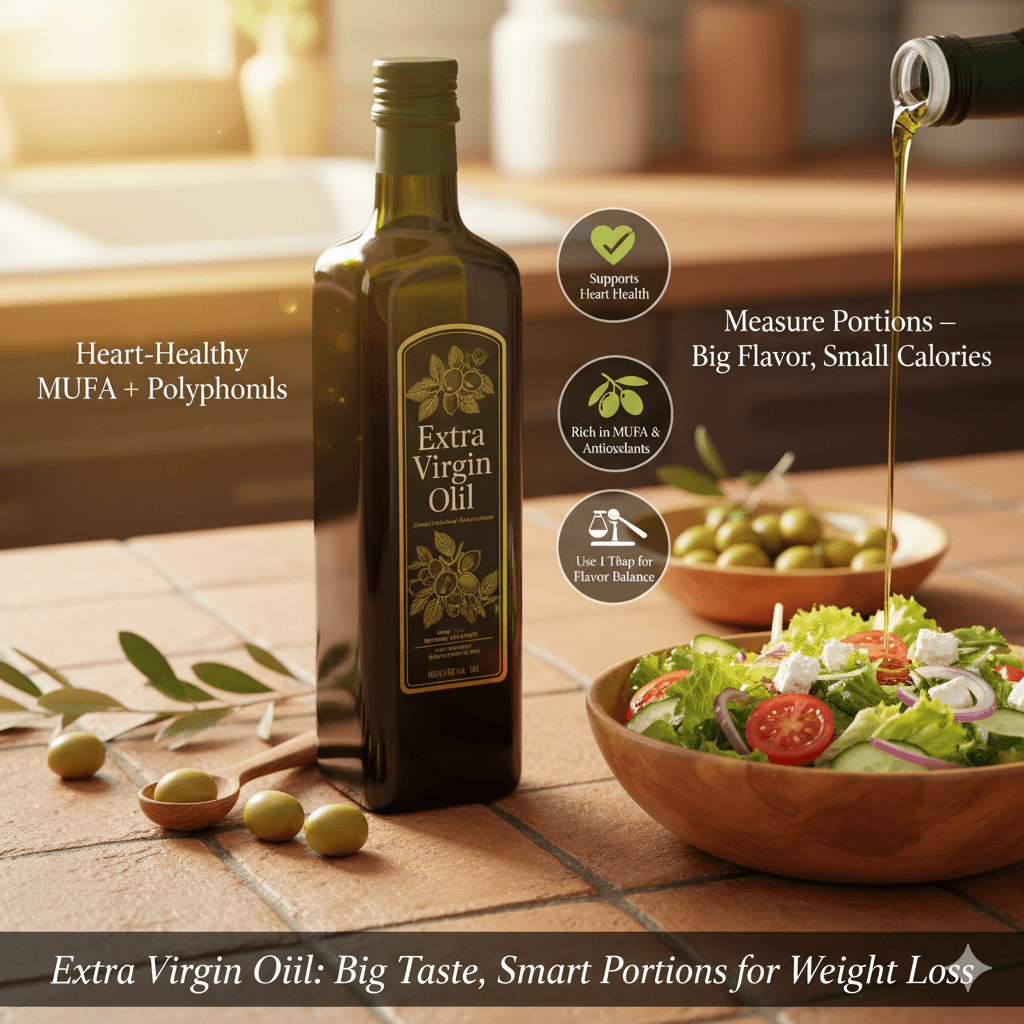
EVOOS is rich in MUFAN polyphenols, which support heart health, society, and flavour. Because meals taste better, people often stick to calorie targets more easily.
How to use:
Dressings, drizzles, light sorting, and roasted vegetables. Therefore, you get big taste for small portions.
Watch out:
It’s still Cal dance; Measure tablespoons during a cut.
2. Avocado oil (Best for weight loss):
Why it helps:
High in MUFA, with a clean taste and a high smoke point, avocado oil is ideal for grilling and stir-frying without all flavours. Consequently, it keeps cooking simple and portions steady.
How to use:
Roasting, sharing, and homemade Mayo. It works; however, you want a neutral richness.
Watch out:
Choose cold-press when possible for better micronutrient retention.

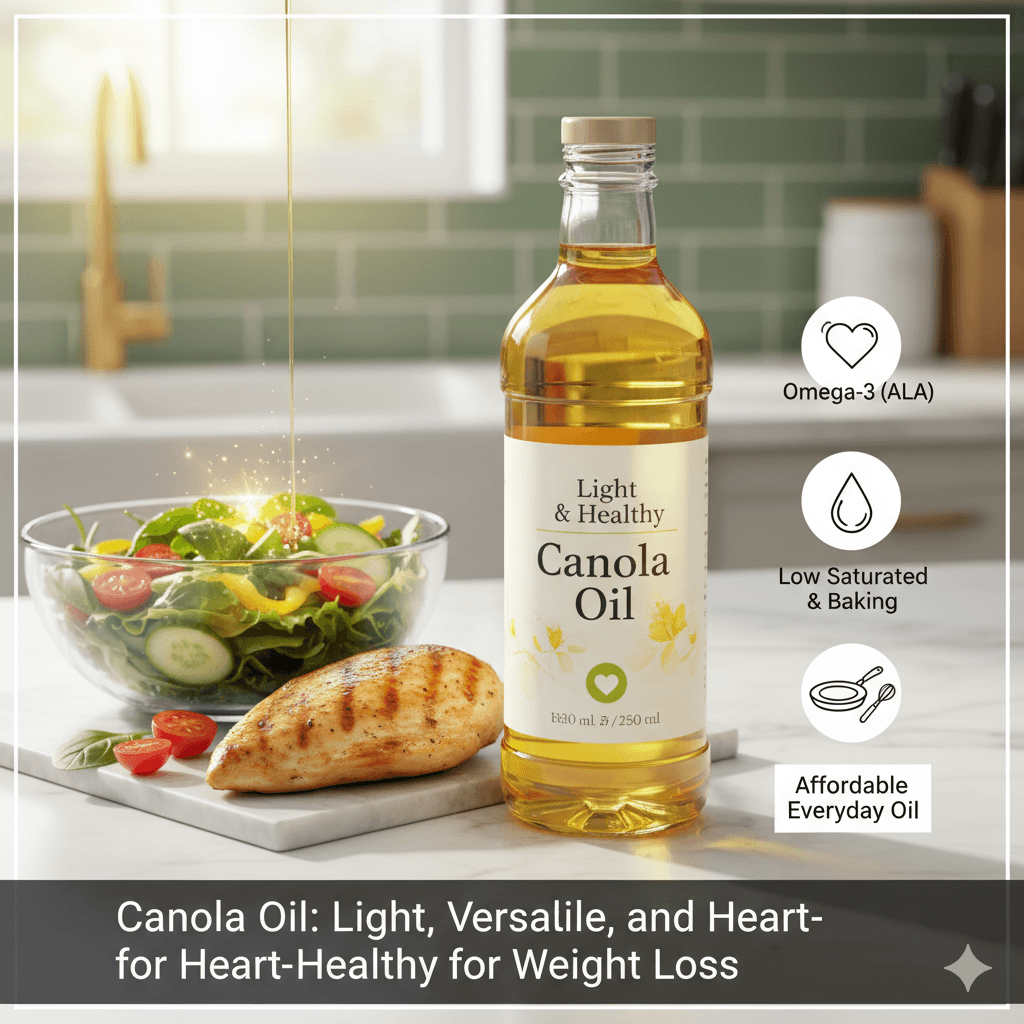
3. Canola oil (Better for weight loss when used wisely):
Why it helps:
Canola provides ALA omega-3 & A lower saturated fat profile. Because it’s a worse style & affordable, you can consistently cook lighter meals at home.
How to use:
Baking, sorting, and dressing. Additionally, it smiles favourably on cooked proteins & veggies.
Watch out:
Options for reputable brands: Some users prefer expeller-pressed options for a cleaner taste.
4. Coconut oil (often worst for weight gain if overused):
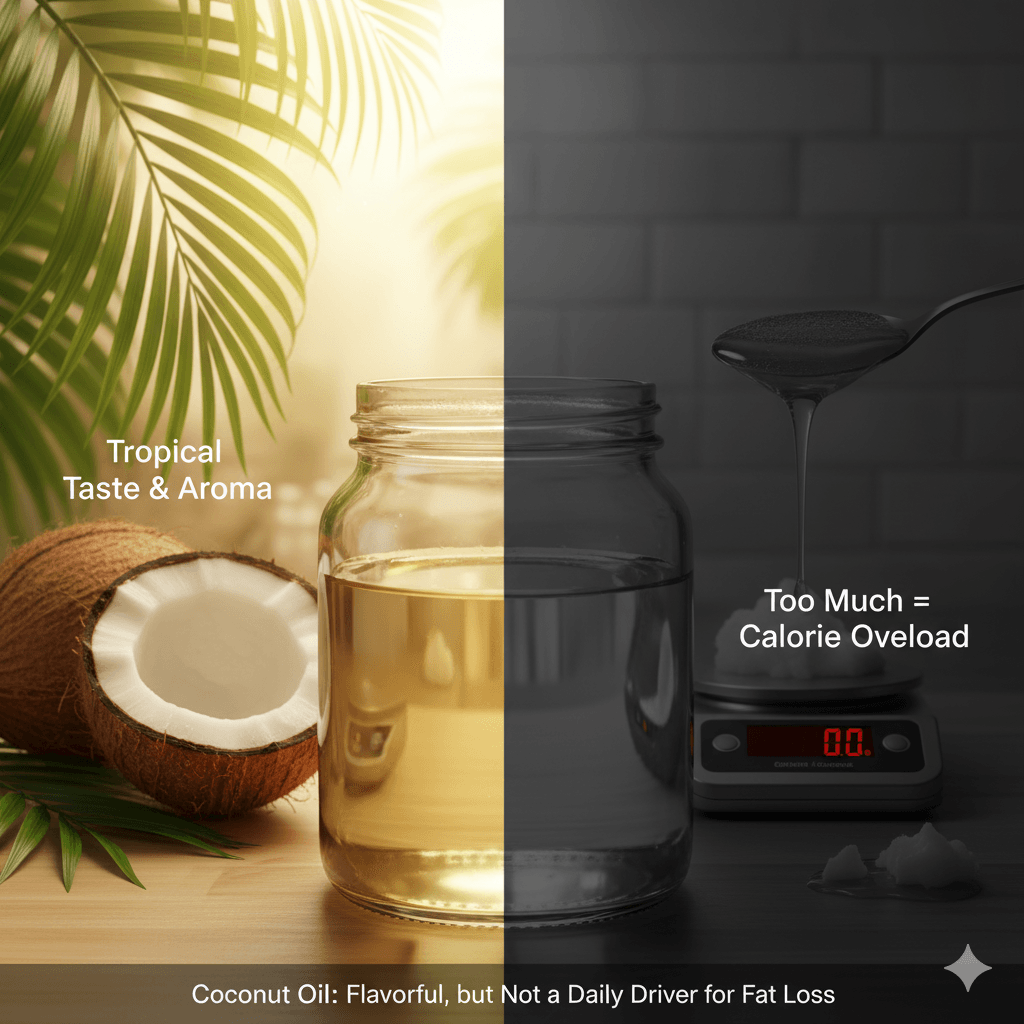
What’s the issue?
Despite MCT interest, standard coconut oil remains very high in saturated fat. Consequently, using it freely can displace healthier saturated fats and raise calories without boosting satiety more than other oils.
When it Fits:
Small Amounts for specific flavours or occasional high-heat cooking are acceptable. However, keep portions tight during weight loss.
Bottom line:
Flavourful, yes, but not a daily driver for a fat loss plan.
5. Ghee / clarified butter (Often worst for weight gain if overused):
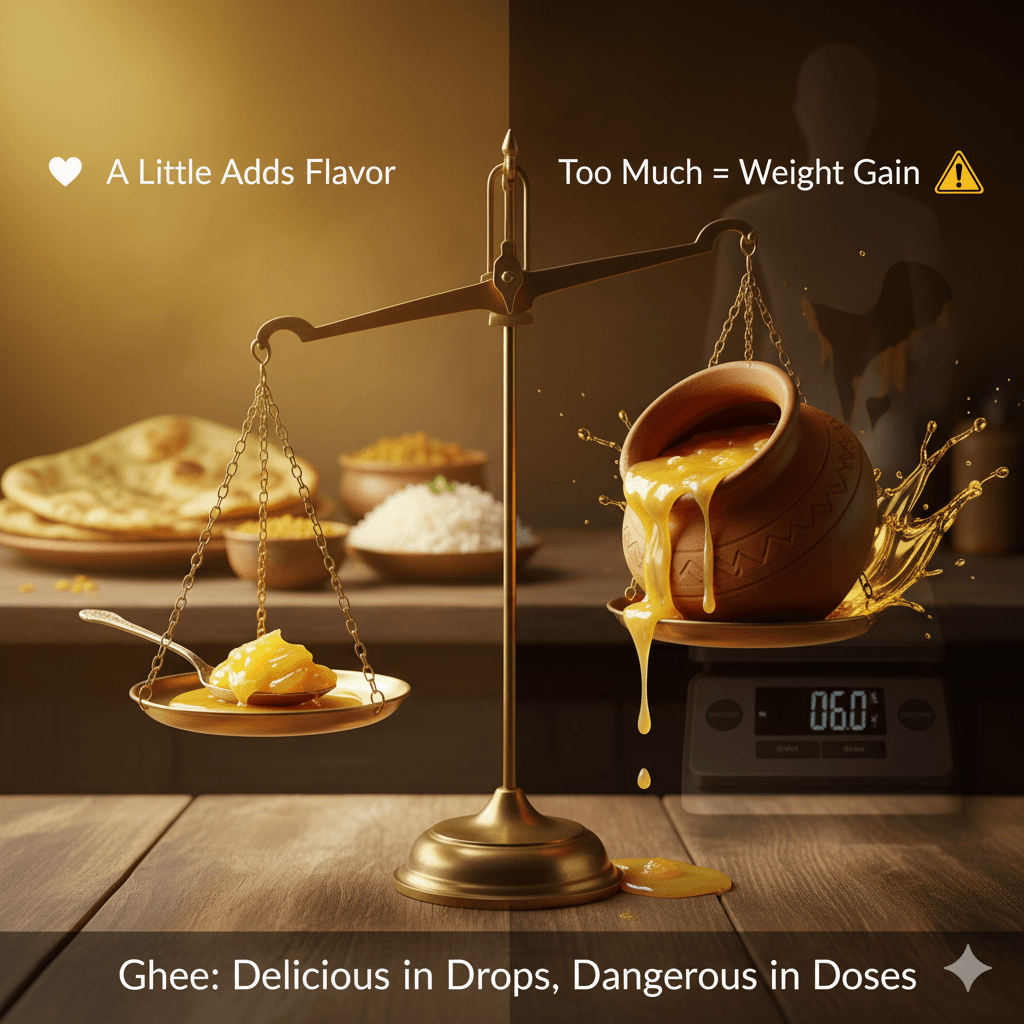
What’s the issue?
He delivers bowl taste yet high saturated fat and cholesterol. Therefore, frequent, generous use can quickly raise the calorie load.
When it fits:
A tiny amount of Indian or Middle Eastern dishes can be strategic taste pops, but calories stay in check.
Bottom line:
Use as an accent, not a base oil, when cutting weight.
How to Choose Oils for Cooking Methods:
Low-no heat dressings, dips
Choose EVOO for flavour and polyphenols. Moreover, you will naturally use less because it tastes great.
Medium heat (sauté, light fry)
Big avocado oil or extra-virgin olive oil for stability and a neutral taste. Consequently, vegetables and lean proteins stay the stars.
High heat (searing roasting)
For high-heat searing and roasting, use refined avocado oil or canola oil. Meanwhile, use coconut oil for specific recipes and keep the portions small.
Portion control and smart kitchen habits:
Measure, Don’t Pour:
Because oil flows fast, use a measuring spoon or spray bottle. As a result, you cut hundreds of weekly calories without noticing.
Build the plate:
Centre meals on lean proteins, legumes, whole grains, and vegetables. Then, add 1 tsp to 1 tablespoon of oil for cooking or frying.
Consequently, you’ll feel satisfied and stay on track.
Flavour boosters that save oil:
Use citrus, herbs, garlic, spices, vinegar, masters, and chillies. Therefore, you rely less on fat for flavour.
Final Conclusion: What the Evidence and Numbers Suggest:
Across patterns and trials, an unsaturated fat-forward diet consistently supports metabolic health, appetite control, and long-term adherence.
Because evidence drives results, oils that taste good, cook well, and align with heart-healthy guidelines give you the best odds of steady, sustainable fat loss.
Meanwhile, oils high in saturated fat can crowd out better choices and increase calories, especially when consumed freely.
Final Selection of Cooking Oils: Best vs.Worst:
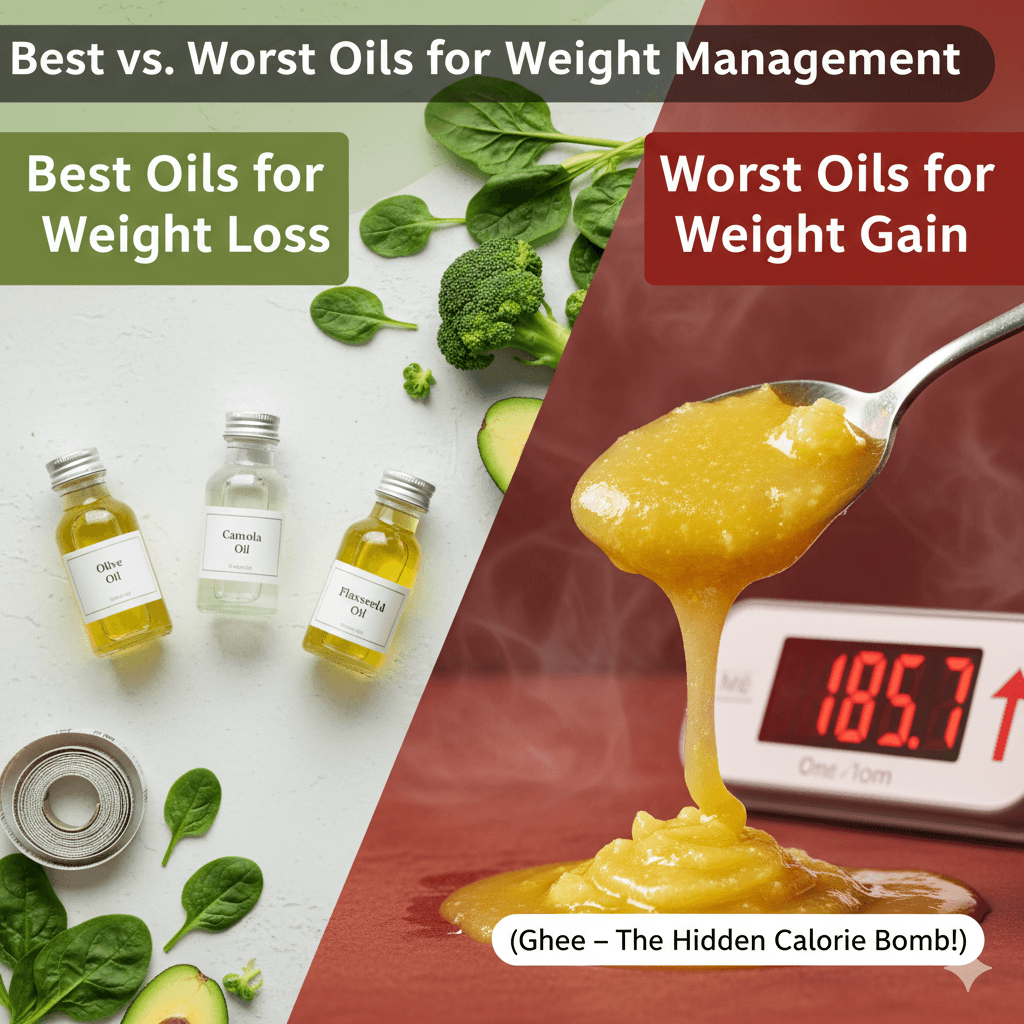
| Category | Oil Name | Why its in this category | Best use | Key note |
| Best for Weight Los | Extra virgin olive oil | Strong flavour with portion control | Dressings, drizzling, light sauté | Searing, roasting, stir-fry |
| Best for Weight Loss | Avocado oil | High MUFA, high smoke point, neutral taste | 80-90% saturated fat, calorie-dense | Great for high-heat cooking |
| Best for Weight Loss | Canola oil | Contains Omega-3 ALA, low saturated fat, budget-friendly | Baking, sautéing, cooking, dressings | Versatile & light tasting |
| Worst if overused | Coconut oil | Occasional flavour-specific dishes | Best for Weight Loss | Use sparingly due to SFA load |
| Worst if overused | Ghee/clarified butter | High saturated fat & cholesterol | Tiny portions for finishing dishes | Not ideal for primary cooking fat |
Disclaimer: The content on this website is for general informational and educational purposes only. It is not intended to provide medical advice, diagnosis, or treatment. Always consult a qualified healthcare professional, doctor, or dietitian before making any changes to your diet, exercise routine, or lifestyle. Reliance on any information provided on this site is solely at your own risk.