


Introduction: Butter vs Ghee vs Vegetable Oils?
Choosing the right cooking oil in the form of Butter ghee vs vegetable oil affects health, inflammation, and culinary outcomes.
People commonly ask whether to reach for better, guy, or vegetable oil for everyday cooking, high-heat frying, or salad dressings.
In this article, the evidence and practical factors behind Butter ghee vs Vegetable oil come together so you can make an informed choice for health and flavour.
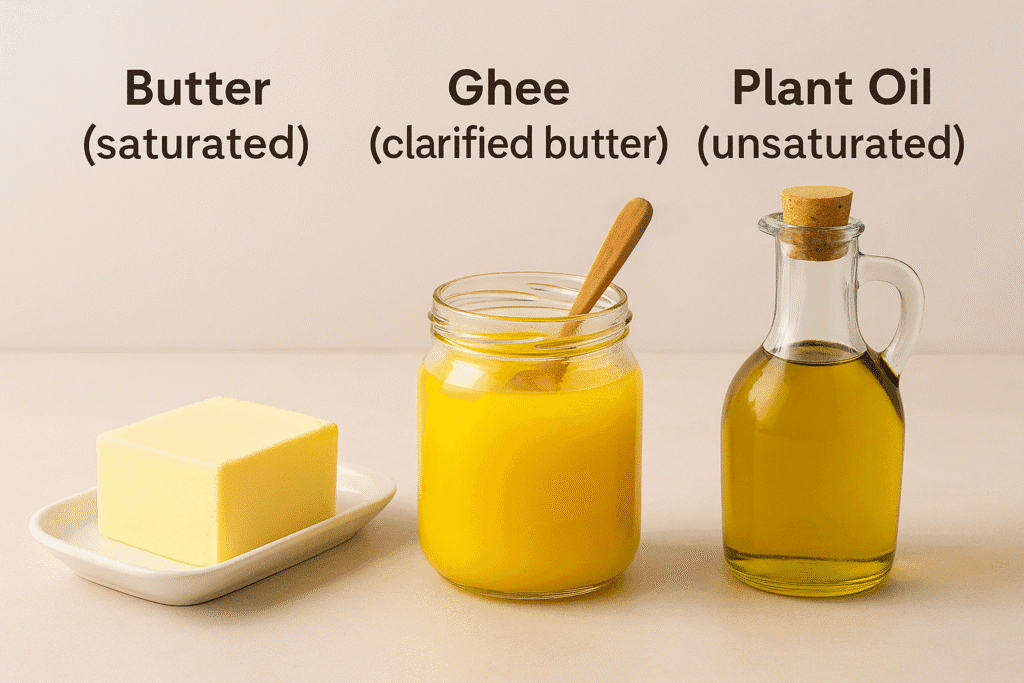
Sources of These: Butter vs Ghee vs Oils:
Butter dairy churned from cream: Made by churning cream or whole milk until fat separates from buttermilk.
Therefore, butter contains milk solids, water, and milk-derived micronutrients (Vitamin A and trace K2). Because producers vary their processes, composition can vary slightly between bands and between artisanal and industrial butter.
- Ghee-clarified butter (traditional): first, simmer butter to evaporate water & brown/settle milk solids; then strain.
- As a result, Ghee retains concentrated milk fats and fat-soluble vitamins while losing most of the lactose and casein, which often helps individuals who lack lactose tolerance tolerate it better.
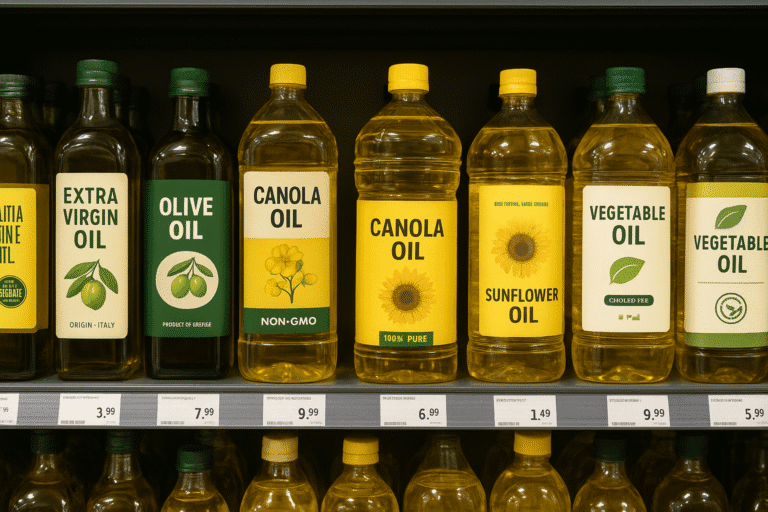
- Vegetable oils-pressed or extracted from seeds and fruits: for example, olive oil comes from pressed olives;
- Canola, sunflower, and soybean oils are derived from seeds by pressing and, in some cases, solvent extraction.
- Moreover, oils undergo refining, deodorisation, or cold pressing, so their flavour, stability, and nutrient content differ substantially.
Industrial versus artisanal differences:
- Industrial versus artisanal differences: commercial refining increases smoke points and shelf life but often reduces minor antioxidants.
- Cold-press or extra version options preserve flavour and bioactive compounds.
- Production impact on health: thus, how the fat is produced-clarified vs unclarified, refined vs extra virgin affects both culinary performance and nutritional characteristics;
- Consequently, choose based on cooking needs and health goals.
Cholesterol Comparison:
| Source | Cholesterol (mg/100g, approximate) | Effect on blood LDL (qualitative) | Notes |
| Butter | ~215 mg | Tends to raise LDL when consumed in excess | Contains milk solids & cholesterol |
| Ghee | ~250 mg (varies) | Similar tendency to raise LDL at high intake | Plant oils contain no dietary cholesterol; fatty acid profile matters |
| Vegetable oils (EVOO, canola, sunflower) | 0 mg | Lowers or improves LDL when replacing saturated fats | Plants oils contain no dietary cholesterol; fatty acid profile matters |
Health Effects: What Research Says about Butter vs Ghee vs Oils:
Clinical trials and extensive epidemiologic studies help to compare the health outcomes associated with these fats.
Randomised controlled trials, such as those involving Mediterranean-style diets enriched with extra virgin olive oil, show reduced cardiovascular events when plant-derived unsaturated fats replace saturated fat sources.
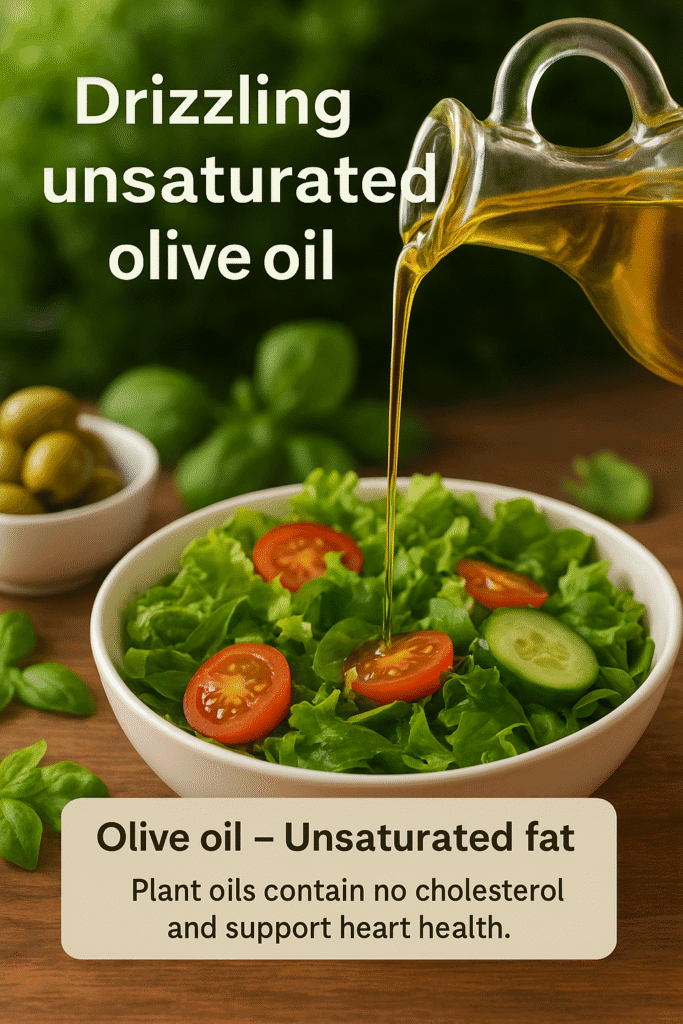
Large cohort analyses have linked higher intakes of plant oils to lower cardiovascular disease and mortality compared with better diets.
Studies focused specifically on Ghee are fewer and smaller; they sometimes report neutral or mixed effects on lipid profiles, so the evidence for Ghee remains less definitive than for well-studied vegetable oils.
Cholesterol in Butter and Ghee: Why Vegetable Oils Offer a Healthier Alternative.
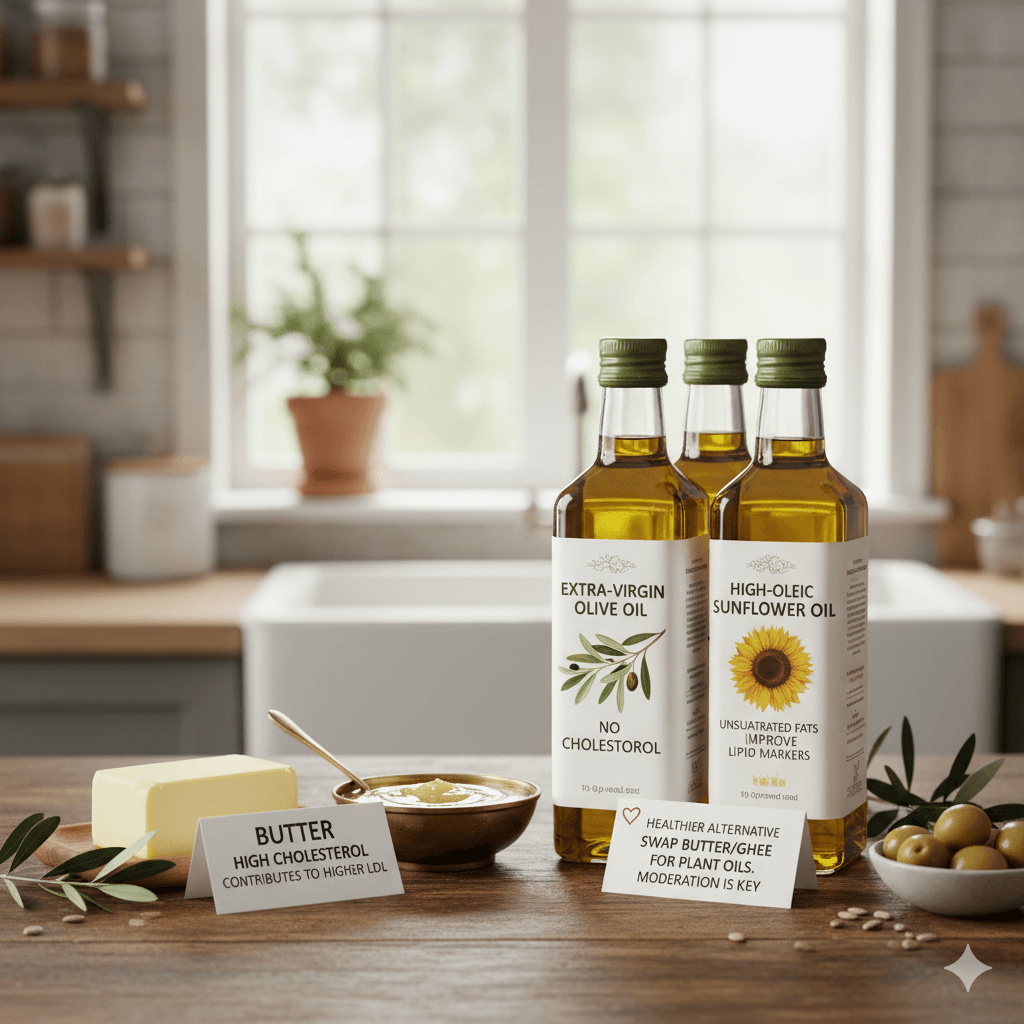
- Butter and Ghee contain appreciable dietary cholesterol, which can raise LDL levels when consumed frequently.
- By contrast, vegetable oils contain no dietary cholesterol and supply unsaturated fats that improve lipid markers when they replace animal fats.
- Swapping part of butter or ghee for extra virgin olive oil or high-oleic oils reduces dietary cholesterol and adds heart-protective compounds.
- Nonetheless, moderation matters: excess total fat increases calorie intake, and overheating some plant oils can produce oxidation products.
- Therefore, favour plant oils as the primary daily fat and reserve butter or ghee for occasional favour use?
Cardiovascular Evidence: Cholesterol Mortality, and Practical Takeaways:
- Replacing saturated fats with unsaturated plant oils reliably lowers LDL cholesterol and improves associated risk markers in many clinical trials.
- Moreover, pooled cohort studies indicate that diets rich in plant oils are predominantly linked to lower all-cause and cardiovascular mortality.
- Practical takeaway: favour plant oils as your primary daily fat, while using he or better sparingly for high-heat cooking or flavour; When possible, replace some butter/ghee with extra-virgin olive oil or high-oleic oils to improve lipid outcomes.
In contrast, very high intakes of better show are associated with mortality across extensive observational studies.
Therefore, the balance of evidence tilts toward vegetable oils for population-level heart benefits.
That said, Ghee butter remains acceptable in moderation depending on culinary needs and cultural context.
Cooking Performance and Food Safety:
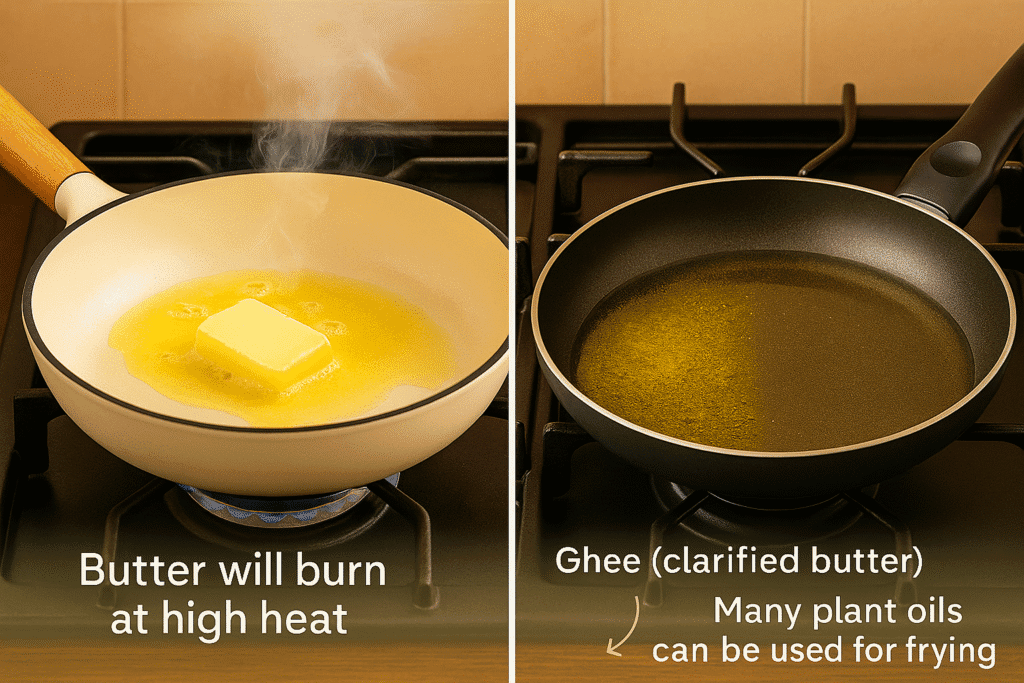
Smoke point, flavour, and oxidative stability determine which fared best suited to particular cooking methods.
Butter has a rich flavour and performs well in low-heat or finishing applications, but milk solids lower its smoke point. G, by contrast, removes milk solids and offers a higher smoke point, making it more suitable for high-heat flying.
Visit able oils differ: extra virgin olive oil works best for dressings and medium-heat cooking, while refined, high-oleic oils and refined avocado oil suit high-temperature frying due to their higher smoke point and greater oxidative stability.
High-PUFA oils oxidise more readily at high temperatures and therefore require careful selection or refinement for frying to avoid the formation of harmful oxidation products.
Consumer Point of View Cost, Culture, and Preference:
Taste, tradition, and budget often drive consumer choices. Butter provides a rich, familiar taste in many Western cuisines, while ghee holds cultural and culinary significance in South Asian cooking with a nutty aroma that many dishes rely upon.
Vegetable oils range widely in price and sensory profile; extra virgin olive oil tends to be pricier and more flavorful. In contrast, canola, sunflower, and other refined vegetable oils are more budget-friendly and neutral in flavor.
Shoppers balancing cost and health often opt for vegetable oils as the primary daily fat, replacing butter or ghee for flavour-sensitive applications.
How To Choose Your Goals.
- If heart health is a priority, replace some of your butter or ghee with extra virgin olive oil or high-oleic plant oils in everyday cooking and dressings.
- For high-heat frying, use G or refined high-smoke-point plant oil, such as refined avocado oil or refined high- or low-smoke-point sunflower oil.
- When baking or when flavour matters most, use butter sparingly or combine it with a better-for-you oil to reduce saturated fat while preserving texture and taste.
- Rotate fats in your kitchen to achieve different fatty acid profiles and reduce the risk of consistently consuming a single fat in excess.
Modern research on butter vs. ghee vs. vegetable oils.
Two important lines of evidence help frame practical guidance. The PREDIMED randomised trials showed that a Mediterranean-style diet supplemented with extra-virgin olive oil reduced major cardiovascular events among high-risk adults compared with a low-fat control group. Multiple cohorts and meta-analytic studies find that replacing saturated fats with unsaturated plant fats correlates with reduced cardiovascular disease and mortality across large populations. By contrast, evidence for Ghee is relatively limited: the available trials are small, and extensive long-term cohort data are sparse. Thus, when comparing Butter vs Ghee vs Vegetable oil, the strongest clinical and population evidence supports vegetable oils, particularly extra-virgin olive oil and other unsaturated-rich oils, for cardiovascular protection.
This table condenses significant findings and design types for quick comparison.
| Study or Evidence Type | Design | Main relevance |
| PREDIMED | Randomised controlled trial, ~7000 participants | Mediterranean diet with EVOO reduced major cardiovascular events |
| Meta-analyses/ Cohorts | Large prospective cohorts & meta-analyses | Higher plant-oil intake associated with lower CVD & mortality when replacing saturated fats |
| Small trials on Ghee | Clinical interventions, small samples | Mixed or neutral effects; insufficient large-scale data |
Fatty acid comparison table.
The fatty acid profile explains physiological and cooking differences, and it offers a chemical rationale for the health pattern observed in trials.
| Source | Saturated FA (%) | Monounsaturated FA (%) | Polyunsaturated FA (%) | Representative fatty acids |
| Butter | 50-65 | 25-35 | 2-4 | Palmitic & Myristic acids |
| Ghee | 40-55 | 30-45 | 2-6 | Includes some conjugated linoleic acid and Short-chain fatty acids |
| Extra-virgin olive oil | 10-20 | 60-75 | 5-15 | Oleic acid predominates |
| High-oleic canola/sunflower | 7-10 | 60-70 | 20-30 | High oleic acid with variable linoleic content |
| Regular sunflower | 10-12 | 20-25 | 60-70 | Linoleic acid rich |
Higher monounsaturated fatty acid content tends to support favourable lipid profiles and better oxidative stability. In contrast, high polyunsaturated content can be healthy but requires attention when used at high frying temperatures.
Quick Comparison Table One Page Summary:
The table below provides a one-glance summary to guide daily choices.
| Consideration | Butter | Ghee | Vegetable Oil (EVOO/High-oleic) |
| Heart-health evidence | Mixed; higher sat fat | Limited data; mixed findings | Stronger evidence for benefits when replacing sat fat |
| Best culinary use | Flavour, baking, low-heat | High-heat frying and traditional recipes | Dressings, general cooking, frying (refined) |
| Practical recommendation | Use sparingly | Use moderately | Prefer as primary daily fat where possible |
Conclusion: Practical Recommendation.
When weighing Butter vs Ghee vs Vegetable Oil, the best choice depends on goals.
For daily heart-health benefits, prioritise vegetable oils rich in monounsaturated fats, such as extra virgin olive oil, or high- or low-heat varieties for high-heat cooking; choose key or refined high-smoke-point plant oils to minimise smoke & oxidation.
Reserve butter for flavour where it contributes most. Finally, rotate fats and keep portion sizes moderate to balance taste, tradition, and long-term health.
Disclaimer: The content on this website is for general informational and educational purposes only. It is not intended to provide medical advice, diagnosis, or treatment. Always consult a qualified healthcare professional, doctor, or dietitian before making any changes to your diet, exercise routine, or lifestyle. Reliance on any information provided on this site is solely at your own risk.

Leave a Comment