


History of cold-pressed oils,
Cold-pressed oils’ benefits.
The benefits of cold-pressed oils date back to ancient civilizations such as Egypt and Mesopotamia, where people manually crushed seeds to extract oil.
Traditionally, wooden and stone presses were used without heat. These oils were used for cooking, medicine, and skincare.
Over time, the screw press replaced manual tools for efficiency. Today, the cold press is making a comeback as a healthier, chemical-free oil extraction method.
Natural and Purest Vegetable Oils:
In today’s World of processed foods and fast-paced lifestyles, more and more people are seeking healthier, more natural choices.
One such choice gaining popularity is cold-pressed vegetable oil. But what exactly does “cold-pressed” mean, and why is it considered healthier?
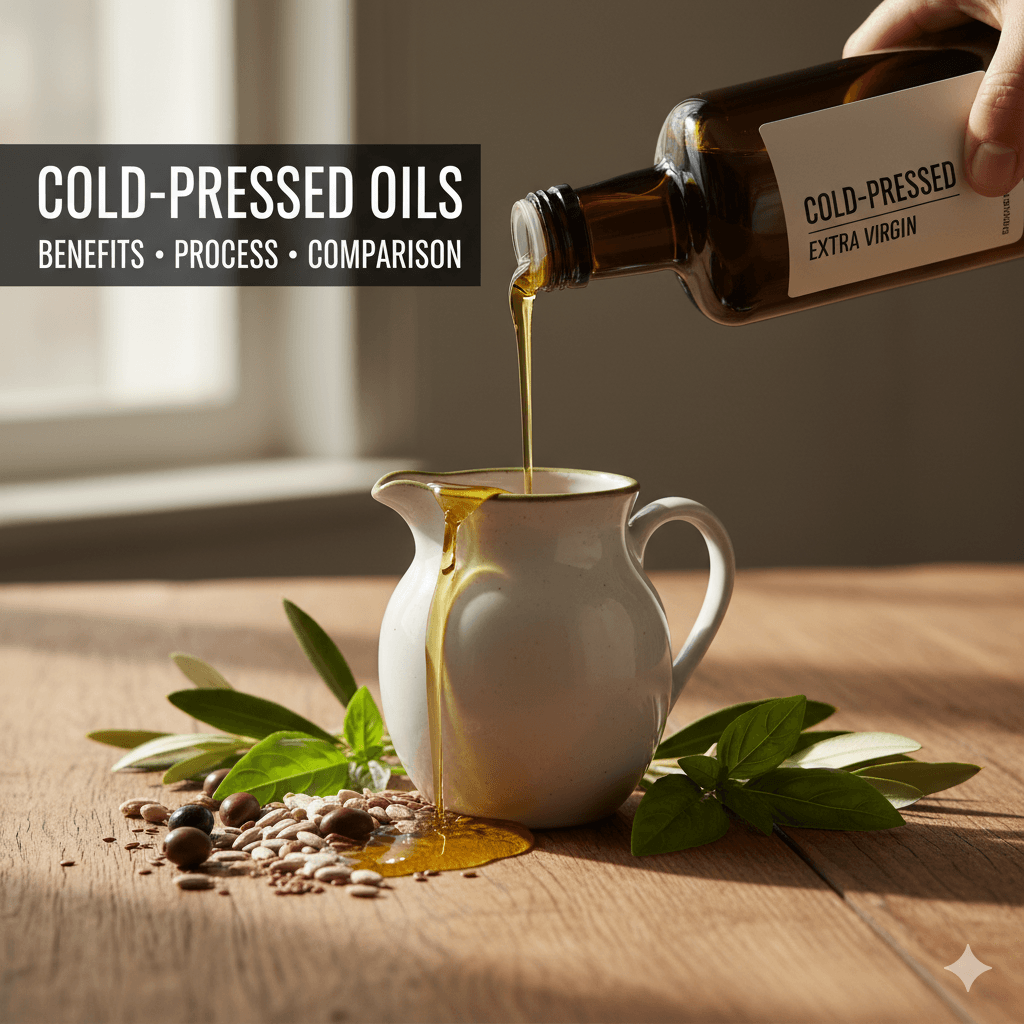
How Is It Different from Refined Oil?
Cold-pressed oil Refined oil
Extract without heat. Made using high heat and chemicals
Retains nutrients. Loses many vitamins and antioxidants
Has natural flavour and colour. Neutral in taste and colour
Shorter shelf life, longer shelf life due to additives
Cold-pressed oil is like fresh juice, while refined oil is like canned juice
What does “Cold Pressed” mean?
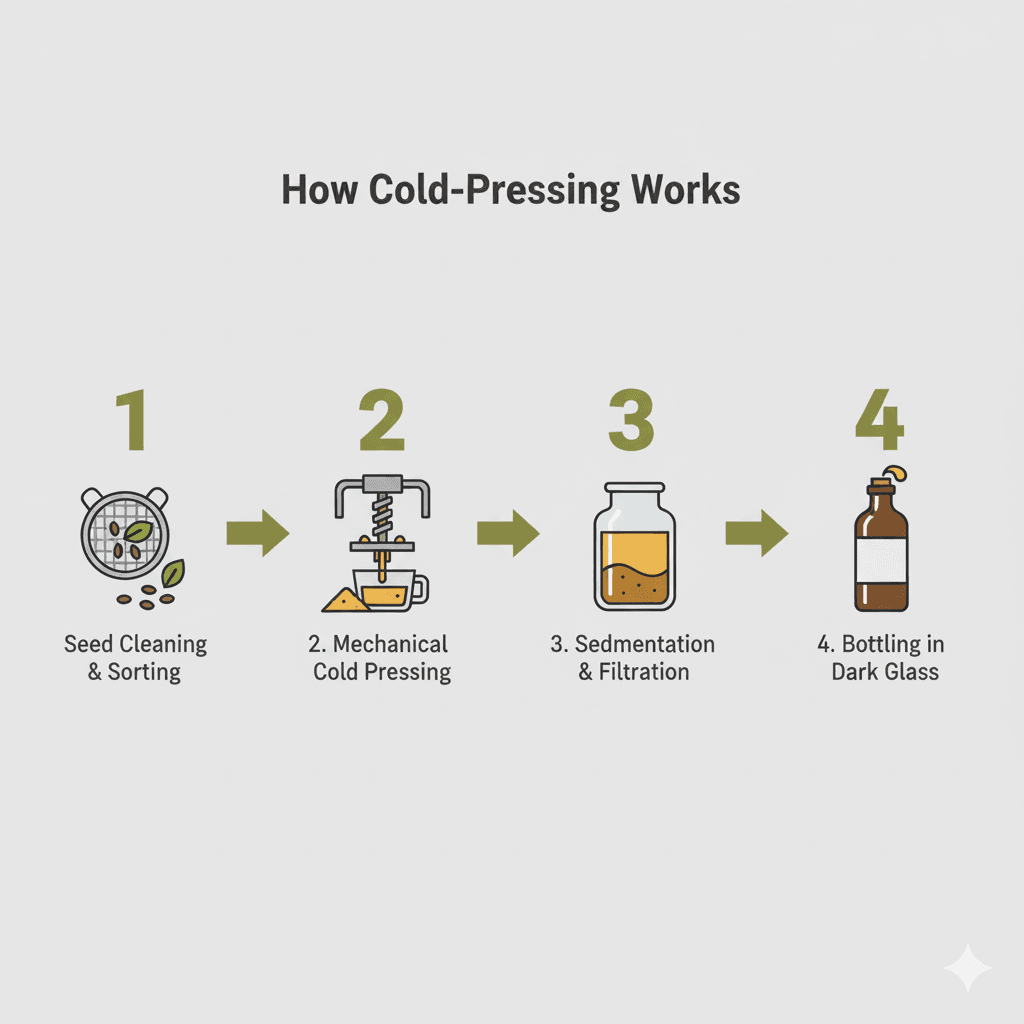
Cold pressing is a method of extracting oil from seeds, nuts, or fruits without heat or chemicals. Mean?
Instead of boiling, refining, or bleaching the oil, the seeds are slowly crushed using a mechanical press (such as a screw press), and the oil is gently squeezed out.
This process;
Keeps the natural nutrients and antioxidants intact
Maintains the flavour and aroma of the original seed and avoids chemical solvents like hexane.
Cold-pressed oils: Benefits:
Many nutritionists and health-conscious consumers prefer cold-pressed oils because they;
They are rich in antioxidants, Vitamins (like E), and phytochemicals
Help reduce inflammation in the body
Contain healthy fats like omega-3 and omega-6
Support heart health, digestion, and skin health
They are often free from trans fats and harmful additives
However, it’s essential to store them properly and avoid overheating them during cooking, as high temperatures can degrade their delicate nutrients.
How to Identify Genuine Cold-Pressed Oils?
When buying, check the label for;
Words like ‘’cold pressed’’, ‘’virgin’’, or ‘’extra virgin’’
No mention of refining, bleaching, or deodorizing
Slight cloudiness or sediment at the bottom (a good sign of unfiltered oil)
Packaging in dark glass bottles (helps prevent oxidation). Always buy from trusted brands and ensure the oil is certified for food use.

Common Cold Pressed Vegetable Oils:

When buying, check the label for;
Words like ‘’cold pressed’’, ‘’virgin’’, or ‘’extra virgin’’
No mention of refining, bleaching, or deodorizing
Slight cloudiness or sediment at the bottom (a good sign of unfiltered oil)
Packaging in dark glass bottles (helps prevent oxidation)
Always buy from trusted brands and ensure the oil is certified for food use.
Common Cold Pressed Vegetable Oils:
Here are a few examples of oils that are available in cold-pressed form:
Cold-pressed olive Oil:
Great for salads and light cooking
Sunflower Oil Cold-pressed
High in Vitamin E.
Cold-pressed Mustard Oil
Used in traditional South Asian recipes
Coconut Oil Cold-Pressed
Popular in both food and skincare, Cold Pressed Flaxseed Oil is rich in omega-3 fatty acids but is best consumed raw.
Final Thoughts:
Cold-pressed vegetable oils are a healthier and more natural alternative to processed oils.
Whether you’re using them in salads, for light sautéing, or for skincare, they offer real benefits without chemicals.
While they may cost a bit more and have a shorter shelf life, the quality and purity they provide make them well worth it.
If you’re serious about your health or love food in its purest form, cold-pressed oil is an excellent addition to your daily routine.


Comments are closed.