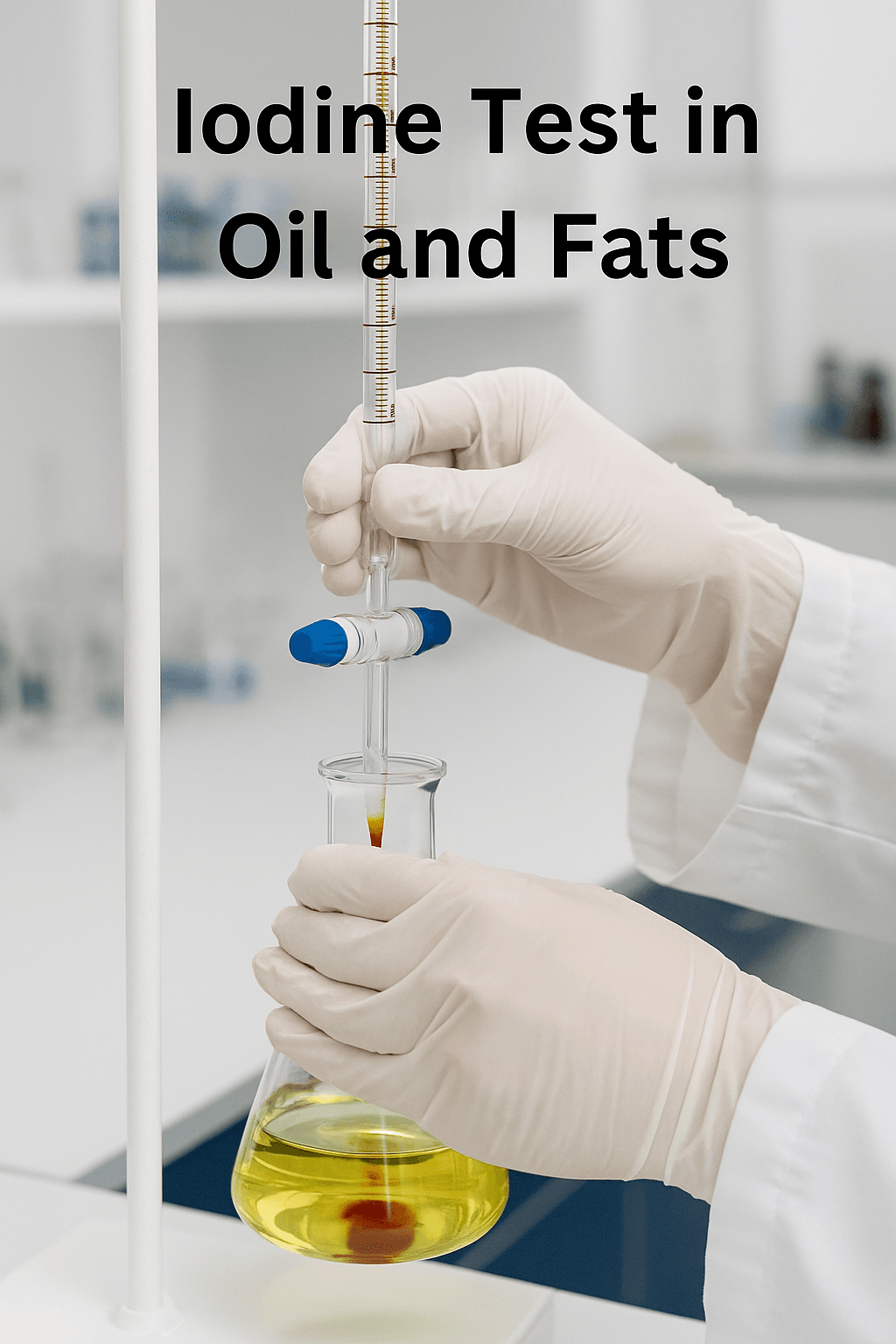
Definition: Determination of iodine value,
The determination of iodine value denotes the percentage by weight of halogen calculated as iodine absorbed under the conditions of the test.
Determination of iodine value in Edible Oils:
Determining the iodine value is one of the most critical quality control methods used in the edible oil and fats industry. It helps producers, researchers, and even consumers understand the nature of oils, their stability, and their suitability for different applications.
History of the Iodine Test:
The determination of iodine value dates back to the late 19th century, when chemists began exploring ways to measure the unsaturation level of fats and oils. Early researchers discovered that iodine reacts with double bonds present in unsaturated fatty acids.
By quantifying this reaction, they could estimate the degree of unsaturation in oils, which soon became a standard test in oil chemistry.
Introduction to the Iodine Value:
In simple terms, the iodine value (IV) represents the grams of iodine absorbed by 100 grams of oil or fat.
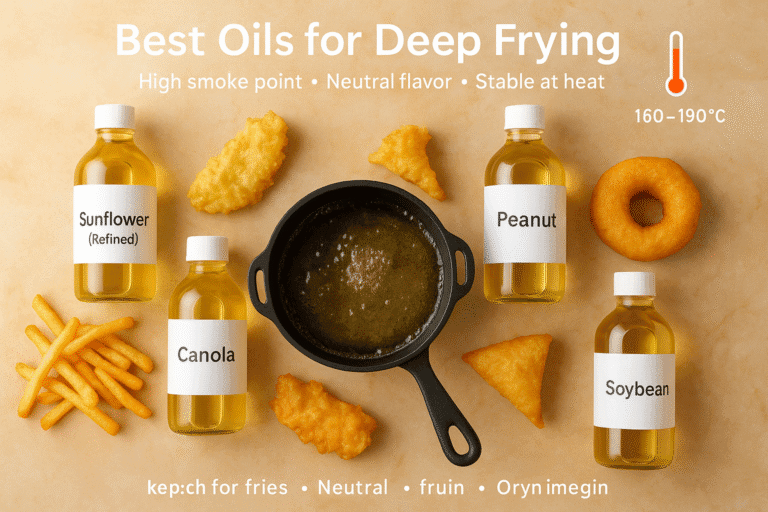
The higher the iodine value, the more unsaturated the oil is. For example, oils like sunflower and soybean have high iodine values due to their polyunsaturated fatty acids, while coconut oil and palm oil show much lower values.
Importance of the Iodine Test:
The determination of iodine value is crucial for several reasons:
Quality Control: It ensures that oils meet international standards before they reach consumers.
Identification: Helps detect the type of oil or potential adulteration.
Stability Check: Oils with higher iodine values are more prone to oxidation and rancidity, so that shelf life can be predicted.
Industrial Usage: In soap-making, margarine production, and other industries, the iodine value indicates how an oil will behave during processing.
Why Do We Perform the Iodine Test?
The main reason is to measure the level of unsaturation in oils. This information is valuable for both nutritional and technical purposes.
From a health perspective, unsaturated oils are often preferred, but extremely high unsaturation can reduce stability.
For manufacturers, the iodine value helps in selecting the right oil for frying, baking, or industrial applications.
Principle
Oil is treated with an iodine monochloride solution (Wijs solution).
After the addition of the halogen has taken place, the excess of iodine monochloride is determined by titration with sodium thiosulfate solution.
Reagents:
Carbon tetrachloride (CCl4)
Wij’s Solution
Potassium Iodide (KI) 10% Solution
0.1N Sodium Thiosulphate
Procedure:
- First, take two iodine flasks: one for the sample and one for a blank.
- Then, weigh the sample about 0.1 to 0.5g in an iodine flask.
- After that, add 15ml of carbon tetrachloride to the cylinder and 25ml of Wij’s solution using a pipette.
- Then, close the flask, mix, and allow to stand in the dark for 1 hour at 20 degrees Celsius.
- Then, after taking the sample flask, add 20 mL of potassium iodide (10% aqueous solution) and 150 mL of distilled water.
- Also run for blank sample.
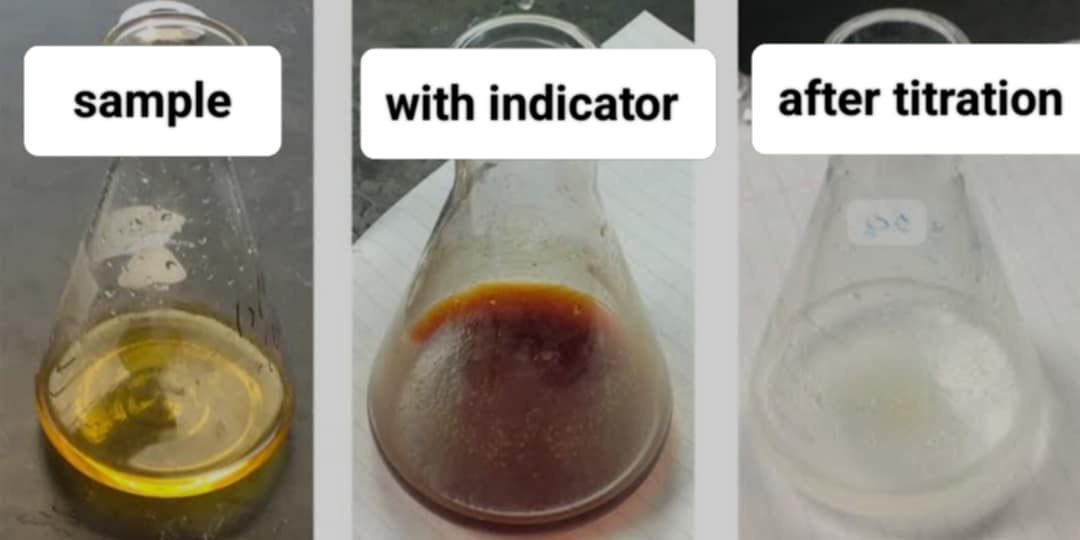
- Finally, add Aitrate to 0.1N sodium thiosulfate until the color changes from red to yellowish, then add a few drops of a 1% starch (in distilled water) indicator. Blue color will appear, then titrate till the blue color disappears.
Calculation:
I.V= (V.B-V.S)*N of Na2S2O3*12.69/Wt of sample
where:
V.B=Volume used in blank
V.S. Volume used in the sample.
Molecular Weight of Iodine is 126.9.
Iodine Number of different vegetable oils.
Canola Oil: 110-126
Soybean oil: 125-140
sunflower oil: 110-140
cottonseed oil: 110-119
Note: FT-NIR CDR also determines the iodine value in just 2 minutes, with a digital display.
However, analytical methods take approximately 1.5 hours and also involve a risk of human and chemical errors.
Cost of determination of iodine value:
Determining the iodine value is relatively affordable compared to advanced analytical techniques such as gas chromatography.
In most laboratories, the test costs between USD 10 and 50 per sample, depending on the location and facility.
This makes it a cost-effective choice for routine quality control in edible oil industries.
Conclusion:
The iodine test remains a reliable, simple, and economical method to evaluate edible oils.
Whether you are a food technologist, a manufacturer, or a quality inspector, understanding iodine value helps ensure oil quality, safety, and performance in daily use.
References: AOAC 993.20: AOCS Cd 1d-92(97): AOCS 17th Edn 2000 920.159