Introduction of Extra Virgin Oils:
Extra Virgin Oils & Cooking oils are more than just a base for food preparation; they are essential contributors to energy, nutrition, and overall health.
With so many types of oils available, the debate often centers on extra-virgin oils, such as olive, coconut, and canola, versus their refined versions.
Both categories are derived from the same raw materials, but their processing methods make them distinctly different in taste, chemical profiles, and health effects.

Unrefined Oils:
For centuries, unrefined oils have played a central role in traditional diets, offering a wide array of natural antioxidants and bioactive compounds.
On the other hand, refined oils, which became familiar with the advent of industrial food processing, offer stability, affordability, and versatility in high-temperature cooking.
This article provides a comprehensive comparison of extra virgin oils and refined oils across history, chemistry, nutritional values, fatty acid composition, market volume, and health outcomes.
With research-backed insights, practical recommendations, and FAQs, you can choose the right oil for your daily use.
History and Background of Extra Virgin Oils:
The story of oil dates back thousands of years. In ancient civilizations, oil was not just a cooking medium; it was also used for medicine, beauty, and religious rituals. Olive oil, for example, has been central to the Mediterranean diet for over 4000 years.
Historical records show it was pressed using stone mills and stored in clay jars, symbolizing purity and abundance.
Coconut oil held cultural significance in tropical regions of Asia and the Pacific as both a food staple and a medicinal product. Communities used it in cooking, skincare, and even spiritual ceremonies.
Similarly, canola oil traces its roots to the broader family of rapeseed oils, which were historically used in lamps and later, in the 20th century, refined for human consumption.
Industrial Revolution:
Refined oils, however, emerged during the Industrial Revolution, when the demand for shelf-stable products and large-scale food production surged.
Refining techniques such as beaching, deodorizing, and chemical neutralization became common, enabling oils to withstand mass distribution and storage without spoiling.
Ancient Extraction Methods:
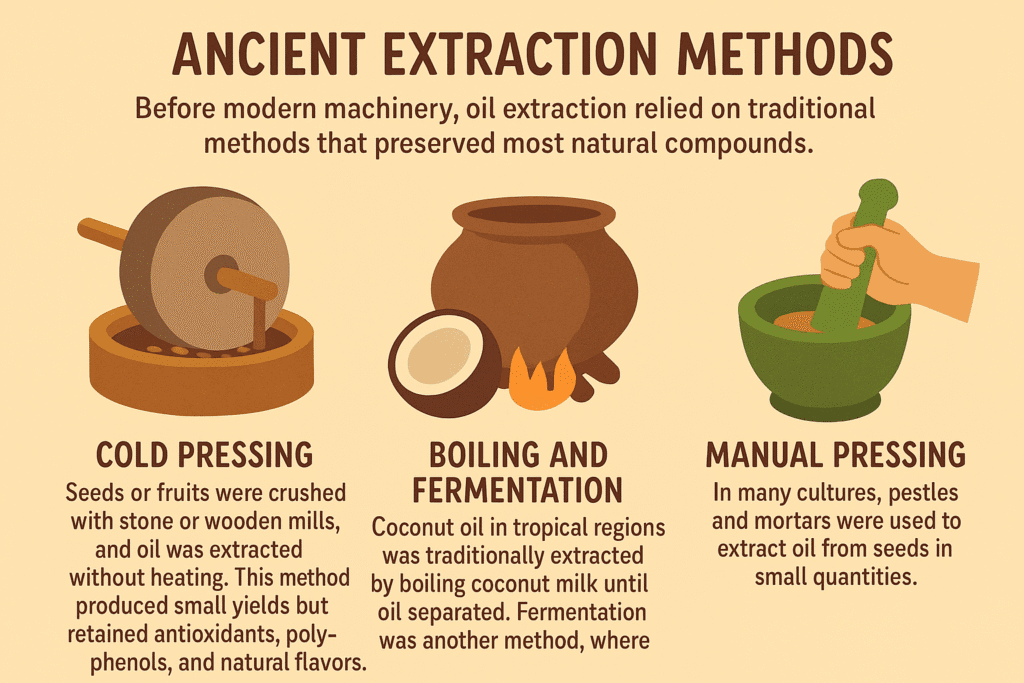
These traditional techniques were slow and labor-intensive, but they produced oils closest to their natural state, which we now classify as extra virgin oil.
Chemistry of Extra Virgin vs Refined Oils:
The significant difference between extra-virgin and refined oil lies in their chemical composition.
- Extra Virgin Oils: Retain natural bioactive compounds such as polyphenols, tocopherols (vitamin E), phytosterols, and carotenoids. They undergo minimal or no heat treatment. As a result, they have distinct flavors and aromas and higher antioxidant levels.
- Refined Oils: Undergo high-heat and chemical processes to remove impurities, free fatty acids, and odors. While this improves stability and neutral taste, it also strips away many natural compounds.
Refining typically reduces beneficial antioxidants and can slightly alter the fatty acid structure, especially during high-heat deodorization.
Fatty Acid Profile (Comparison Table):
| Extra Virgin Olive Oil | 14 | 73 | 11 | Low | High (rich in antioxidants) |
| Refined Olive Oil | 14 | 73 | 11 | Low | Very High (due to refinement) |
| Extra Virgin Coconut Oil | 82 | 6 | 2 | Trace | High (naturally Stable) |
| Refined Coconut Oil | 82 | 6 | 2 | Trace | Very High (neutral taste, longer shelf life) |
| Extra Virgin Canola Oil | 7 | 63 | 28 | Moderate | Moderate |
| Refined Canola Oil | 7 | 63 | 28 | Moderate | High (improved stability after refining) |
This table shows that fatty acid percentages remain mostly consistent, but stability and bioactive compounds differ between extra virgin and refined versions.
Nutritional Value (Comparison Table):
| Nutrient | Extra Virgin Oils | Refined Oils |
|---|---|---|
| Vitamin E | High | Reduced |
| Polyphenols | Rich | Nearly absent |
| Antioxidants | Abundant | Minimal |
| Flavor | Distinct, Natural | Neutral |
| Calories (per tbsp) | ~120 Kcal | ~120 Kcal |
| Smoke Point | Lower (160-190oC) | Higher (200-240oC) |
While the calorie content is the same, extra virgin oil has higher nutrient density, whereas refined oil excels in cooking stability.
Market Volume and Global Trends:
The global edible oil industry is one of the largest food sectors worldwide. According to recent reports, the market size for vegetable oils exceeded USD 250 billion and continues to grow steadily.
- Extra Virgin Olive Oil: Dominates in Mediterranean and premium health-conscious markets, valued at around USD 16 billion.
- Coconut Oil: Growing demand in beauty, wellness, and functional food sectors, particularly for extra virgin coconut oil.
- Canola Oil: Among the top three oils in North America and Europe, widely consumed in both refined and unrefined forms.
Refined oils account for the majority of global sales due to their affordability and stability.
However, consumer trends increasingly favor extra virgin oil for its health and benefits, and natural profile.
Daily Usage:
Extra Virgin Oils: Ideal for salad dressings, drizzling, dips, baking, and low- to medium-heat cooking. They add rich flavor and nutrients, but may not withstand high frying temperatures.
Refined Oils: Best for deep frying, stir-frying, commercial cooking, and baking at high temperatures, where stability and a neutral taste are essential.
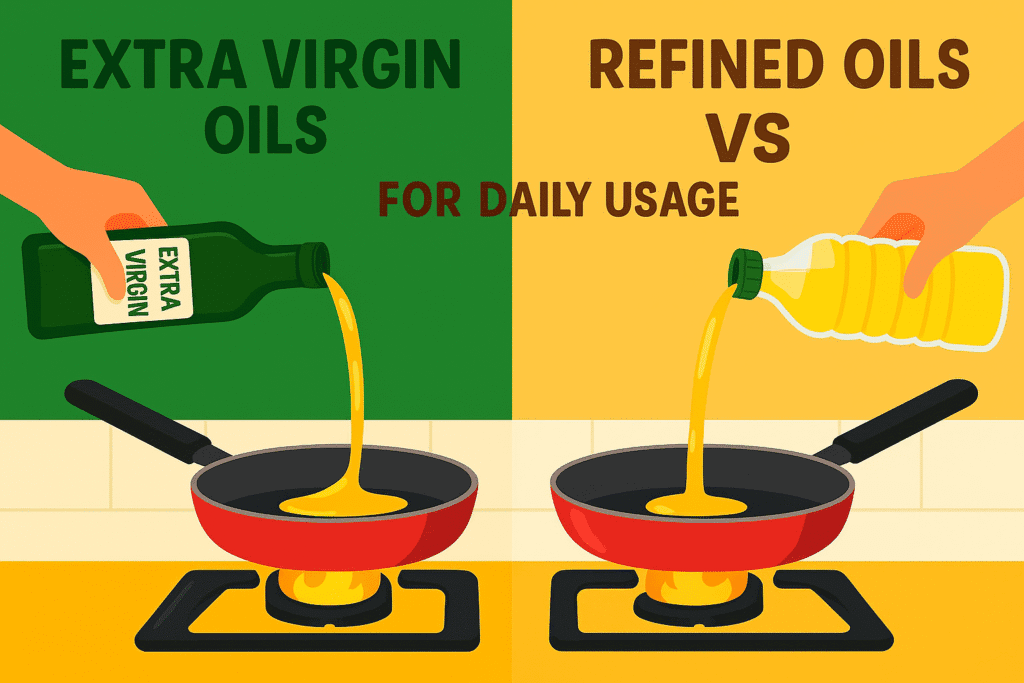
Many households combine both, using extra virgin oil for raw or lightly cooked meals and refined oil for frying.
Preference of Choice (Consumer Comparison):
- Taste Preference: Extra virgin oils appeal to those who value natural flavor, while refined oils appeal to those who prefer a neutral taste.
- Health Preference: Extra virgin oils are preferred by health-conscious consumers, while refined oils appeal to those prioritizing cost and cooking stability.
- Cultural Preference: Mediterranean and Asian regions traditionally prefer extra virgin oils, while North America leans heavily on refined oils due to affordability.
Research-Based Analysis:
Scientific studies consistently highlight that extra virgin oils reduce the risk of cardiovascular disease, inflammation, and oxidative stress.
Polyphenols and antioxidants in these oils help combat free radicals.
On the other hand, refined oils, though stripped of antioxidants, provide high smoke points and safety in frying.
Some studies also caution that excessive consumption of refined oils, especially when repeatedly reheated, may increase the formation of oxidative byproducts that can negatively impact health.
Side Effects and Health Impacts: Extra Virgin Oils,
Extra Virgin Oils:
- Positive: Rich in antioxidants, lowers cholesterol, anti-inflammatory, supports brain health.
- Negative: Lower smoke point can degrade if overheated.
Refined Oils:
- Positive: High stability, neutral taste, safe for frying.
- Negative: Loss of antioxidants, potential trans fats if over-processed, higher risk of oxidation byproducts.
Final Recommendation Table:
| Category | Extra Virgin Oils | Refined Oils |
| Best Use | Salad, dressing, light cooking | Frying, baking, high-heat cooking |
| Health Impact | Positive (antioxidants, nutrients) | Neutral to negative (loss of bioactive) |
| Shelf Life | Moderate | Long |
| Taste | Distinct, natural | Neutral |
| Cost | Higher | Lower |
Conclusion:
Both extra virgin oils and refined oils have a place in daily cooking. Extra virgin oils excel in nutrient density, flavor, and health benefits, making them perfect for raw consumption and light cooking.
Refined oils, on the other hand, provide the stability and affordability required for high-heat applications and large-scale cooking.
The best strategy is to use both wisely: incorporate extra virgin oils for salads, drizzles, and low-heat meals, while reserving refined oils for frying and baking.
A balanced approach ensures you benefit from nutrition without compromising cooking safety.
FAQS
- Is extra virgin olive oil better than refined olive oil?
- Yes, it retains more antioxidants and natural compounds, but refined olive oil is better for frying.
- Can I use extra virgin coconut oil for frying?
- It can be used for shallow frying, but not repeated deep frying.
- Which oil is healthiest for daily use?
- Extra virgin olive oil is considered the healthiest due to its polyphenols and monounsaturated fats.
- Are refined oils harmful?
- Not inherently, but overconsumption and repeated heating can generate harmful byproducts.
- Should I avoid entirely refined oils?
- No, they are helpful in specific applications, but balance them with extra virgin oils for better health outcomes.