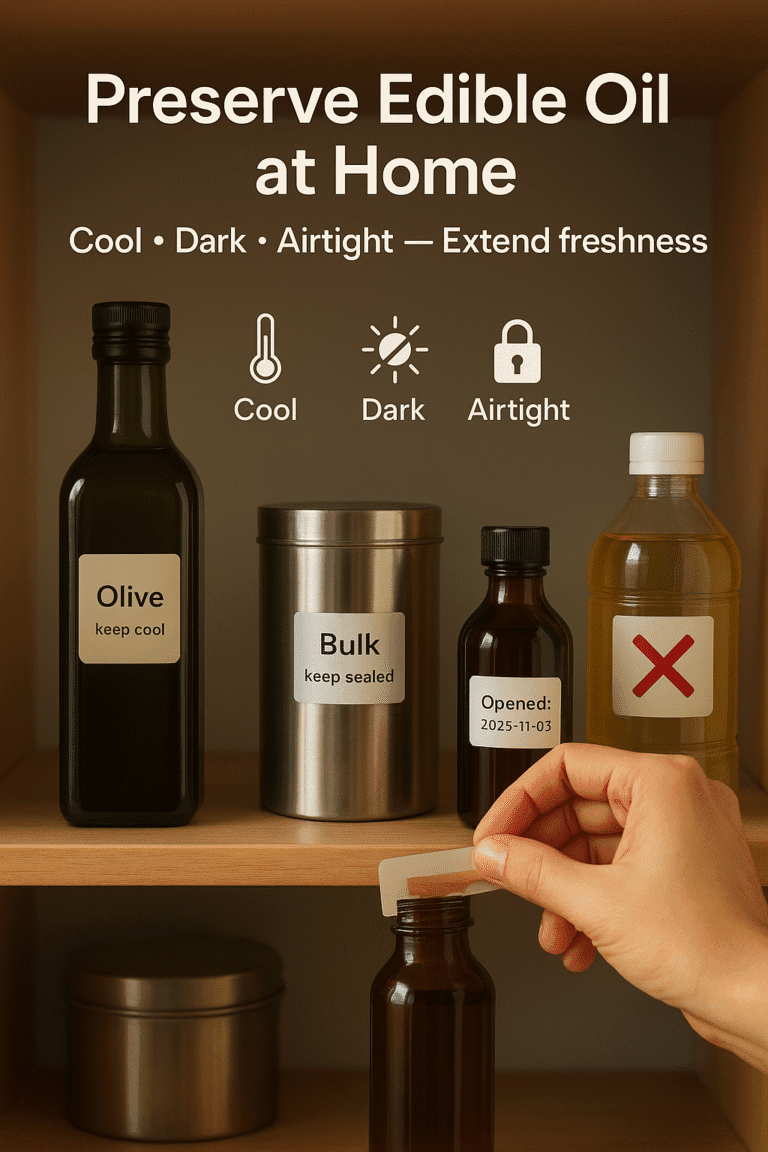
Adulteration in Edible Oils: How to identify at Home:
Adulteration in edible oils is a growing concern that directly impacts health, nutrition, and trust in food quality.
Many low-cost oils are mixed with inferior or non-edible oils to increase profit margins. Such adulteration not only reduces nutritional value but can also cause serious health issues like liver damage, heart disease, and digestive problems.
Thankfully, several simple home-based tests can help identify oil purity without using sophisticated lab equipment.
For example, freezing tests, paper spot tests, and solubility tests are commonly used to detect the mixing of cheaper oils, such as mineral or argemone oil.
While modern laboratory instruments provide accurate quantitative analysis, traditional home-based techniques remain useful for quick qualitative screening.
These old testing methods, though less precise, offer valuable first-hand insights. Comparing them with modern detection approaches highlights how far quality control in edible oils has advanced.
Introduction to Adulteration in Edible Oils:
Adulteration in edible oils poses a significant health risk and can compromise the overall quality of your food.
Although laboratory analysis provides the most reliable results, several easy, at-home methods using everyday household items can help identify contaminated or impure oils.
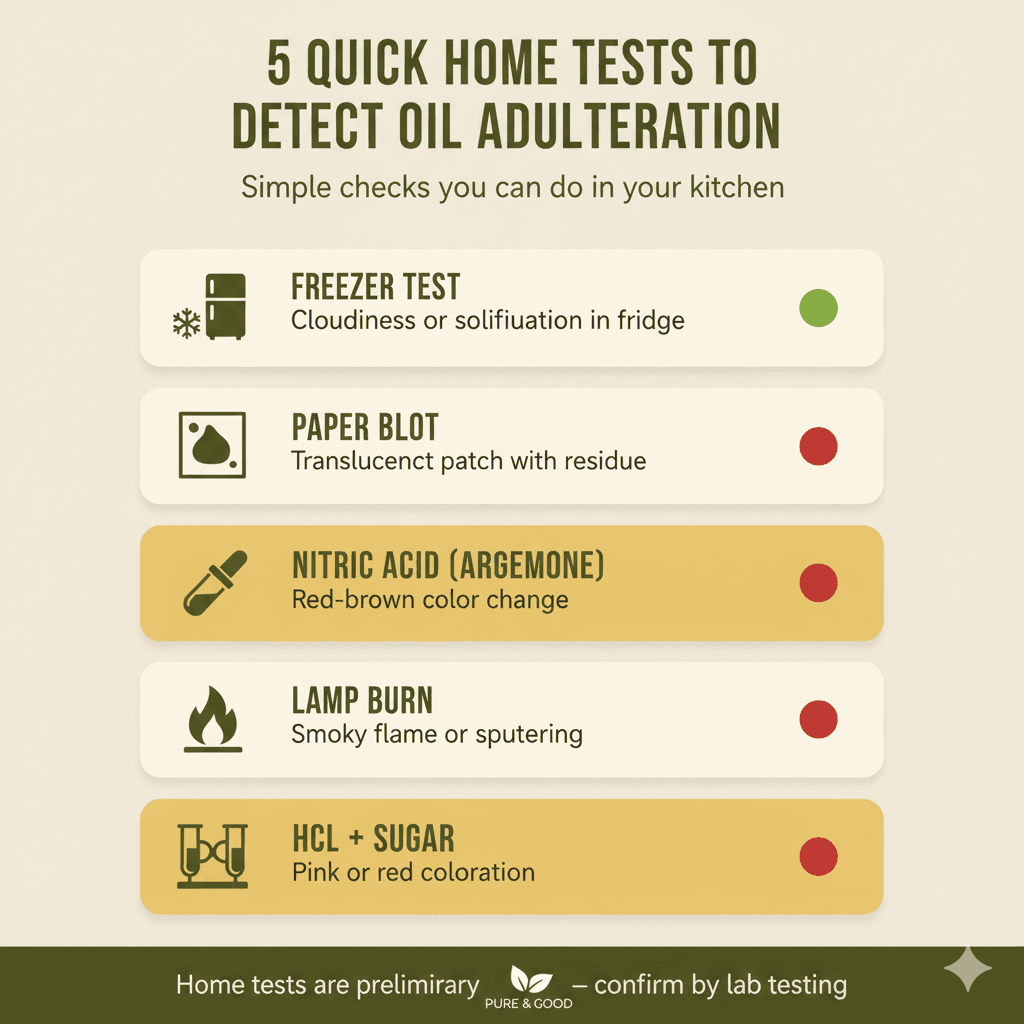
Comparison Table: Old Vs Modern Methods of Adulteration in Edible Oils,
| Test Name/ Method | Old or Traditional Principle | Modern Comparison | Accuracy Level | Purpose |
| Floating Paper Test | Pure oil leaves no stain on paper after evaporation | Replaced by TLC and GC analysis | Low | Detects non-edible oil mixing |
| Freezing or Solidification Test | Pure oils solidify uniformly at low temperatures | DSC (Differential Scanning Calorimetry) was used | Medium | Identifies adulterated fats |
| Odor and Taste Check | Natural aroma and flavor indicate purity | GC-MS for volatile compound detection | Low | Detects rancidity/ adulteration |
| Lamp Burning Test | Pure oils burn clean without soot | Flash point testing in the lab | Low | Identifies mineral oil presence |
| Turbidity with Nitric Acid Test | Cloudiness shows adulteration | HPLC/FID modern confirmation | Medium | Detects foreign oil mixing |
Traditional and Modern Techniques to Check Edible Oil Purity:
- Identifying adulteration in edible oils is essential to ensure safety, nutrition, and authenticity. While laboratories use advanced instruments today, traditional and home-based tests are still valuable for quick screening. Below are key techniques, both old and modern, that help detect impurities effectively:
Visual Observation:
Pure oils are precise and uniform in color.
Cloudiness or layered separation often indicates poor-quality oil or mixing.
Odor and Taste Test:
Traditional users rely on aroma – pure oils like mustard or sesame have a characteristic smell.
Any pungent or chemical odor signals possible adulteration.

- Refrigeration or Freezing Test:
- Keep a small oil sample in the refrigerator (around 5 °C).
- Pure oils solidify evenly, while adulterated ones show uneven freezing or layers.
- Paper Blot Test:
- Drop a small quantity of oil on white paper and let it sit.
- Pure oil leaves no greasy ring once dry; adulterated oils leave thick or dark stains.
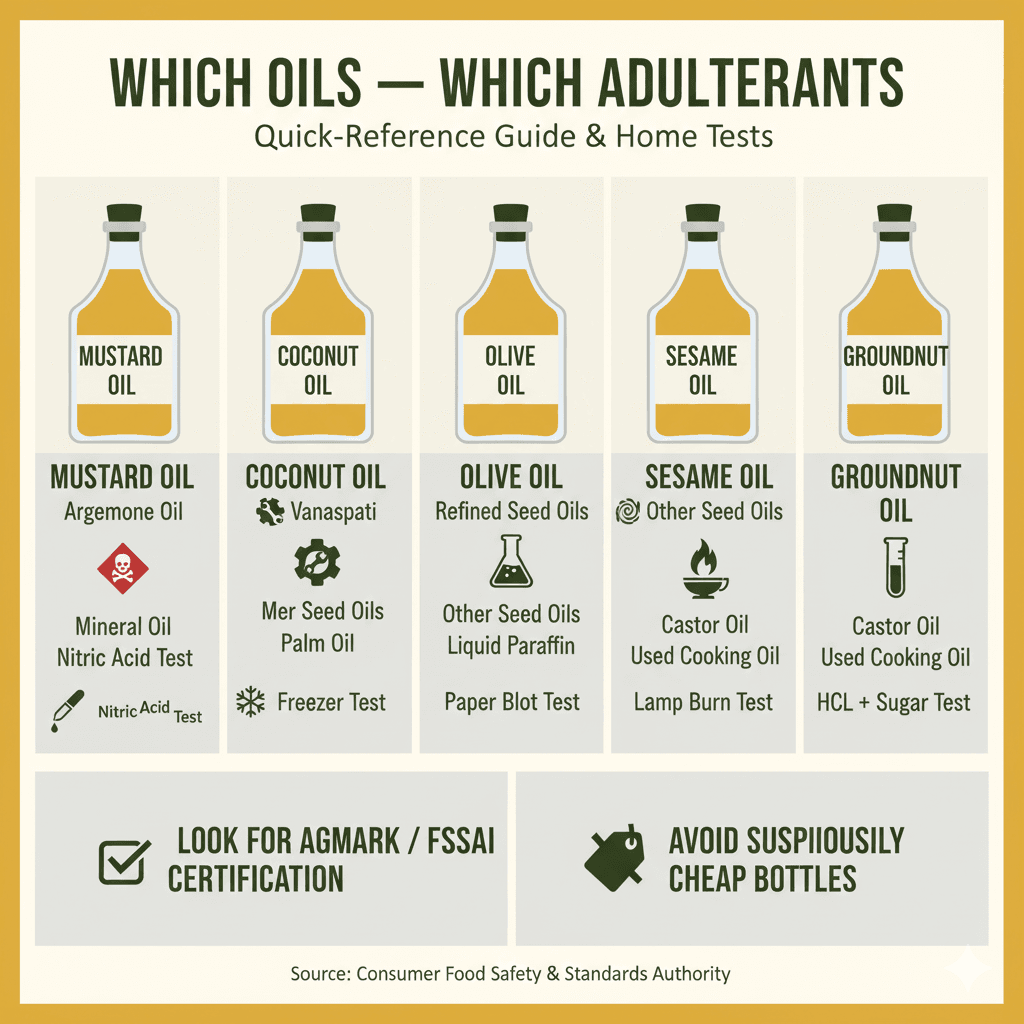
Common Adulterants in Edible Oils:
Before testing for adulteration, it’s essential to understand which substances are most commonly added to edible oils:
- Mustard Oil: Often adulterated with argemone oil, which is toxic and harmful to health.
- Coconut Oil: May contain mineral oil or be blended with Vanaspati (hydrogenated fat) to reduce cost.
- Olive Oil: Frequently diluted with lower-cost vegetable oils to mimic its appearance.
- Sesame Oil: Sometimes mixed with cottonseed oil, which is less expensive.
- Groundnut Oil: Commonly adulterated with palm olein or mineral oil to increase volume cheaply
Simple At-Home Tests to Check for Edible Oil Adulteration:
You can use basic items found at home or from a local pharmacy to detect common adulterants in cooking oils. Here are a few quick tests.
1. Detecting Argemone Oil in Mustard Oil:
What You’ll Need: Nitric acid (available at most pharmacies)
How to Test:
Combine equal parts (about 5ml each) of mustard oil and nitric acid in a clean test tube.
Shake the mixture thoroughly and let it rest.
What to Look For: A reddish or orange tint indicates the likely presence of argemone oil, a toxic contaminant.
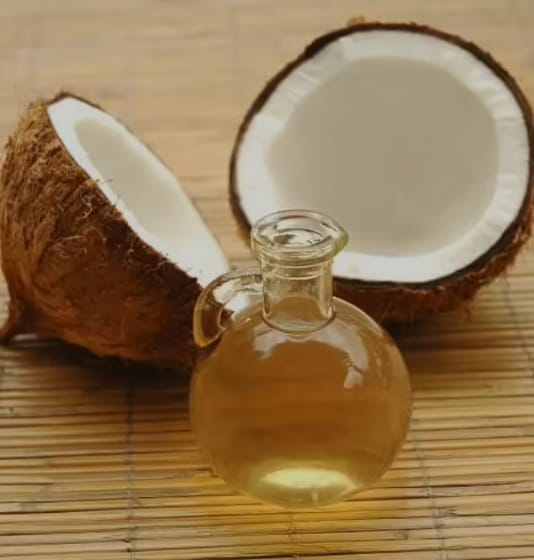
2. Identifying Mineral Oil in Coconut Oil:
What You’ll Need: A freezer
- How to Test:
- Pour a small amount of coconut oil into a transparent container.
- Please place it in the freezer for about 30 minutes.
- What to Look For: Pure coconut oil will completely solidify. If any part remains liquid, it suggests mineral oil adulteration.
3. Checking for Vanaspati in Ghee or Coconut Oil:
- What You’ll Need: Concentrated hydrochloric acid (HCl) and common sugar
- How to Test:
- Mix 1 teaspoon of the ghee or coconut oil with an equal amount of concentrated HCl and add a small pinch of sugar.
- Shake well and allow it to stand for 5 minutes.
- What to Look For: Pink or red color in the bottom layer may indicate the presence of vanaspati.
4. Detecting Cottonseed Oil in Sesame Oil:
- What You’ll Need: Concentrated hydrochloric acid and sugar
- How to Test:
- Add 5ml of sesame oil, 5ml of concentrated HCl, and about 1 teaspoon of sugar to a test tube or small container.
- Shake vigorously and let it sit.
- What to Look For: A red coloration suggests adulteration with cottonseed oil.
Limitations of Home-Based Oil Testing:
While home tests are helpful for quick checks, they come with certain drawbacks:
- These methods provide preliminary results but are not entirely reliable or accurate.
- They may fail to detect small amounts of adulterants or substances that don’t react visibly.
- For individuals with specific dietary needs, such as infants, older adults, or patients, it’s best to rely on laboratory testing to ensure safety.
Tips to Avoid Purchasing Adulterated Oils:
To reduce the risk of buying impure or low-quality oils, consider the following guidelines:
- Choose reputable brands that carry AGMARK or FSSAI certifications.
- Inspect the oil for clarity, aroma, and absence of residue or sediment before using.
- Be cautious of oils sold at suspiciously low prices; they may be diluted or impure.
- Whenever possible, opt for cold-pressed or single-origin oils from trusted and verified sources.
Conclusion:
Detecting adulteration in edible oils using simple home methods is a practical and affordable first step.
While these do-it-yourself tests can reveal common impurities, they are no substitute for the assurance that comes with buying certified, high-quality products from trusted suppliers.
Remember, your health starts in the kitchen. Choose purity for a healthier life.