


Introduction to Moisture content in oils:
Understanding the Role of Moisture content in oils:
When producers, refiners, or quality teams discuss purity, Moisture Content in Oils always appears at the top of the list.
Even a small amount of water can affect flavour, stability, and storage life. Therefore, understanding how moisture gets into products, how to measure it, and why it matters is essential in every oil and fat processing unit.
Traditionally, moisture remains invisible, so testing helps prevent larger problems such as hydrolysis, mould growth, or equipment corrosion.
Natural Entry Points of Moisture:
Moreover, edible oils are derived from seeds, fruits, nuts, and animal fats, so that moisture can enter during extraction, washing, transportation, or direct contact with humid air.
Since moisture causes oxidation and breakdown of triglycerides, industries constantly monitor it using valid test methods.
Old Method: Oven Drying Technique for Moisture content in oils:
Basic Working Principle of Moisture content in oils:
Before advanced instruments appeared in the industry, laboratories relied heavily on the oven method.
This technique directly supports the measurement of Moisture Content in Oils by heating a weighed sample under controlled temperature until the water evaporates.
First, analysts weigh a clean, dry dish. Then, they add a small amount of oil and place it in a hot-air oven at a set temperature, usually around 105°C to 130 °C.
After a defined time, the dish is removed, cooled in a desiccator, and weighed again. The difference between the initial and final weights indicates the amount of moisture lost.
Potential Errors and Limitations:
Although this method sounds simple, attention to detail is crucial.
For example, overheating can cause the loss of volatile compounds other than water, leading to inaccurate results.
Conversely, if the drying time is too short, moisture remains, resulting in an incorrect result. Therefore, technicians follow standardised time-and-temperature guidelines.
Latest Method: FT-NIR and Modern Moisture Analysis:
Working Principle of FT-NIR:
As technology improved, industries began adopting faster, more precise methods, especially Fourier Transform Near-Infrared Spectroscopy (FT-NIR).
Unlike older techniques, FT-NIR measures Moisture Content in Oils without drying or altering the sample.
A beam of near-infrared light passes through or reflects off the oil, and sensors detect how moisture molecules absorb specific wavelengths of light.
The instrument then calculates the moisture level in seconds.
Ease of Use and Industrial Preference:
Moreover, FT-NIR eliminates sample loss and reduces human error. Since operators only need to fill a cuvette or place a drop on a sensor window, the procedure becomes clean and efficient.
Additionally, calibration models help link absorption data to precise moisture percentages, thereby enhancing reliability. Many refineries and quality labs prefer FT-NIR because it allows online or at-line analysis.
That means they can check the moisture Content in Oils during production without stopping the process.
Sources of Moisture in Oils and Fats:
Processing and Extraction Stages:
To manage Moisture Content in Oils effectively, you must recognise where water comes from in the first place.
Harvesting, transportation, washing, refining steps, and storage conditions all introduce moisture.
For example, seeds and fruits often arrive at processing plants with natural moisture content. Then, pressing or solvent extraction can leave residual water in the crude oil.
Refining and Handling Steps:
Additionally, the washing and neutralisation steps in refining involve direct contact with water. If separation is incomplete, leftover moisture stays in the oil.
Another common source is condensation when oil is stored in tanks subject to temperature fluctuations.
Whenever hot oil cools down in a humid environment, microdroplets settle quickly.
Side Effects of Moisture in Oils and Fats:
Chemical and Quality Issues:
High Moisture Content in Oils harms quality, flavour, and processing performance.
First, moisture promotes the hydrolysis of triglycerides, generating free fatty acids and off-flavours. Once free fatty acids rise, refining costs increase because more neutralisation and bleaching become necessary.
Moreover, hydrolysis reduces product stability and shortens shelf life.
Microbial and Visual Impact:
Additionally, microorganisms such as yeast and mould proliferate in the presence of moisture.
Even though oil generally resists microbial activity, water droplets can form pockets where organisms thrive.
As a result, rancid odour, discolouration, and potential health hazards appear in finished products.
Precautions and Control Measures:
Preventing Moisture Entry:
To control Moisture Content in Oils, industries rely on preventive habits rather than reactive responses.
For example, proper drying of raw materials before extraction reduces the water carried into the refining line. Additionally, temperature-controlled storage tanks help avoid condensation.
When producers maintain stable temperature gradients, moisture cannot easily form droplets inside the oil.
Processing and Equipment Practices:
Sampling practices also matter. Clean, dry tools and sealed sampling ports reduce the chance of contamination.
Similarly, filtration systems and dehydrators remove existing moisture before sending oil to packaging or further processing. Many plants install vacuum dryers or sparging systems to strip out water using controlled heating and airflow.
Furthermore, careful washing and separation help ensure that water from neutralisation or degumming does not remain in the oil.
Operators need accurate centrifuges or separators, and they must confirm dryness before storage.
Monitoring and Long-Term Control:
Another key step involves transferring oil in moisture-free pipelines or tankers. When equipment is cleaned with water, staff must dry it thoroughly before reintroducing the product.
Desiccant breathers in storage vents also help stop humid air from entering tanks. Above all, regular laboratory tests confirm that moisture remains within safe limits.
Whether using the oven method or FT-NIR, consistent monitoring enables quick corrective action.
By adopting these precautions, companies reduce oxidation, corrosion, and microbial risks, protecting quality and extending shelf life.
Definition:
Moisture content in oils and fats is the loss in mass of the sample on heating at 105±1°C under the specified operating conditions.
Apparatus:
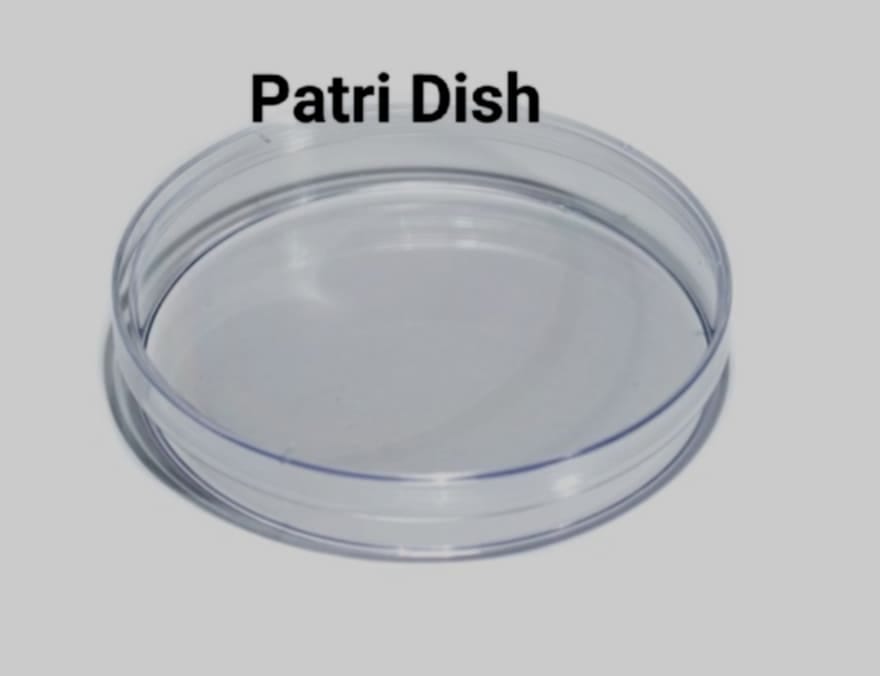
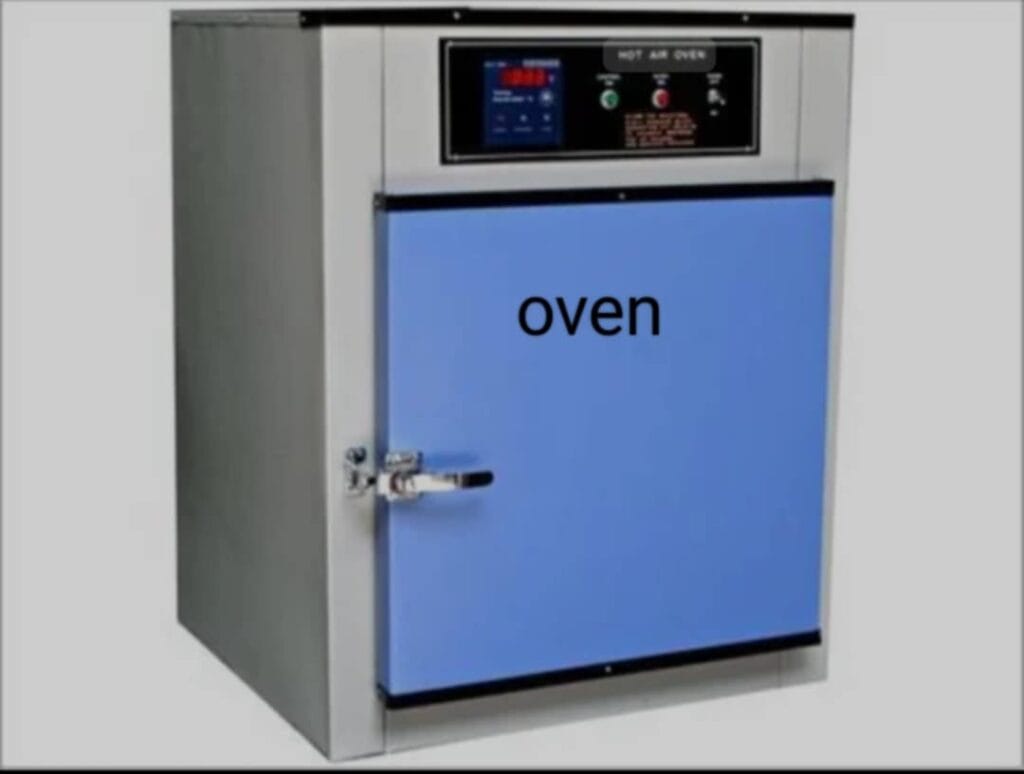
Oven, Metal dishes 7-8 cm in diameter and 2-3 cm deep, provided with tight-fitting slip-on covers, and a Petri dish.
Procedure:
- Weigh into a previously dried and tared dish about 5–10g of oil or fat, thoroughly mixed by stirring.
- Loosen the lid of the dish and heat in an oven at 105±1°C for 1 hour. Remove the dish from Ovenoven and close the lid.
- Cool in a desiccator containing phosphorus pentoxide or an equivalent desiccant, then weigh.
- Heat oven to 400°F for a further 1 hour, cool, and weigh.
- Repeat this process until the change in weight between two successive observations does not exceed 1mg.
Formula:
% Moisture= (W1-W2)/W*100
Where: mg/g/kg
W1 Weight of sample plus petri dish
W2 Weight of the sample plus the petri dish after 3 hours at 105
W: weight of sample.
Example:
For example.
- We have an oil sample in a tank with around 10 MTT.
- We will take the sample in a Beaker.
- First, weigh the petri dish by using a digital weighing scale.
- Note the value in the logbook, suppose it’s 10.2354g. its W=10.2354g
- Now we will take the gross weight of the sample plus petridis; suppose it is W1 = 34.5431 g.
- The next step is to keep the petri dish containing the sample in OvenOven for 3 hours at 105 degrees Celsius.
- After three hours, the sample is removed from OvenOven, placed in a desiccator for 30 minutes, and weighed; suppose its W2 = 33.9874 g.
Calculation:
Using Moisture % formula:
% Moisture= (W1-W2)/W*100
Moisture Content (34.5431-33.9874)/10.2354*100
% Moisture= 5.4291%.
Crude Oil:
Canola, Soybean, Sunflower oil, cottonseed oil, palm oil, and olein. These oils have less than 0.2% moisture. But it depends on industry to industry.
It may be high depending on the industries.
Final Oils:
The final product should have a moisture content of less than 0.2%, as per CODEX regulations.
Worldwide Moisture Content Standards for Edible Oils and Fats:
| Authority/ Standard Body | Region/ Country | Maximum Allowed Moisture & Volatile Matter | Applies To |
| Codex Alimentarius (CAC/RCP 19-1979) | Global (International) | ≤ 0.2% | All refined edible oils & fats |
| BIS IS 548 (Part 1) | India | ≤ 0.2-0.25% | Various edible oils |
| EU Regulation (EC No 852/2004 & 1881/2006) | European Union | ≤ 0.2% | Refined edible oils & fats |
| China GB Standards (GB/T 5528) | China | ≤ 0.2 % | Edible oils and fats |
| ISO 662:2016 | International | Method-based limit: typically, ≤ 0.2% | All oils & fats |
| GSO (GCC Standardization Org.) | UAE, Saudi Arabia, GCC | ≤ 0.2% | Refined vegetable oils |


Comments are closed.