


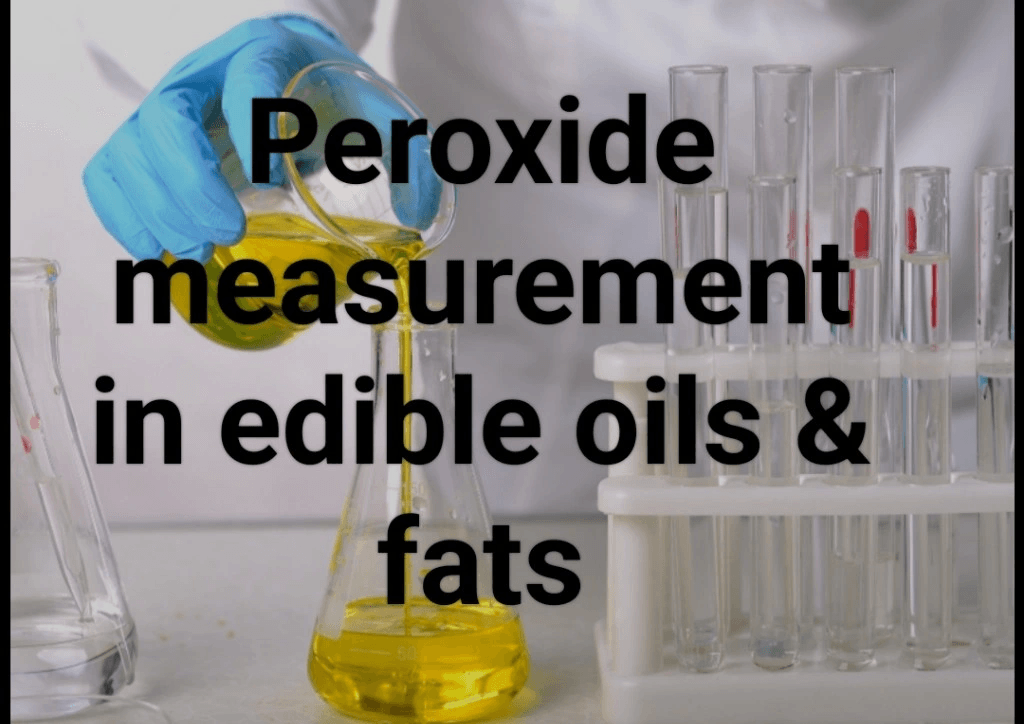
Introduction to the determination of peroxide value:
Determination of Peroxide value (PV) is a crucial indicator of oxidative rancidity in edible oils and fats.
Determination of peroxide value in Edible Oils:
The peroxide value test is one of the most widely used methods in the edible oil industry. It serves as an essential indicator of the quality and freshness of oils and fats, making it a standard procedure in laboratories worldwide.
History Of The determination of peroxide value:
The peroxide value test was developed in the early 20th century, when scientists began studying lipid oxidation. They discovered that when oils react with oxygen, peroxides and hydroperoxides are formed in the initial stages.
Measuring these compounds provided a reliable way to assess how far an oil has progressed toward oxidation, and this eventually became a benchmark quality test.
Introduction to the determination of peroxide value:
In simple terms, the peroxide value (PV) measures the amount of oxygen absorbed by an oil in the form of peroxides. It is expressed as milliequivalents of oxygen per kilogram of oil (meg O2/kg).
A low peroxide value indicates that the oil is fresh and stable, while a high value suggests rancidity and reduced shelf life.
Importance of the Peroxide Value Test:
The peroxide test is essential for several reasons:
Quality control: Ensures that only safe, fresh oils reach consumers.
Shelf Life Prediction: Helps estimate how long an oil can be stored before it turns rancid.
Health Safety: Rancid oils with high peroxide values can produce harmful compounds.
Industrial Applications: Essential in food production, frying oil monitoring, and product development.
Why Do We Perform the Peroxide Value Test?
The main reason is to check the oxidative stability of oils and fats. Oxidation affects flavour, odour, and nutritional value, making oils unsuitable for consumption.
By performing the peroxide test, manufacturers and food technologists can monitor oil deterioration and ensure compliance with international food safety standards.
Principle:
- Burette (50 mL)
- Conical flask (250 mL)
- Pipettes and measuring cylinders
- Glass stopper bottles
- Analytical balance
- Titration stand
Reagents:
- Glacial acetic acid
- Chloroform (analytical grade)
- Saturated potassium iodide (KI) solution
- Sodium thiosulfate (0.01 N)
- Starch indicator solution (1%)
Procedure:
1. Sample Preparation:
Weigh 5.0 grams of the oil sample in a conical flask.
2. Addition of Solvent:
After that, add 30 mL of a mixture of glacial acetic acid and chloroform in a 3:2 ratio.
3. Reaction with KI:
After that, add 0.5 mL of saturated potassium iodide.
And then shake gently and keep in the dark for 1 minute.
4. Titration:
Remove the flask from the dark and add 30 mL of distilled water.
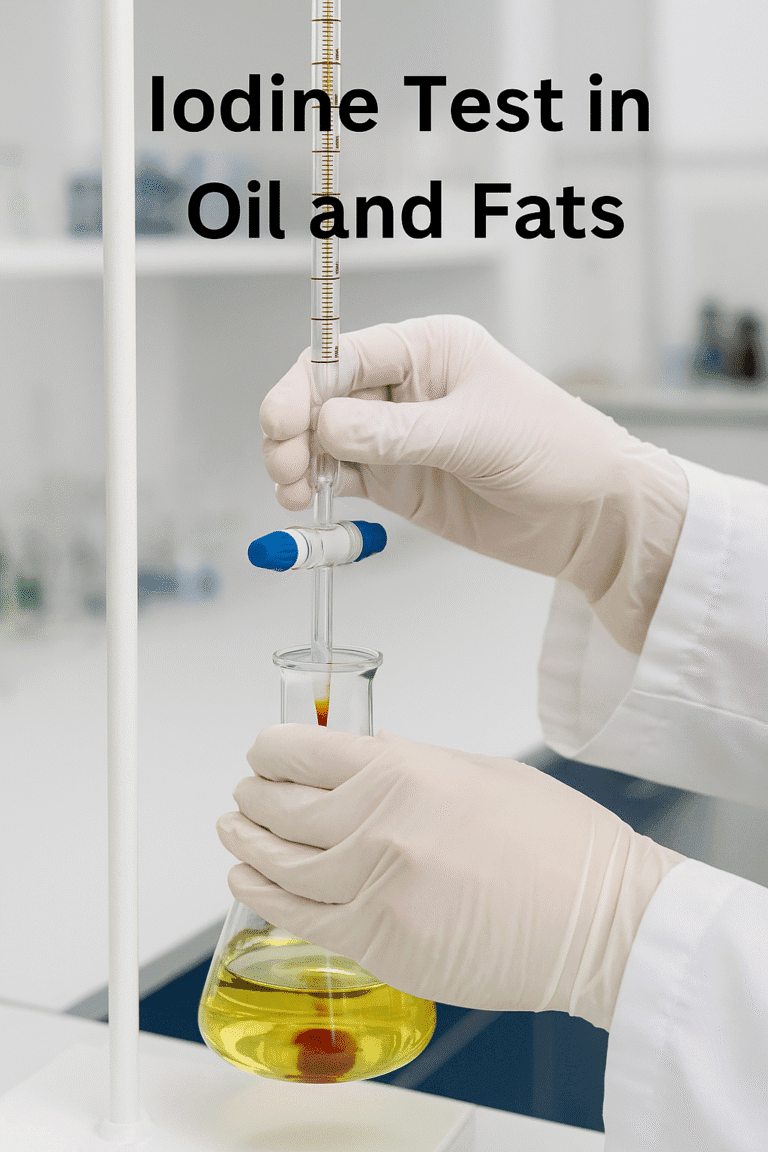
Titrate with 0.01 N sodium thiosulfate until the yellow color fades.
After that, add 1 mL of starch indicator (solution turns blue).
Continue titrating until the blue color disappears.
Calculation:
POV (ML used for Na2S2O3*N*1000)/weight of sample.
Where:
- V = Volume of Na₂S₂O₃ used (in mL)
- N = Normality of Na₂S₂O₃
- W = Weight of oil sample (in grams)
Acceptable Peroxide Values:
Type of Oil Max. Acceptable PV (meq O₂/kg)
Fresh edible oils 5.0–10.0
Refined oils < 5.0
Virgin oils < 15.0
Cost of the Peroxide Value Test:
The peroxide value test is inexpensive and straightforward compared to advanced oxidation monitoring methods.
In most laboratories, the cost ranges from USD 10to 40 per sample, depending on the facility and country. This affordability makes it a routine part of edible oil quality testing.
Troubleshooting:
- False High PV: Due to exposure to air/light. Use fresh samples.
- Color Interference: Use a blank titration without KI.
- May lead to iodine evaporation due to a delayed titration.
Conclusion:
Peroxide value testing is a simple yet effective method for assessing the oxidative stability of oils. Regular monitoring ensures the freshness, safety, and marketability of edible oils.
The peroxide value test is a reliable, cost-effective method for monitoring the freshness and safety of edible oils.
Whether you are a manufacturer, quality inspector, or food researcher, this test is vital for maintaining oil quality and protecting consumer health.
(AOCS, cd 8b – 90): Peroxide value in edible oils
Alternative Methods are also FT-NIR and CDR

Comments are closed.