Prolong Storage at Home:
Introduction to the preservation of edible oil:
Preservation of edible oil is critical because it degrades rapidly when exposed to light, heat, moisture, or air.
As a result, flavor changes, nutrients decline, and rancidity sets in.
However, with proper storage, you can significantly extend shelf life. Traditionally and today, people have used different methods to protect oil from spoilage, but modern techniques offer even greater control and hygiene.
To enrich your existing post on the Preservation of edible oil, below is a well-structured enhancement that covers ancient practices, current methods, and a comparison table.
How Ancient Peoples will do for the Preservation of edible oil:
Before refrigeration and advanced packaging, people relied on practical, natural strategies. Although simple, these methods helped them keep oils usable for long periods.
Clay and Earthen Pots:
They stored oil in unglazed clay pots kept in cool corners. The porous pot walls allowed slight evaporation, which helped reduce heat.
Dark Storage Spaces:
People placed oil containers underground, in basements, or in shaded areas to avoid direct sunlight and temperature swings.
Dry Leaf or Cloth Seals:
Instead of metal caps, they used tightly wrapped leaves, wax seals, or cotton cloth to limit air contact and insect infestation.
Animal-Fat or Herbal Blends:
Sometimes oils were mixed with natural antioxidants, such as herbs or fat-based blends, to slow oxidation.
Transitionally, while these methods were effective for their time, today’s households need convenience, hygiene, and consistency.
Modern Ways to Preserve Edible Oil at Home:
Now, we have efficient, science-backed methods to extend shelf life (Preservation of edible oil) without losing flavor or nutrition.
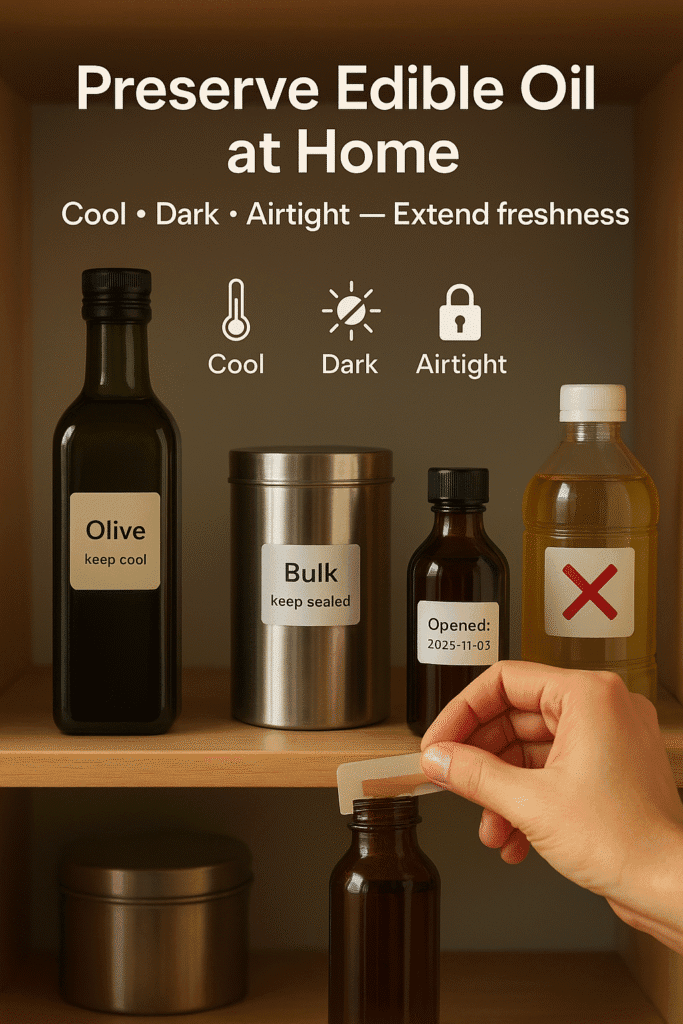
Airtight and Opaque Containers:
Storing oil in dark glass bottles or stainless-steel containers blocks light and limits air. Airtight lids prevent exposure to air and moisture.
Calm and Stable Temperature Storage:
Instead of hot kitchens, oils stay fresher in cool cabinets away from stoves and windows. Some sensitive oils, like flaxseed or sesame, may even be refrigerated.
Small Batch Buying and Refilling:
Rather than buying large packs and opening them repeatedly, people now use smaller bottles to reduce the risk of oxidation.
Vacuum or Nitrogen-Sealed Containers:
Modern users sometimes use vacuum seals or nitrogen flushing to keep air out, significantly slowing spoilage.
Because these methods combine hygiene and scientific knowledge, they help retain aroma, nutrients, and flavor longer.
Old vs Modern Methods for Preservation of Edible Oil:
| Aspect | Ancient Methods | Modern Methods |
| Containers | Clay pots, wooden barrels | Glass, stainless steel, PET, tins |
| Air Protection | Cloth, leaves, wax seals | Airtight lids, vacuum seals, nitrogen flush |
| Temperature Control | Underground, shaded storage | Controlled cabinets, refrigeration |
| Light Exposure | Dark storage rooms | Opaque containers, tinted bottles |
| Hygiene | Moderate, depended on natural materials | High, food-grade containers and sealing |
| Shelf-Life Consistency | Variable, climate dependent | Reliable with proper conditions |
| Risk of Contamination | Higher due to insects/ dust | Much lower with sealed packaging |
| Ease of Use | Labor-intensive, space-dependent | Convenient and quick |
| Cost | Low, local materials | Moderate, long-term savings |
| Nutrient Retention | Basic protection | Better retention with modern practices |
Advantages and Disadvantages:
Ancient Methods:
Advantages:
- Low Cost
- No synthetic materials
- Naturally cool environments
Disadvantages:
- Inconsistent results
- Higher contamination risks
- Limited light and air control
Modern Method:
Advantages:
- Better hygiene and stability
- Longer shelf life
- Convenient storage and dispensing
Disadvantages:
- Requires proper containers
- Some oils need refrigeration
- Initial costs can be higher
Why Oil Storage Matters:
Preservation of edible oils, especially vegetable oils and fats, is prone to oxidation, a process that leads to rancidity, off-flavors, and loss of nutritional value.
Factors like light, heat, oxygen, and moisture accelerate spoilage.
Proper storage slows down this degradation, helping you enjoy better flavor and avoid health risks.
Key Enemies of Oil Freshness:
Preserve edible oils properly. You first need to understand the elements that cause them to deteriorate:
1. Light: Because light Exposure to sunlight or even indoor lighting speeds up oxidation.
2. Heat: Because heat-storing oils near stoves or in hot rooms shortens their lifespan.
3. Oxygen: Contact with air breaks down the oil molecules, making them rancid.
4. Moisture: Because Water can promote microbial growth and spoilage in oils.
5. Contaminants: Dirty utensils or containers can introduce bacteria or foreign substances.

Best Containers for Oil Storage:
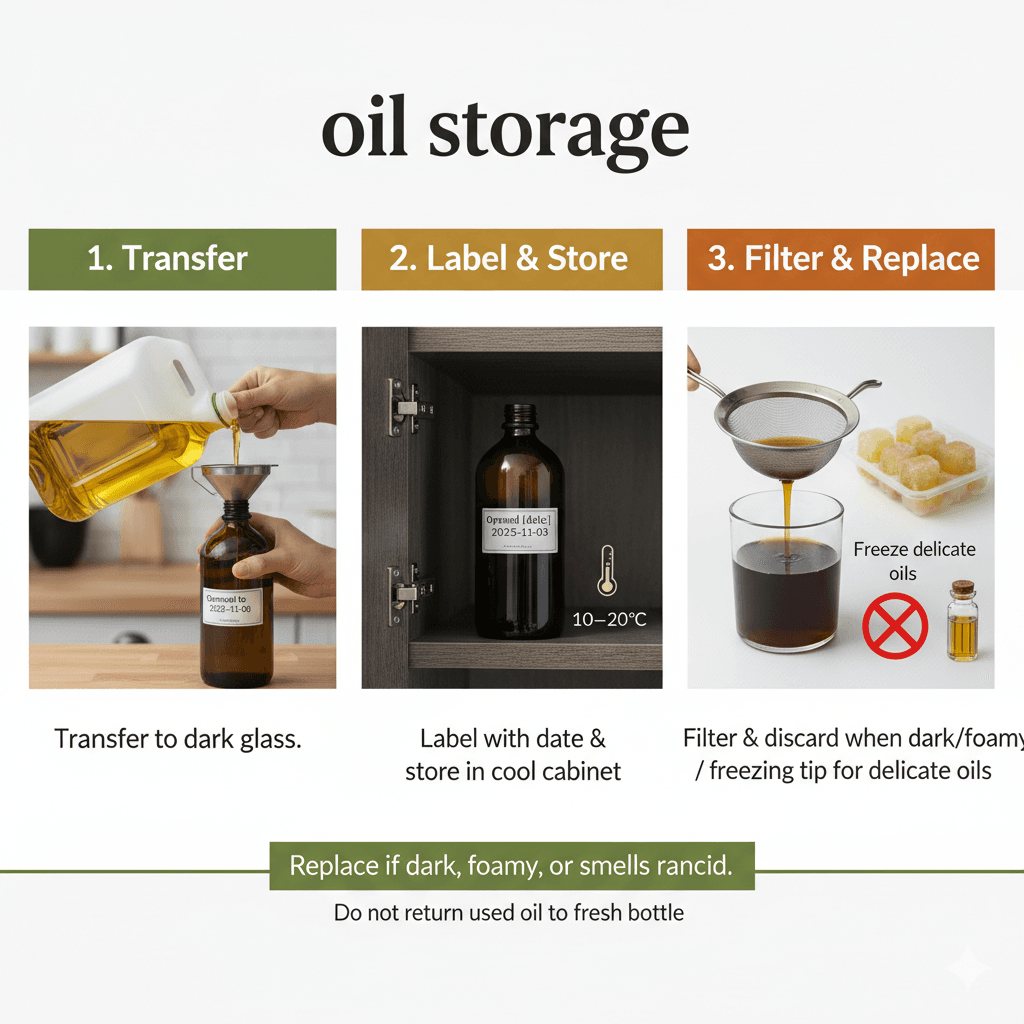
- Dark Glass Bottles: Because Amber or green glass protects against light and is chemically stable.
- Stainless Steel Containers: Ideal for bulk storage, especially in commercial kitchens.
- Tightly sealed airtight caps reduce oxygen exposure.
Avoid plastic bottles (especially cheap ones), as some can leach chemicals or allow air penetration over time.
Ideal Storage Conditions for the Preservation of Edible Oil:
The ideal storage condition for the Preservation of edible oil, Storage Factor Best Practice,
Temperature: Cool, dry places (between 10° and –20°C)
Light: Keep away from direct sunlight; use dark cabinets
Air: Reseal the bottle tightly after each use
Moisture: Keep containers dry and clean at all times
For certain oils (like flaxseed or walnut oil), refrigeration is recommended as they are more delicate.
Shelf Life of Common Edible Oils:
| Oil type | Approx shelf life (unopened) | Shelf life (Opened) |
| Olive Oil | 12-18 months | 6-18 months |
| Canola Oil | 12 months | 6-12 months |
| Sunflower Oil | 12–18 months | 6–12 months |
| Soybean Oil | 12 months | 6–9 months |
| Coconut Oil | Up to 2 years | 1–2 years |
| Flaxseed Oil | 6–8 months | 3 months (in fridge) |
Always check for off smells, cloudiness, or bitterness—these may indicate spoilage.
Tips to Extend Oil Freshness:
- Buy smaller quantities more frequently.
- Avoid transferring oil into containers frequently.
- Never return used oil to the fresh oil container.
- For deep frying, reuse oil no more than 2–3 times (filter between uses).
- Label bottles with the opening date to track freshness.
Can You Freeze Edible Oils? Preserve edible oil at Home.
The picture shows that it has been -4 degrees Celsius for 24 hours. It appears hazy but does not pose a risk to human health.
It will regain its original appearance after 20 minutes at 20 degrees Celsius.
Many oils can be frozen to prolong shelf life, especially for long-term storage. While freezing may cause some cloudiness, it doesn’t harm the quality.

Let it come to room temperature before use.
Final Thoughts:
Preservation of edible oil at Home.
Proper storage of edible oils is essential for maintaining their quality, taste, and nutritional value.
Whether you’re using olive oil for dressing, sunflower oil for frying, or canola oil for sautéing, storing them correctly ensures both safety and flavor in your meals.