Introduction: Role of Antioxidants in Oils.
Antioxidants play a critical role in maintaining the quality and stability of edible oils. Without these compounds, oils are prone to oxidation, leading to rancidity, off flavours, nutrient loss, and a shorter shelf life.
The role of antioxidants in oils has gained significant attention in both the food industry and health sciences.
Antioxidants are not only essential for preserving oils but also contribute to consumer health when they originate from natural sources.
In this article, we will explore the definition of antioxidants, their Importance in oils, and the difference between natural and synthetic sources.
We will also analyse Research findings, safety standards, and consumer preferences.
By the end, you will understand why antioxidants are indispensable in edible oils and how the choice between natural and synthetic can shape product quality and health outcomes.
What are Antioxidants?
Definition of Antioxidants:
Antioxidants are compounds that inhibit oxidation by neutralising free radicals. These unstable molecules cause a chain reaction that damages lipids, proteins, and vitamins in oil. Without antioxidants, edible oils degrade much faster.
Mechanism of action:
Antioxidants work by donating electrons or hydrogen atoms to free radicals, thereby stabilising them.
Some act as primary antioxidants, preventing oxidation initiation, while others act as secondary antioxidants, slowing down chain propagation.
Relevance in Oils:
The role of antioxidants in oils is highly relevant because oils are particularly susceptible to oxidation due to their high saturated fatty acid content.
The type of antioxidant used directly influences oil stability, flavour, and nutritional profile.
Natural Sources & Role of Antioxidants in oils:
Plant-Derived Antioxidants:
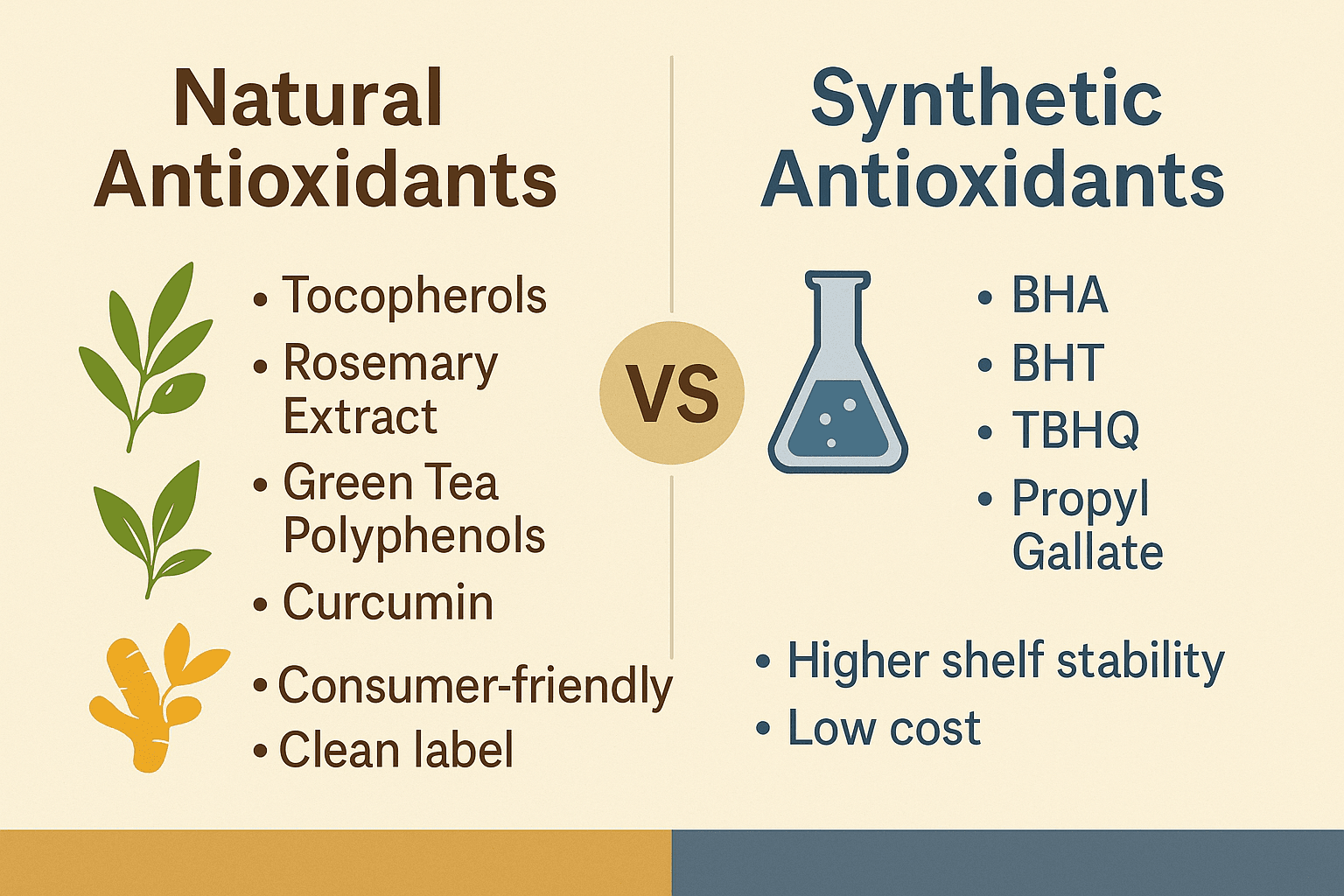
Many natural antioxidants come from plants. Tocopherols (vitamin E), carotenoids, & polyphenols are widely present in seeds, nuts, and herbs.
Or oils like sunflower and soybean naturally contain vitamin E, which provides both health and preservation benefits.
Herbal Extracts:
Herbal sources like Rosemary, thyme, and Oregon oil extracts are gaining popularity.
They are rich in polyphenols & diterpenes, offering dual benefits: enhanced stability, and clean-label marketing appeal.
Consumer Preference:
Consumers often prefer oils fortified with natural antioxidants.
The perception that natural means after drives purchasing behaviour, making natural antioxidants a market trend.
Synthetic Antioxidants in Oils:
Common Synthetic Types:
The food industry has long relied on synthetic antioxidants such as BHA (butylated hydroxyanisole), BHT (butylated hydroxytoluene), & TBHQ (tert-butylhydroquinone).
They are practical, inexpensive, and provide a strong oxidative stability.
Industrial Applications:
Synthetic antioxidants are widely used in large-scale oil processing due to their cost efficiency and ability to extend shelf life.
They remain stable under high temperatures, making them suitable for frying oils.
Safety Consideration:
Although generally recognised as safe, GRAS-regulated amounts, synthetic antioxidants face increasing scrutiny.
Regulatory authorities monitor their levels closely due to concerns about long-term health impacts.
Primary Versus Secondary Antioxidants:
| Antioxidants Type | Function | Examples | Mechanism of Action |
| Primary Antioxidants | Prevent initiation of oxidation | BHT, BHA, Tocopherols | Donate hydrogen to free radicals |
| Secondary Antioxidants | Slow the oxidation chain reaction | Citric acid, phosphate | Chelate metals and decompose peroxides |
Benefits and Role of Antioxidants in oils as a Natural Antioxidant:
| Benefit Area | Description | Common Natural Sources | Industry Relevance |
| Health Impact | Improve immune and cellular function | Tocopherols, Rosemary extract | Herbs, spices, Vitamin E |
| Oxidation Control | Delay rancidity in edible oils | Ascorbyl palmitate, plant extracts | Enhances shelf stability |
| Consumer Acceptance | Preferred over synthetic additives | Herbs, spices Vitamin E | Builds market trust |
Scientific Studies on the Role of Antioxidants in Oils:
Study 1: Tocopherols in Sunflower Oil:
Research published in the field of food science demonstrated that token Pharaohs extended the stability of sunflower oil by 40%.
Royals reach in Tokyo for all showed better oxidative resistance, proving their effectiveness and preserving flavour and nutrients.
Study 2: Rosemary extract in edible oils:
A 2022 study in food chemistry found that Rosemary extracts delayed rancidity in soybean oil by 35 days compared to unprotected oil.
This confirmed the value of natural antioxidants as both safe and functional.
Implications for Industry:
These studies confirm that both natural and synthetic antioxidants are effective, but natural ones offer an additional advantage: consumer trust and nutritional benefits.
Regulatory Limits & Safety:
| Region/Country | Allowed Antioxidants | Maximum Permitted Level | Regulatory Authority |
| USA | BHT, BHA, TBHQ | 200 ppm | FDA |
| EU | Tocopherols, BHA | 100-200 mg/kg | EFSS |
| India | TBHQ, natural extracts | 200 ppm | FSSAI |
| Codex Guidelines | Natural and Synthetic blends | Varies by oil type | Codex Alimentarius |
Future Trends In Antioxidant Technology:
Shift Towards Clean-Label Formulations:
The role of antioxidants in oils is evolving rapidly as consumers demand cleaner and more transparent ingredient lists.
Major manufacturers are moving away from synthetic additives like BHA and TBHQ and replacing them with plant-based alternatives such as green tea extract, rosemary, and, overall, red sunflower oil.
These ingredients not only stabilise oils but also support marketing claims like “100% natural” or “no artificial preservatives.”
Nano in Capsulation for Better Stability:
Researchers are exploring nano-capsulation techniques to improve antioxidant delivery in oils by encapsulating natural antioxidants in microcarriers. Scientists can enhance their solubility, thermal stability, and oxidative performance.
This approach allows natural antioxidants to rival synthetic versions in performance, making it a potential game-changer for the industry.
Synergistic Blends:
Rather than relying on a single antioxidant, future oil formulation will likely combine multiple natural components for synergistic benefits.
For example, pairing Tocopherols with ascorbyl palmitate or green tea extract has been shown to boost protection levels significantly.
These blends ensure longer shelf life while keeping labels consumer-friendly
Natural vs Synthetic Antioxidants: Understanding the role of antioxidants in oils:
| Parameter | Natural Antioxidants | Synthetic Antioxidants |
| Source | Extracted from plants | Chemically produced |
| Shelf-life performance | Moderate to high | High |
| Cost | Higher | Lower |
| Consumer perception | Highly accepted | Moderately accepted |
| Regulatory Scrutiny | Less restrictive | More Regulated |
Benefits and Importance of the role of Antioxidants in oils:
Oil Quality Preservation:
Antioxidants extend the shelf life of edible oils, ensuring consumers receive fresh, flavourful products.
This is vital for oils with high polyunsaturated fatty acid content, such as soybean and Canola.
Health Protection:
By preventing oxidation, antioxidants protect essential nutrients like vitamin E and omega-3 fatty acids.
These compounds are linked to reducing the risk of chronic diseases.
Role of Antioxidants in oils & Market Competitiveness:
The role of antioxidants in oil also influences consumer choice.
Brands that emphasise natural antioxidants attract more health-conscious buyers, thereby improving market performance.
Impact and role of Antioxidants in oils & Reuse Stability:
Oxidation During High-Temperature Cooking:
Deep frying accelerates oxidation due to constant exposure to heat, oxygen, and moisture. Without proper antioxidants, edible oil breaks down rapidly, producing harmful Aldehydes and free radicals.
Thus, the role of antioxidants in oils becomes even more crucial in high-temperature applications like commercial frying.
Performance of Natural vs Synthetic Under Heat:
Synthetic antioxidants like TBHQ show excellent thermal stability, which is why they are commonly used in frying oils.
However, natural extracts such as Rosemary and Rosemary have recently shown competitive performance in these studies, especially when combined with citric acid or lecithin.
The Role of Antioxidants in oils Extending Oil Reusability:
Restaurants and food processors often reuse frying oils multiple times.
Proper antioxidant Asian significantly slows degradation, maintains colour quality, and reduces the formation of forms.
As a result, oils last longer, saving operational costs while maintaining food safety.
Consumer Perception and Labelling Claims:
Preferences for Natural Ingredients:
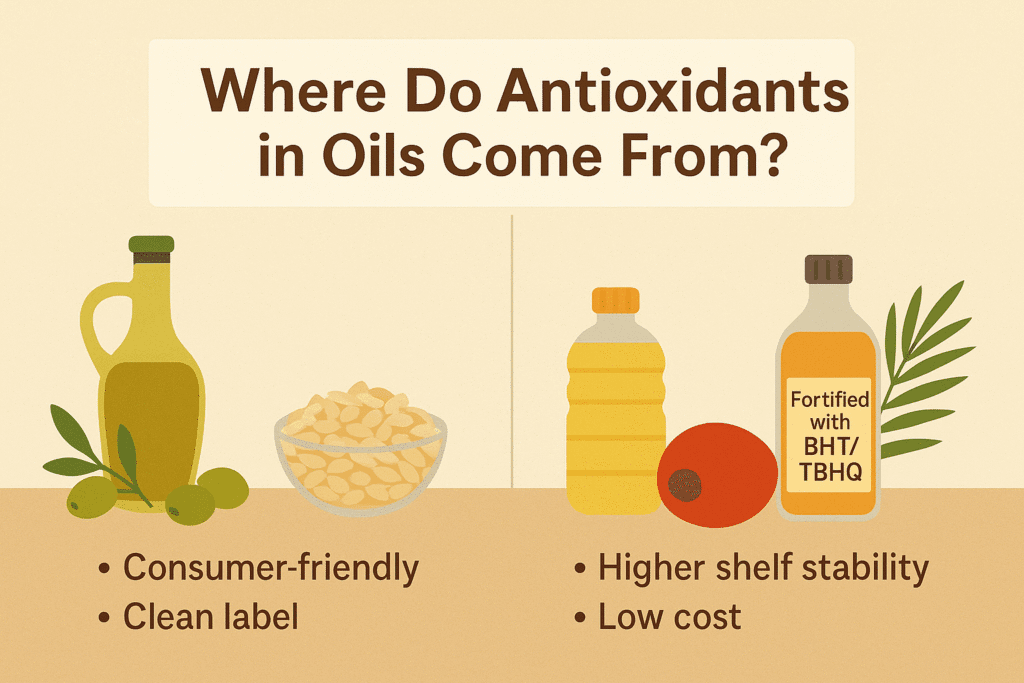
Numerous market surveys reveal that modern consumers strongly prefer oils labelled with natural, naturally preserved, or no synthetic additives.
Antioxidants in oil are not just functional; emotional buyers also associate natural ingredients with trust, priority, and health and safety.
Impact on Branding & Pricing:
Products featuring astral antioxidants often command higher prices due to premium positioning.
For example, cold-pressed oils stabilised with Tocopherols or Rosemary extract are sold at margins 15 to 30% higher than those of conventionally preserved oils.
This makes natural antioxidants not just a technical decision but also a marketing strategy.
Regulatory Labelling Requirements:
Food authorities mandate an explicit declaration of antioxidants on packaging. Synthetic antioxidants must be listed as BHA (E320), BHT (E321), or TBHQ (E319),
while natural options may appear as Tocopherols, Rosemary extract, or ascorbyl palmitate.
Clean labelling helps consumers differentiate between synthetic and natural protection systems.
Conclusion:
The role of antioxidant Oils is undeniable. They are essential for preserving oil quality, ensuring safety, and providing health benefits.
While synthetic antioxidants remain effective and affordable, common natural alternatives better align with consumer expectations and regulatory trends.
As research advances, the industry is moving toward a balance where both natural and synthetic antioxidants coexist.
Natural options offer clean-label advantages, while synthetics offer cost-effective protection.
For manufacturers, choosing the right antioxidant strategy ensures not only productive stability but also consumer trust.
Ultimately, antioxidants are not just preservatives; they are guardians of oil quality, consumer health, and an industry’s sustainability.