


Solvent Extraction vs Mechanical: What Are the Main Oil Extraction Methods?
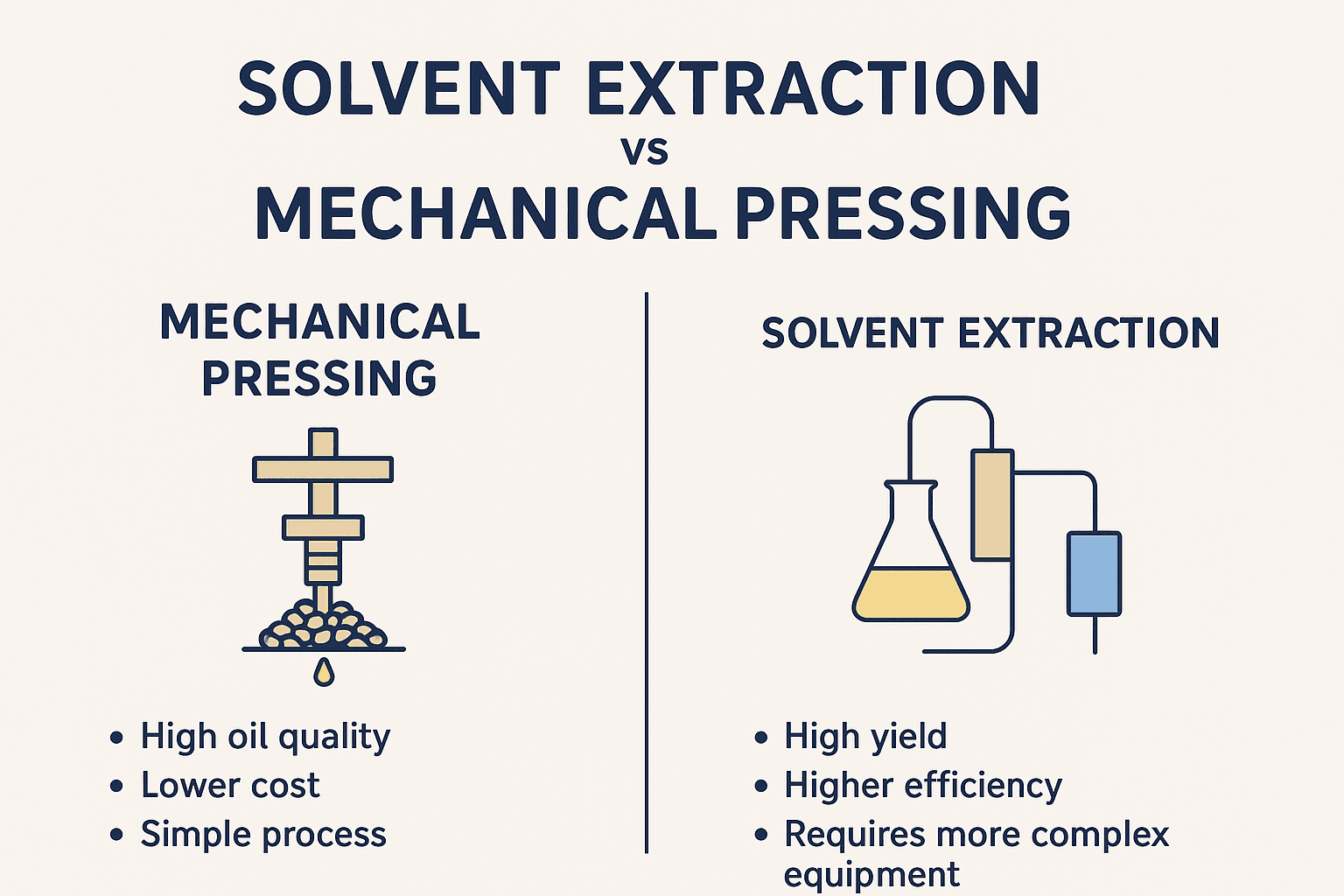
Mechanical Extraction Overview:
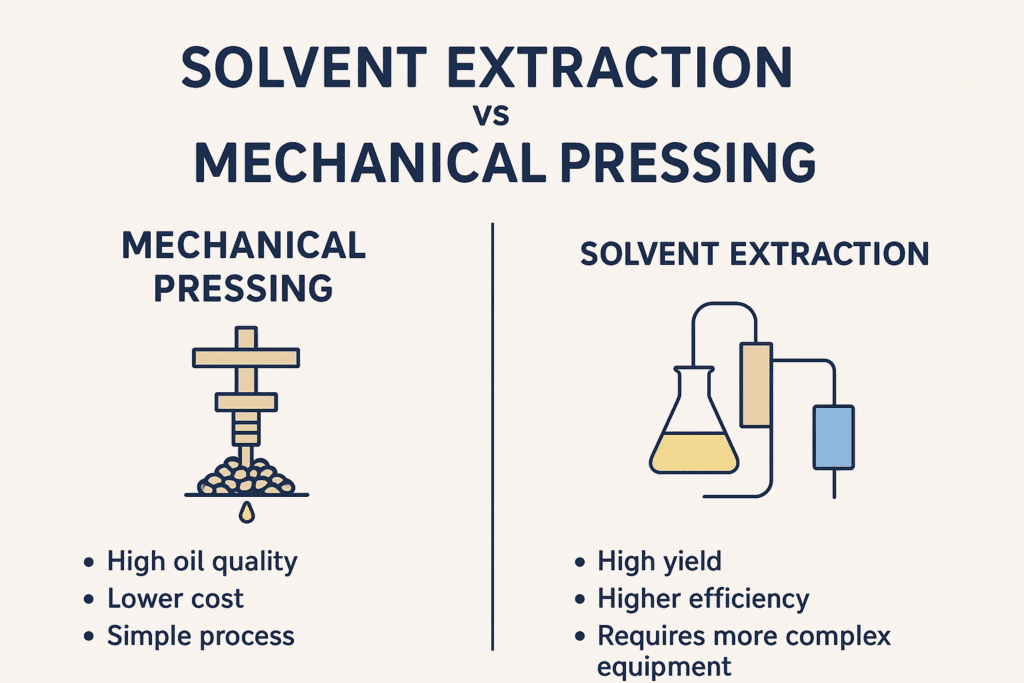
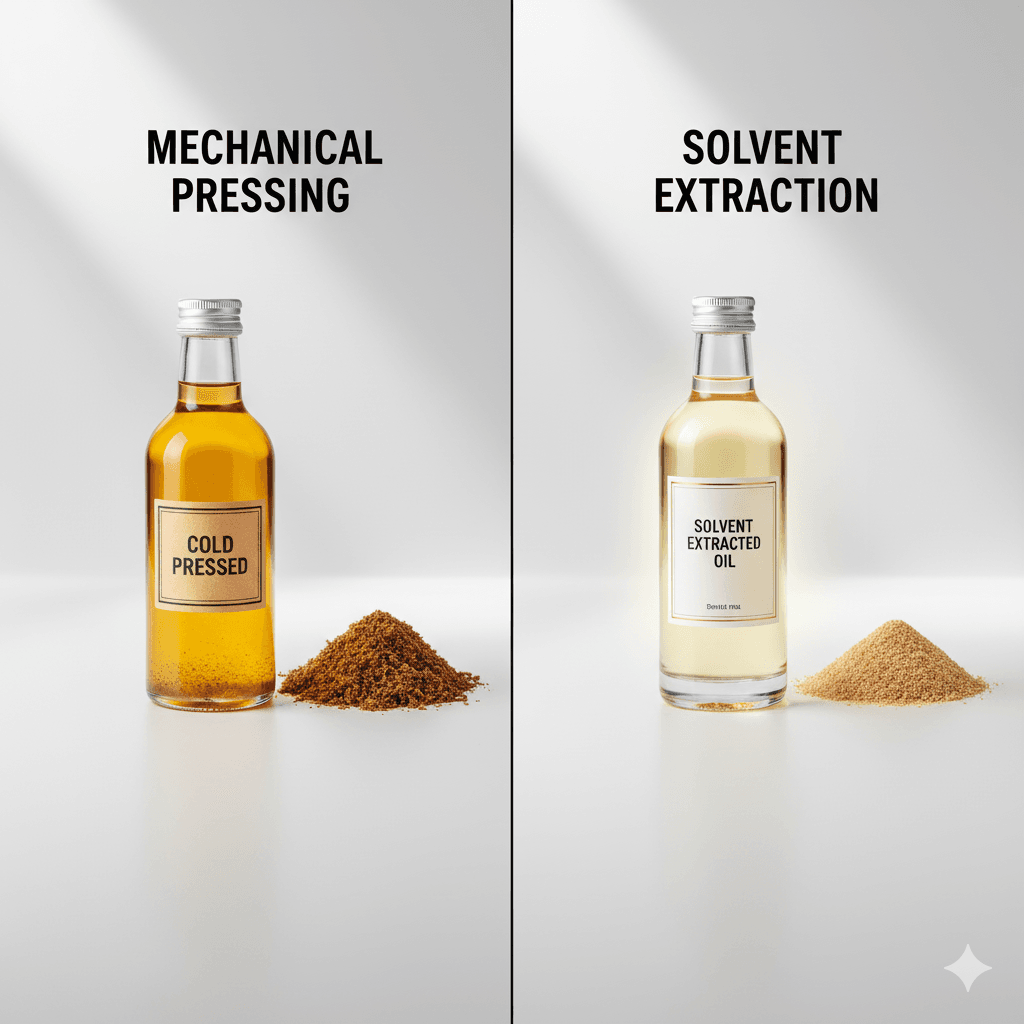
Oils can be obtained from seeds and nuts in two significant ways: solvent extraction vs mechanical Pressing.
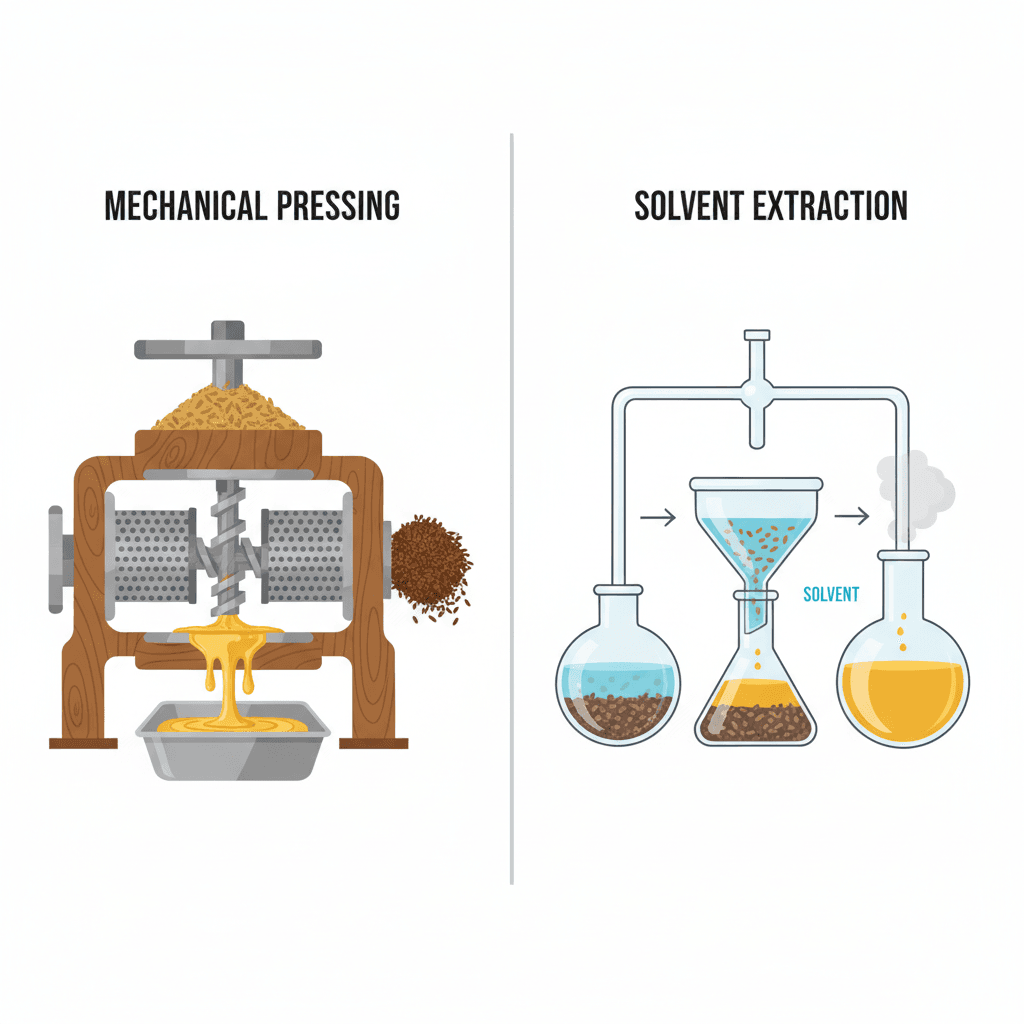
The mechanical process relies on physical force, while the solvent process uses chemical solvents, such as hexane, to dissolve oil.
Each method has unique applications and results.
Solvent-Based Extraction Overview:
It uses chemical solvents to achieve high oil recovery.
It is beneficial for seeds with low oil content, such as soybeans, where pressing alone would leave significant residual oil.
The process, however, requires refining to remove solvent traces.
Why Compare Both Methods?
The debate of solvent extraction versus mechanical pressing matters because oil quality, heel, and cost efficiency differ greatly.
For free farmers, industries, and even consumers who value priority, knowing these differences helps in making informed choices.
How Does Mechanical Pressing Work?
Cold Pressing vs Hot Pressing:
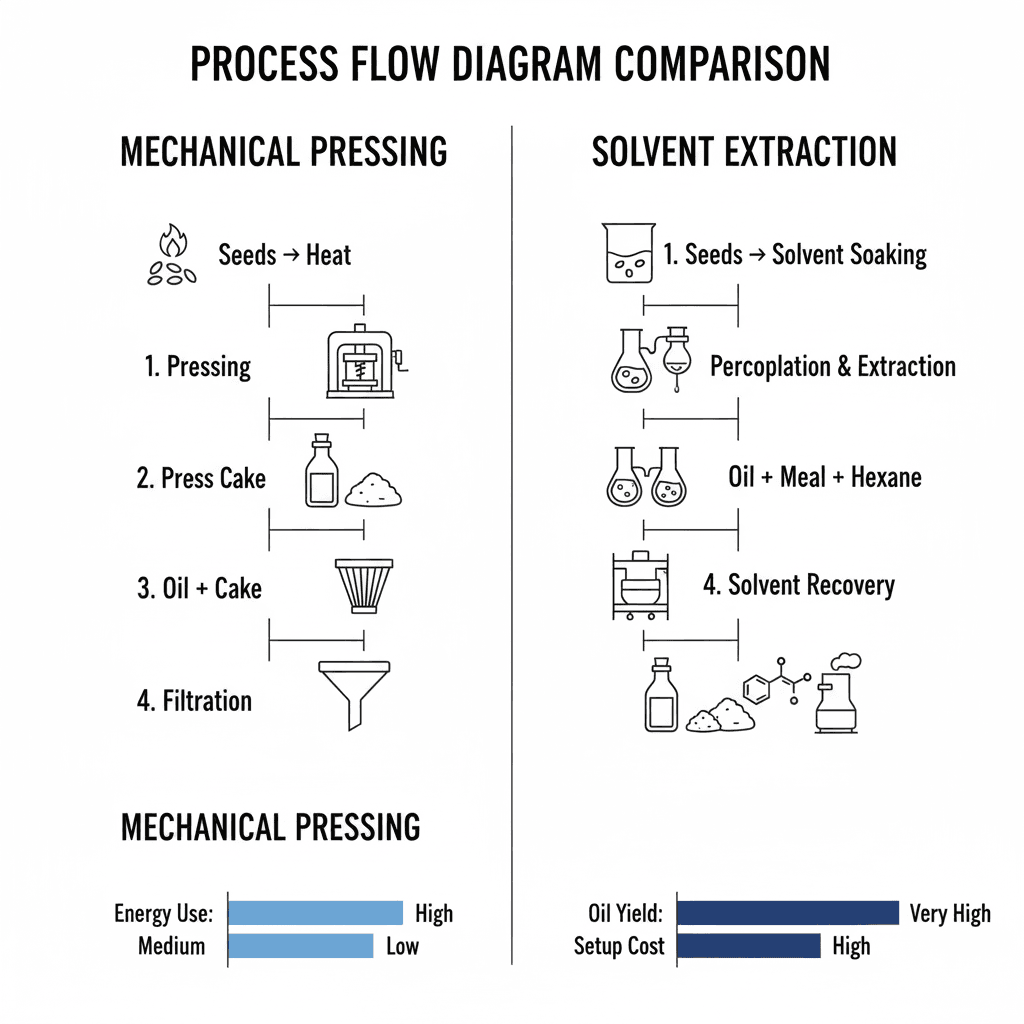
Mechanical Pressing uses machines called expellers. Cold pressing squeezes seeds at low temperatures to preserve nutrients and flavour, while hot pressing applies heat for a higher yield.
Cold Pressing is common in premium oils like olive oil.
Solvent Extraction vs Mechanical, Oil Yield from Mechanical Extraction:
Mechanical Pressing typically recovers 70-85% of the oil, depending on seed type, for a stop thought efficient for high oil seeds like sunflower or sesame,
It may leave 10-15% oil in the seed cake.
Suitable Oilseeds for Pressing:
Seeds like peanuts, soybeans, mustard, and sunflower respond well to pressing. However, soybeans and rice beans usually require solvent extraction because of their lower oil content.
This makes solvent extraction versus mechanical pressing a choice based on raw material.
How Does Solvent Extraction Work?
What Solvents Are Used?
Hexane is the most common solvent in the edible oil industry due to its high efficiency. Ethanol is also being tested as a safer alternative.
These solvents dissolve oil, which is then separated by heating and condensation.
Oil Recovery Process:
After seeds are fleet, they undergo solvent treatment. The oil dissolves in hexane, creating a mixture called Misscella.
The solvent is evaporated, leaving purified crude oil behind. This crude oil still requires refining.
Degumming and Refining Requirements:
Unlike processed oils, extracted oils need neutralisation and utilisation to meet the double standards.
While yield is high, processing steps are more costly and complex in the solvent extraction vs mechanical pressing debate.
Solvent Extraction vs Mechanical Pressing: Key Differences:
Yield and Efficiency:
Mechanical pressing leaves behind more oil in the cake, while solvent extraction ensures higher recovery, often above 95%.
This efficiency makes solvent extraction ideal for mass production.
Oil Quality & Purity:
Pressed oils are often considered natural with better taste, aroma, and nutrient retention.
Solvent-extracted oil, though refined, requires skilled labour and strict safety compliance.
Installation & Maintenance Cost: Solvent Extraction vs Mechanical
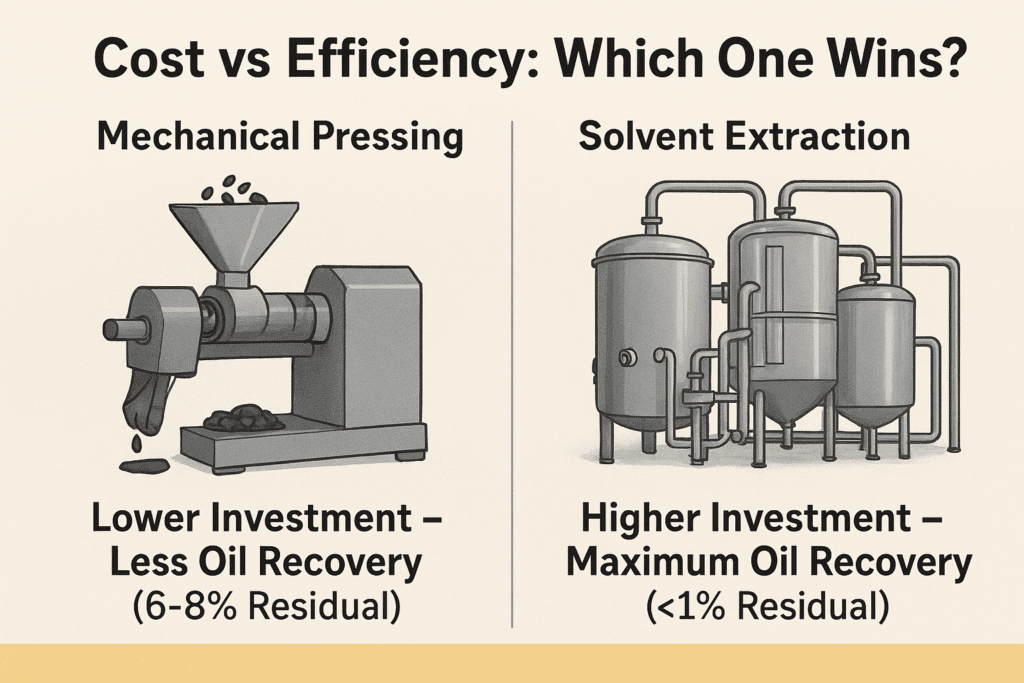
Expellers are cheaper to install & maintain and are suitable for small to medium industries. Solvent plants require high investment, skilled labour, & strict safety compliance.
Comparison Table: Solvent Extraction vs Mechanical Pressing
| Criteria | Mechanical Pressing | Solvent Extraction |
| Oil yield | 70-80% | 95-99% |
| Oil Quality | Higher nutrients, natural aroma | Requires refining, less natural flavour |
| Equipment Cost | Low to moderate | High installation & operational cost |
| Scale of Operation | Small & medium- Scale producers | Large-scale industrial plants |
| Environmental Impact | Low (minimal chemicals used) | Higher (use of solvents, emissions) |
| Seed Suitability | High-oil seeds (sesame, sunflower) | Low-oil seeds (soybean, rice bran) |
Solvent Extraction vs Mechanical: Which Method Produces Better Oil Quality?
Nutrients Preservation
Mechanical pressing preserves vitamins, antioxidants, and bioactive compounds. Cold-pressed oils especially retain natural colours and flavours.
Refining Needs
Solvent-extracted oils require more refining steps, which reduces their natural nutrient content.
Consumers often view pressed oils as healthier and safer.
Consumer Preference
In premium markets, mechanical pressing wins. However, when demand is about quantity and low cost, solvent extraction dominates.
Hence, deciding between extraction and mechanical Pressing often comes down to market focus.
Cost & Efficiency Comparison of Both Methods:
| Higher return per ton of seed processed, making it more profitable at a large scale. | Mechanical pressing (Expeller Method) | Solvent Extraction |
| Capital investment | Higher energy use but maximise oil recovery, leading to greater overall profitability | Long-term Economics |
| Operational cost | Higher return per ton of seed processed, making it more profitable a large scale | Lower energy consumption, but leaves residual oil in the cake, reducing potential profits |
| Higher infrastructure cost; requires specialised equipment & environmental clearance | Lower financial risk and easier to manage with minimal staff | Higher return per ton of seed processed, making it more profitable at large scale |
Environmental and Safety Considerations:
- Environmental Concerns
- Solvent plants generate emissions and associated risks from volatile solvents such as hexane. They require waste management systems and safety protocols.
- Safety In Operations
- Pressing is mechanically safer, with fewer hazards, while solvent plants require trained staff to prevent accidents such as fires or solvent leaks.
- Sustainability Factor
- Growing demand for sustainable oils gives mechanical pressing an edge,e as many consumers choose cold-pressed oils for environmental and health reasons.
Solvent Extraction vs Mechanical: Which Method Is Best for You?
- For Small Business
- Mechanical Pressing is practical, affordable, and easy to operate. It works best for minor procedures targeting local or premium markets.
- For Industrial Scale
- Large manufacturers prefer extraction because it maximizes yield, efficiency, and profit margins. It suits soybean, canola, & rice bran processing.
- Decision Point
- Ultimately, the debate between solvent extraction and mechanical Pressing depends on scale, oilseed type, and market requirements.
Final Conclusion: Mechanical or Solvent: Who Wins?
Balanced Perspective
Both methods have substantial advantages. Mechanical pressing offers natural quality and consumer appeal, while solvent extraction ensures efficiency and industrial profitability.
Market Outlook
In premium segments, cold-pressed oils are rising. In mass markets, solvent extraction remains dominant. Together, they form the backbone of the global edible oil industry.
Final verdict
Solving extraction versus mechanical Pressing is not about one method being superior; Instead, it’s about choosing the right approach for the right purpose.
Frequently asked questions about Solving extraction versus mechanical Pressing:
Does Solvent Extraction Leave Residues?
Ans: A common concern in the discussion of extraction vs mechanical Pressing is the possibility of solvent residues in edible oils.
In reality, strict refining and quality control steps ensure that solvents like magazine are obliterated.
Food safety authorities around the world have set maximum residue limits; edible oils are always neutralised to ensure safety.
Therefore, consumers do not need to worry about residues in regulated products.
Is Cold-Pressed Oil Always Healthier?
Ans: Cold-pressed oils are often marketed as healthier due to higher nutrient retention, natural flavours, and minimal processing.
They usually retain antioxidants, vitamin E, and natural pigments.
However, their shelf life is shorter, and they may not be suitable for heavy frying. Solvent-extracted and refined oils, though less “natural”, are more stable and cost less, making them affordable and widely used in cooking and food manufacturing.
Which Method is More Equal Friendly?
Mechanical Pressing has a clear sustainability advantage.
It avoids chemicals, all wins, generates fewer emissions, and requires less energy. However, solvent extraction uses advanced recovery systems to reduce waste and emissions.
Large plants increasingly adopt eco-friendly technology, but for smaller-scale sustainability, pressing is still the preferred method.
Global Market Trend in Solvent Extraction vs Mechanical Methods:
Growing demand for Cold-Pressed Oils
Health-conscious consumers are driving growth in cold-pressed and minimally processed premium oils such as olive,
Flaxseed and sesame oil are being marketed under the label of “natural” or “organic”, giving mechanical pressing a strong foothold in retail markets.
Industrial Dependence on Solvent Extraction
At the same time, former industries that produce soybean, canola, and rice bran oil rely almost entirely on solvent extraction.
The reason is simple: demand is massive, and the solving methods ensure maximum recovery.
Without this technology, the global vegetable oil supply would not meet current consumption levels.
Balancing Both Approaches:
Therefore, the future of solving extraction versus mechanical Pressing is not about one replacing the other. Instead, both methods will coexist: solvent extraction for the mass market and pressing for the premium segments.
This balance reflects consumer diversity, where affordability and health benefits both matter.
Future outlook: Where is Oil Extraction Heading?
Innovation in Solving Extraction:
Research is underway to replace hexane with greener solvents such as ethanol or supercritical CO2.
These innovations aim to reduce environmental impact while maintaining efficiency.
Such improvements would make solvent extraction safer and more eco-friendly in the long term.
Technological Improvements in Pressing:
Modern mechanical presses are becoming more efficient, reducing oil loss in the cake, and innovations in expeller design and temperature control are narrowing the yield gap between pressing and solvent extraction.
This train strengthens the appeal of mechanical Pressing in the niche and helps focus the market.
Final Word on the Future:
Ultimately, the debate between extraction and mechanical Pressing will continue to be about efficiency versus natural quality.
Yet new technologies are blurring the boundaries, making both methods better suited for tomorrow’s needs.


Leave a Comment