


History of Determination of Vitamin A in Oils:
The Determination of Vitamin A in Oil began gaining importance in the early 20th century, when scientists linked dietary deficiencies to blindness and immune problems.
Initially, analysts used simple colour reactions to estimate vitamin levels in edible fats. However, accuracy was inconsistent, and results varied from lab to lab.
As oil fortification became common, the industry needed a standardized way to verify vitamin content.
Consequently, AOCS introduced methods like the Carr-Price reaction to support both qualitative and quantitative analysis. Over time, advancements in spectrophotometry, reagent purity, and sample handling made the Determination of vitamin A in Oils more precise and repeatable.
Today, regulators and manufacturers rely on updated AOCS procedures to maintain consistency in testing and ensure reliable quality checks.
Importance of Vitamin A in Edible Oils:
Vitamin A supports vision, immunity, skin health, and cell growth. Because many populations struggle with deficiencies, edible oils are often an ideal medium for fortification.
Determining Vitamin A in Oils helps verify that consumers receive the intended nutritional value. Additionally, manufacturers must comply with government fortification standards and labelling laws.
Without proper testing, under-fortification can pose health risks, while over-fortification may lead to toxicity.
Furthermore, vitamin A degrades when exposed to light, oxygen, or high heat, so regular evaluation preserves quality throughout storage.
Ultimately, reliable determination of Vitamin A in Oils protects public health and ensures brand credibility in domestic and export markets.
Testing Errors in Determination of Vitamin A in Oils:
Errors in the determination of Vitamin A in Oils often arise from poor reagent handling, incorrect sample preparation, or instrument miscalibration.
For example, exposure to light can degrade vitamin A before testing begins. Additionally, analysts sometimes use contaminated glassware or expired antimony trichloride, which leads to inconsistent readings.
Another common issue is improper homogenization, resulting in an uneven distribution of vitamins within the sample. Furthermore, temperature fluctuation during the reaction can alter colour intensity and skew results.
Regular calibration, strict reagent storage, and standardized procedures significantly reduce these risks.
Ultimately, avoiding testing errors ensures accurate Determination of vitamin A in Oils and supports regulatory compliance.
Qualitative and Quantitative Methods For Determination Of Vitamin A in Oils:
The Determination of Vitamin A in Oils relies on both qualitative and quantitative AOCS methods.
The Carr-Price test, a classic qualitative test, utilizes ferric chloride to produce a temporary blue colour, confirming the presence of vitamin A. Although it does not measure exact levels, it quickly detects deficiency or degradation.
In contrast, quantitative methods measure absorbance at a specific wavelength using a spectrophotometer. Analysts prepare a standard curve and compare results against a known concentration.
Furthermore, sample purity, reaction timing, and reagent strength influence accuracy. With these techniques, the Determination of Vitamin A in Oils becomes both reliable and adaptable to different oil types and fortification levels.
IU Definition in Relation to Determination of Vitamin A in Oils:
An international unit (IU) measures biological activity rather than weight. In the Determination of Vitamin A in Oils, IU helps compare different vitamin A sources with varying potency.
Manufacturers and nutritionists prefer IU because it reflects the amount of usable vitamin the body actually receives. For instance, retinyl acetate and retinyl palmitate have different molecular structures, yet IU treats them as one standard.
Furthermore, IU values simplify the definition of fortification targets and labelling requirements. When analysts determine Vitamin A in Oils, they convert laboratory results to IU to meet regulatory specifications.
This approach improves consistency across batches, brands, and regions.
IU Conversion Table for Determination of Vitamin A in Oils:
- A conversion table helps translate laboratory values into something practical. During the Determination of Vitamin A in Oils, analysts often express results in micrograms (μg), milligrams (mg), or IU. Since different forms of vitamin A have different potencies, conversion becomes essential. For example:
Form of Vitamin A 1 IU Equals:
- Retinol 0.3 ug
- Retinyl Acetate 0.344ug
- Retinyl palmitate 0.55 ug
- Using such data, the Determination of vitamin A in Oils becomes more standardized and comparable across regions. Additionally, this supports proper labelling, dosage control, and regulatory reporting for fortified oils.
Definition:
The qualitative detection of vitamin A in edible oils and fats is based on its reaction with antimony trichloride (SbCl₃) in Chloroform, forming a blue complex.
This colour confirms the presence of vitamin A.
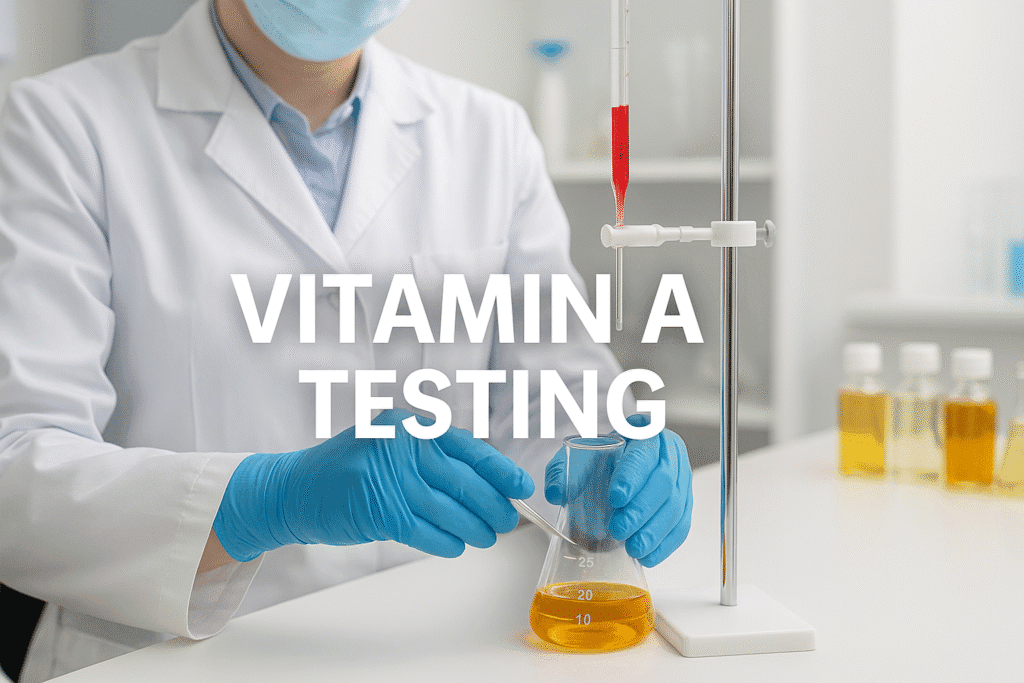
Determination of Vitamin A in Edible Oils and Fats (Qualitative Method).
Principle:
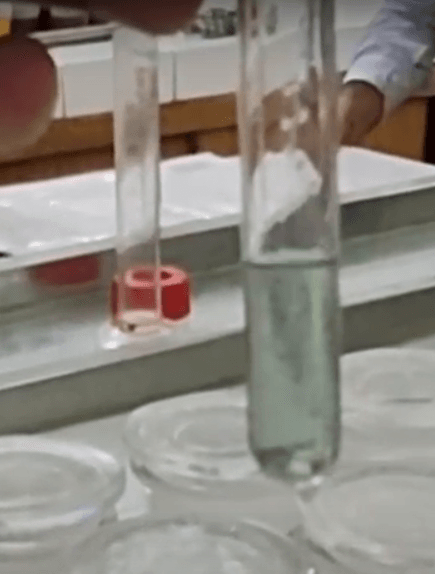
When Vitamin A (retinol)
reacts with antimony trichloride in chloroform solution to form a blue complex.
This reaction, known as the Carr-Price reaction,
is specific to vitamin A and provides a visual confirmation of its presence.
The intensity of the blue colour varies with the vitamin A content,
although in the qualitative test, it’s not measured quantitatively.
Apparatus:
- Test tubes with stoppers
- Pipettes
- Beakers
- Glass rods
- Water bath
- Ice bath (if needed)
- Protective gloves and a lab coat
- Fume hood (recommended)
Reagents:
1. Antimony Trichloride Solution (SbCl₃)
o Prepare a 1% solution in Chloroform (see below)
2. Chloroform (CHCl₃)
o Must be pure and freshly distilled
3. Edible Oil Sample
Preparation of Reagents:
1. Antimony Trichloride Solution (1% in Chloroform):
- First of all, dissolve 1 g of antimony trichloride in 100 mL of Chloroform.
- Then, mix thoroughly and store in a dark, airtight bottle
- After that, prepare fresh before use or store under refrigeration for short periods (max 24–48 hours).
Caution: This reagent is highly reactive and should be handled under a fume hood.
Procedure:
1. Sample Preparation
o First of all, take 1 mL of the oil sample in a clean, dry test tube.
2. Reagent Addition
o Then add 1–2 mL of freshly prepared SbCl₃ solution.
3. Observation
o Then, mix gently by swirling.
o Observe the development of a blue colour within 30–60 seconds.
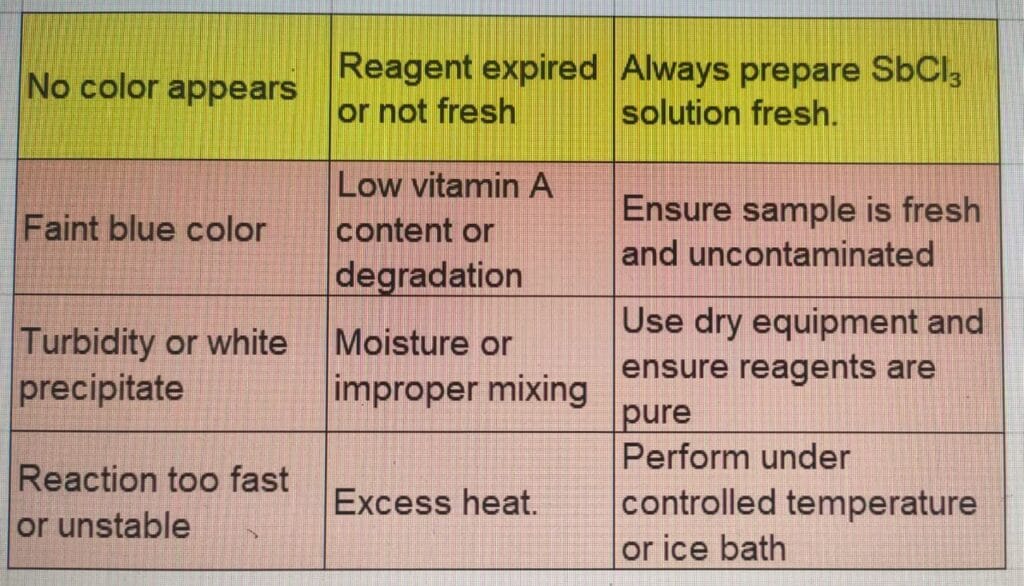
Interpretation:
Safety and Precautions:
- Conduct the test in a well-ventilated area or fume hood
- SbCl₃ is corrosive. Use gloves and goggles
- Dispose of reagents per local hazardous waste guidelines
Note: Regulation & standards
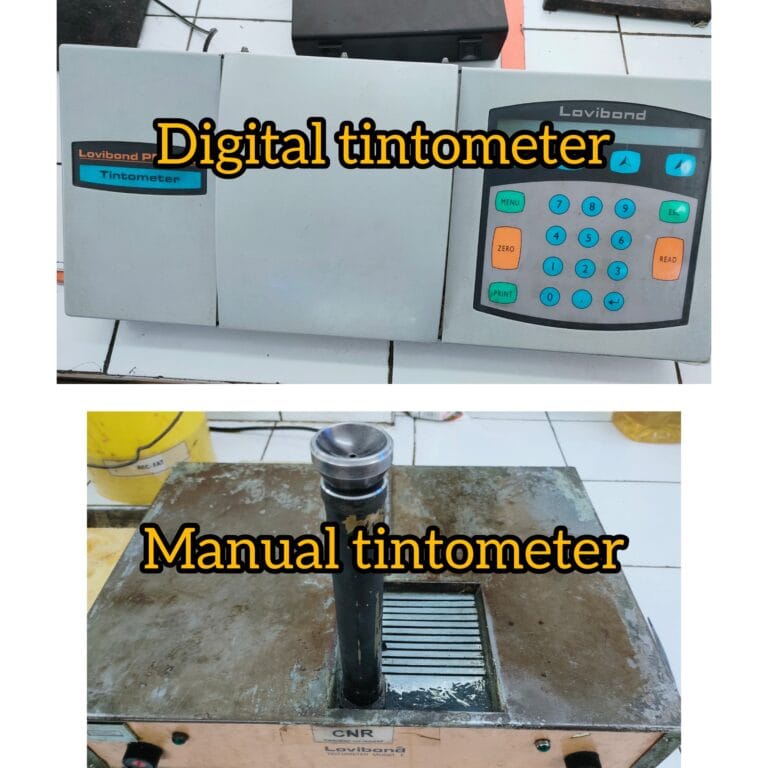
Vitamin A 33000IU to 45000IU.


Comments are closed.