


Introduction of Vitamin A fortification in oils:
Growing Need For Fortification:
Vitamin A fortification in oils & Vitamin A deficiency continue to affect millions of people, especially in regions where diets lack fruits, vegetables, or animal-based foods.
Because of this, vitamin A fortification in Oils has become a practical and accessible intervention.
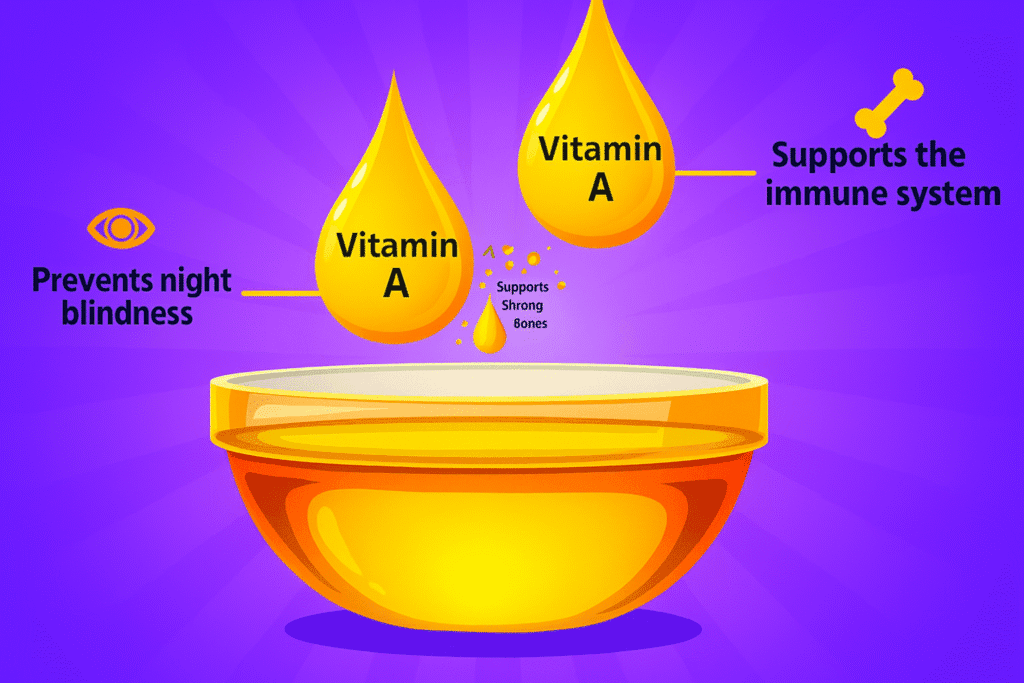
Why Oil is Ideal?
Cooking oils are used daily in most homes, so they help deliver essential nutrients without changing eating habits.
Since vitamin A dissolves easily in fat, it is considered stable when blended into edible oil under proper processing and storage conditions.
Public Health Burden of Deficiency:
In many developing regions, vitamin A Deficiency remains one of the leading causes of preventable childhood blindness; it also weakens the immune system and increases the likelihood of severe infections.
Governments recognise that relying solely on supplements is not enough, so integrating fortification into everyday products like edible oils effectively closes the gap.
What Is Vitamin A?
Forms and Biological Role:
Vitamin A includes active retinoid and provitamin A carotenoids. Retinoids come from animal sources, while carotenoids convert to vitamin A inside the body.
Impact on Health:
This new trend supports vision immunity,y cell growth, and skin maintenance. Without enough Vitamin A, people experience night blindness, weak immunity, and poor physical development.
Connection to Fortified Oils:
Because it is fat-soluble, vitamin A fortification in oils ensures easy absorption and stable delivery, especially where diets lack new natural sources.
What is fortification? Concept of vitamin A fortification in oils
Definition and Purpose:
Fortification means adding vitamins or minerals to food to fix a known deficiency in a population. It helps people meet nutritional needs without supplements.
Why use edible oils:
Edible oils are ideal because they are consumed by all income groups and mix evenly with vitamin A. Manufacturers can add and control exact doses during processing.
Relevance to public health:
Through vitamin A fortification in oils, the government can reduce deficiency on a large scale without forcing lifestyle changes or relying only on supplementation Programmes.
History of vitamin A fortification in oils:
Early public health efforts:
Food fortification began in the early 20th century when deficiencies in Iodine, vitamin D, & Iron caused widespread health issues.
Governments started adding nutrients to common foods to address these problems.
Rise of vitamin A programmes:
Research revealed the effects of vitamin A deficiency on children and pregnant women. Therefore, many countries subsequently explored ways to deliver it through food rather than solely through supplements.
Adoption of Oil fortification:
Over time, vitamin A fortification in oils became popular because oils are used daily in both urban and rural households.
Countries in Asia, Africa, and Latin America began implementing national policies and regulations around this method.
Chemical Structure of Vitamin A:
Molecules are composed:
Vitamin A is used and fortified as retinol or retinal esters. Its chemical formula is C²⁰H³⁰O, and it dissolves well in fats.
Functional Properties:
The structure includes a ring and a long polyene chain, which help the body convert it into forms needed for vision and immunity.
Stability in Oils:
Because of its fat-soluble nature, Vitamin A fortification in oils allows the nutrients to remain stable when stored properly and protected from light and oxidation.
Research-Based Evidence:
Study 1: Children’s Health Impact:
A study in Southeast Asia tested fortified cooking oil in young children and recorded improvements in serum retinol levels.
Moreover, Families use the oil as they usually would, making the results practical and relevant.
Study 2: Fortified palm oil trials:
Another programme focusing on palm oil showed that adding vitamin A improved dietary intake across different income groups.
It also demonstrated that oils could deliver a predictable amount of the nutrients when properly regulated.
Study 3: Community-based outcomes:
A common community trial in East Africa compared households using fortified oil with those relying only on dietary intake.
After six months, children and mothers in the 45 group showed a significantly higher rate in all levels and fewer deficiency symptoms.
The study also found that awareness campaigns boosted acceptance and encouraged consistent use.
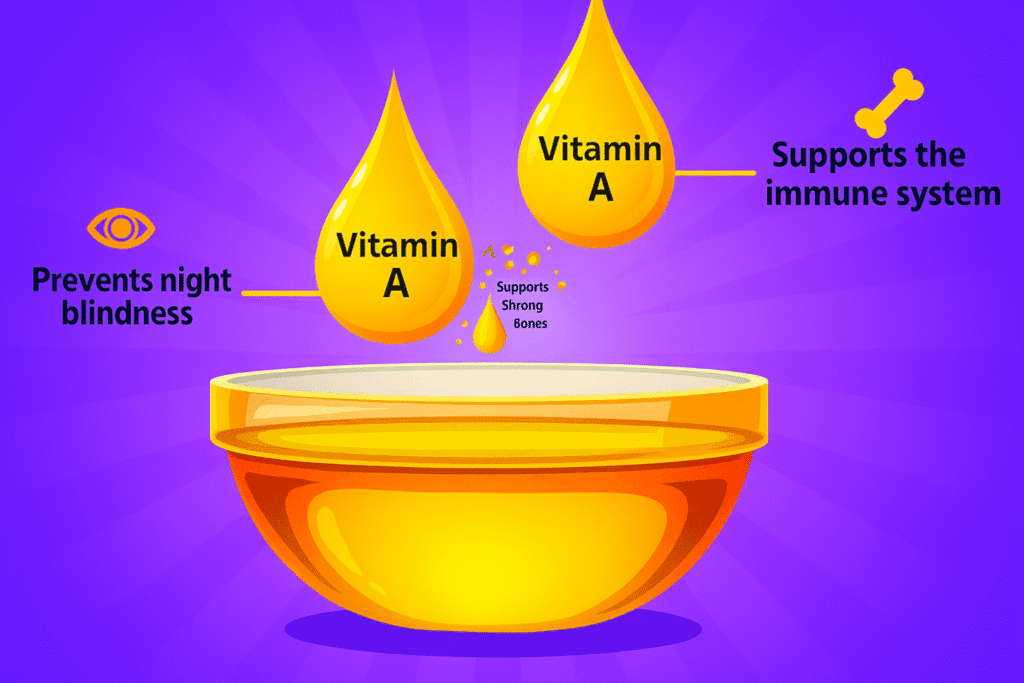
These results encouraged policymakers to continue investing in vitamin A fortification in oils rather than temporary supplementation drives.
Public Health Implications:
Together, these studies confirm that vitamin A fortification in oils can reduce deficiency rates and support national nutrition goals more efficiently than capsule-only programs.
RDA Recommendations for Vitamin A:
Daily Needs By Age:
Vitamin A requirements change with age cause growth, metabolism, and body maintenance vary across life stages.
Gender and health factors:
Men and women may need different amounts based on body size, pregnancy, or overall health status.
Recommended Intake Table:
Age Group (Years) Recommended Daily Allowance (mcg RAE)
3-20 440-600
21-35 600-700
36-50 700-800
Above 50 700-900
These values help manufacturers determine the appropriate dosage of vitamin A for oil fortification, ensuring consumers can meet their daily needs safely.
Side Effects of Low and High Vitamin A Intake:
- Risk of Deficiency
- A lack of vitamin A can lead to night blindness, dry eyes, reduced immunity, and poor growth in children. Populations without access to diverse diets are particularly at risk.
- Consequences of Access
- Too much vitamin A may cause nausea, dizziness, headaches, and, in severe cases, liver stress. Fortification levels must stay within regulated safety margins.
- Balance to Fortification
- When properly monitored, vitamin A fortification in oils helps people avoid both deficiency and toxicity by supplying controlled, safe levels in everyday foods.
International Standards for Vitamin A fortification in oils:
Global Policy Frameworks
Organisations such as WHO & UNICEF support food fortification as a strategy to tackle hidden hunger, especially among vulnerable populations.
National adoption
Countries in Africa, South Asia, and Latin America have introduced mandatory or voluntary programmes for edible oil fortification.
Standard Table:
| Region/Country | Fortification Status | Common Fortification Level |
| India | Mandatory in many states | 20-25 IU/g |
| Bangladesh | National-Level programme | 15-22 IU/g |
| Nigeria | Mandatory in edible oils | 20-30 IU/g |
| Latin America | Mixed options | 15-25 IU/g |
| South East Asia | Scaling through policy | 15-30 IU/g |
Standard Table:
These guidelines help ensure that vitamin A fortification in oils remains consistent, safe, and effective.
Benefits and Importance of vitamin A fortification in oils:
Improved Public Health:
Countries that adopt Vitamin A Fortification in oils see reductions in night blindness, infection rates, and childhood vulnerability. Since oil is used daily, even small amounts of added vitamins are creating measurable benefits.
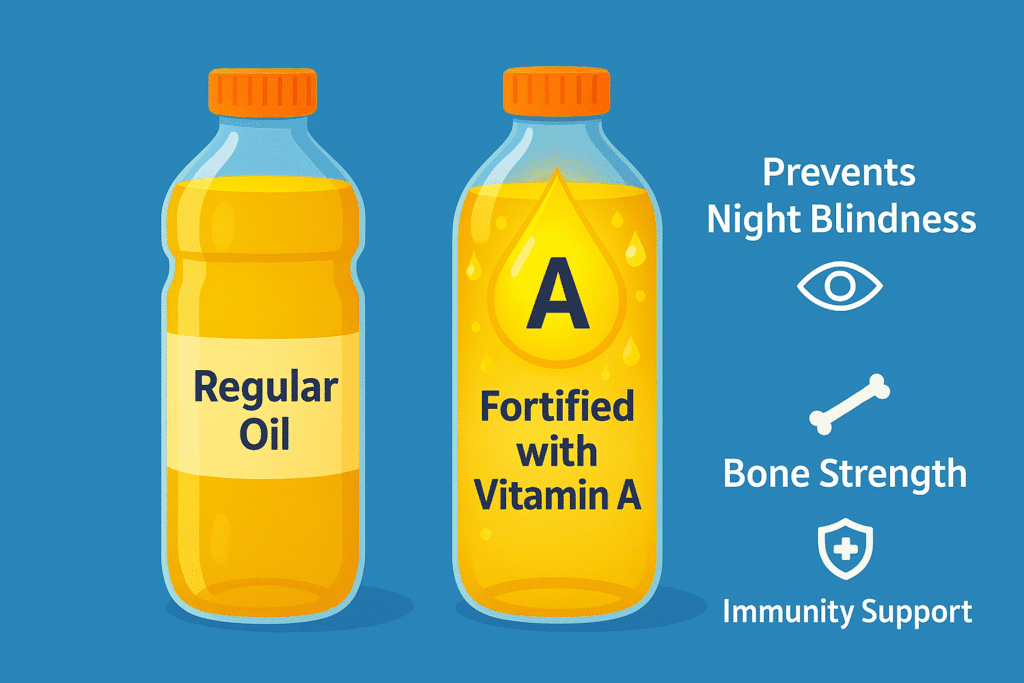
Accessibility and Affordability
People do not need to change their diets or purchase habits; a complete list of fortified oils fits naturally into cooking routines, allowing large populations to receive nutrition without extra effort or cost.
Support for Long-Term Nutrition Goals
Fortification programmes indeed help government & health agencies meet national targets related to child health, Maternal care, and disease prevention.
When combined with monitoring, these programmes offer long-lasting results.
Long sustainability of vitamin A fortification in oils:
Unlike short-term nutrition campaigns, Vitamin A fortification in oils becomes sustainable once it is integrated into existing production systems.
The costs remain low for manufacturers while consumers receive health benefits without extra effort.
When monitored properly, it becomes a generational solution that continues to protect children and adults alike.
Final Conclusion:
Practical Solution
Vitamin A fortification in oils is an effective strategy that reaches all income levels, as Vitamin A dissolves easily in fats and the process delivers consistent nutrient levels in every batch.
Population Impact
Deficiency drops when fortified oils reach households, for business, and public programmes. Children, pregnant women, and older adults benefit most from this approach.
Future Outlook:
With proper regulation, quality control, and ongoing awareness, Vitamin A fortification in oils can remain one of the most reliable tools for preventing deficiency-related illness.
Continued collaboration between governments, industry, and health organisations will ensure safe implementation and broader coverage.
Strengthening Policy and Awareness:
To maximise impact, governments can combine fortification with public education. When consumers understand why fortified oil matters, they are more likely to choose it at the market.
Regular monitoring, labelling rules, and industry incentives also help maintain transparency and trust.
As fortification expands globally, the emphasis on research, regulation, and community involvement will continue shaping its success.

Comments are closed.