Introduction of Desi Ghee Health Guide:
Desi Ghee Health Guide genuinely healthier than other cooking fats, or is its traditional status masking potential health risks?
Desi ghee has been a cornerstone of South Asian cuisine for centuries, yet questions linger about its health impact.
This Desi Ghee Health Guide aims to provide a science-based, practical, and balanced understanding of ghee, covering its history, fatty acid composition, nutritional value, cholesterol content, health effects, and recommended daily intake.
In addition, this guide compares desi ghee with common vegetable oils, helping readers make informed dietary choices without ignoring cultural preferences.
History of Desi Ghee: Desi Ghee Health Guide,
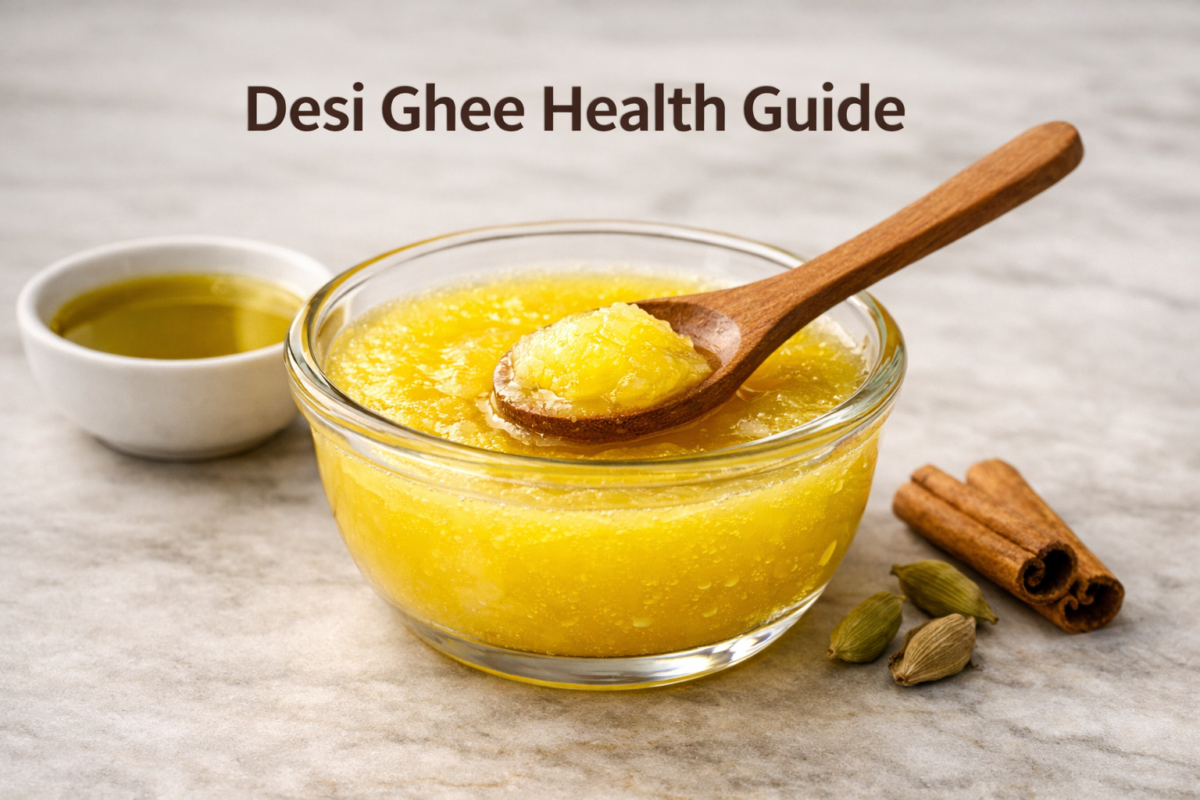
Desi ghee originated in the Indian subcontinent as a method to preserve milk fat in hot climates. By removing water and milk solids from butter, early households created a fat with a long shelf life and distinctive aroma.
One can imagine a family in rural India, gathering around the kitchen during the peak summer, gently simmering butter on a clay stove.
As the mother skillfully clarified the butter, she would narrate stories of how her grandmother preserved the rich butterfat for crucial use during festivals and family celebrations when food played a central role.
Traditionally, people valued ghee not only as a cooking medium but also for religious rituals and Ayurvedic practices.
Over time, production evolved from household preparation to industrial-scale processing, while the basic principle of clarifying butterfat remains unchanged.
What is Desi Ghee?
Desi ghee is clarified butter made by heating butter until the moisture evaporates and the milk solids separate.
The remaining golden fat is strained, producing a product that is nearly 100% fat. Because proteins and lactose are removed, ghee is more stable at High temperatures and has a higher smoke point compared with butter.
Fatty Acid Profile of Desi Ghee:
Understanding the fatty acid profile is essential in any Desi Ghee Health Guide, as health effects depend mainly on fat composition.
Knowing this, readers can make informed choices, such as preferring ghee over butter for high-heat cooking because its more stable saturated fats, or balancing their diet by combining ghee with oils rich in unsaturated fats for heart health.
This knowledge helps readers navigate cooking methods and dietary adjustments that align with both their culinary preferences and health goals.
Typical Fatty Acid Composition (per 100 g):
| Total fat | ~97-99 g |
| Saturated fatty acids (SFA) | 54-66 g |
| Monounsaturated fatty acids (MUFA) | 20-30 g |
| Polyunsaturated fatty acids (PUFA) | 1-4 g |
| Natural trans fats (ruminants) | <4 g |
| Cholesterol | ~250-285 mg |
Key saturated fats: palmitic, myristic, and stearic acids.
Key unsaturated fats: oleic acid (MUFA).
Nutritional Value of Desi Ghee:
Desi ghee is calorie-dense, providing approximately 112 kcal per tablespoon (13 g). It contains:
- Fat soluble vitamins: A, D, E, and K (levels vary by animal feed and processing)
- No carbohydrates
- No protein
- Trace antioxidants from heating and milk fat
While ghee contributes vitamins, its nutritional benefits mainly come from energy and flavor rather than micronutrient density.
Cholesterol Content in Desi Ghee:
Desi ghee contains dietary cholesterol because it is an animal-derived fat. One tablespoon typically provides around 30-35 mg of cholesterol.
Current nutrition science indicates that dietary cholesterol affects blood cholesterol less than saturated fat for most individuals; however, people with hypercholesterolemia or cardiovascular disease should still monitor intake carefully.
If you have high LDL cholesterol, it’s advisable to limit your intake of desi ghee to minimize potential health risks.
Saturated vs Unsaturated Fats in Ghee:
A central concern in this Desi Ghee Health Guide is the balance between saturated and unsaturated fats:
- Saturated Fats: High intake is associated with increased LDL cholesterol and cardiovascular risk.
- Monounsaturated fats: Oleic acid is considered heart-friendly when it replaces saturated fats.
- Polyunsaturated fats: Present in tiny amounts in ghee, unlike most vegetable oils.
The high saturated fats content means ghee should be used in moderation, especially for daily cooking.
Health Effects of Desi Ghee:
Research on ghee presents mixed finding:
Potential Benefits
- Stable at high cooking temperatures
- Enhances flavor and satiety
- Contains small amounts of conjugated linoleic acid (CLA) from ruminant fat
Potential Risks
- High saturated fat content
- May raise LDL cholesterol if consumed in excess
- Excess calorie can contribute to weight gain
Overall, moderate use within a balanced diet is key.
Daily Consumption: How Much Is Safe?
Health organizations recommend limiting saturated fat to less than 10% of daily calories, and closer to 6% for individuals at higher cardiovascular risk.
Practical Guidance
Avoid using ghee as the sole cooking fat every day.
1 tablespoon ghee ≈ 7-8 g saturated fat.
Prefer 1 tablespoon per serving for flavor.
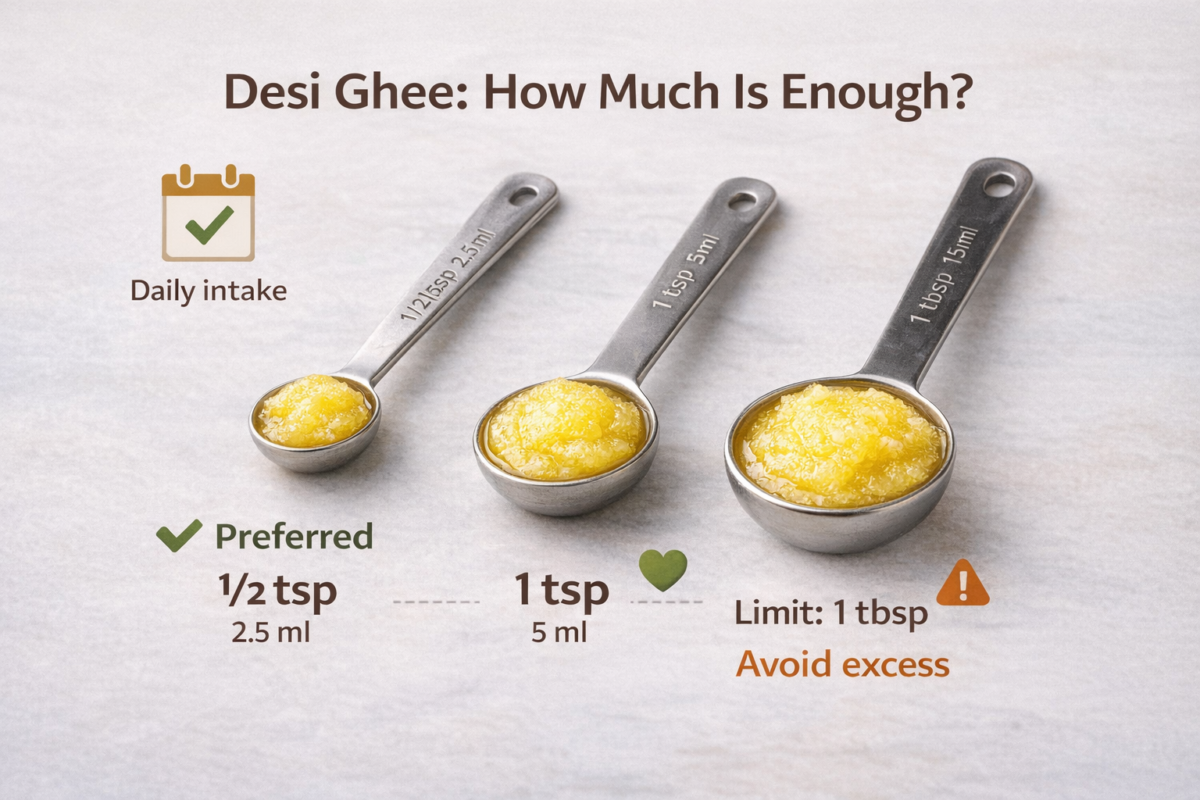
Balancing ghee with unsaturated vegetable oils helps keep saturated fat intake within recommended limits.
Desi Ghee vs Vegetable Oils:
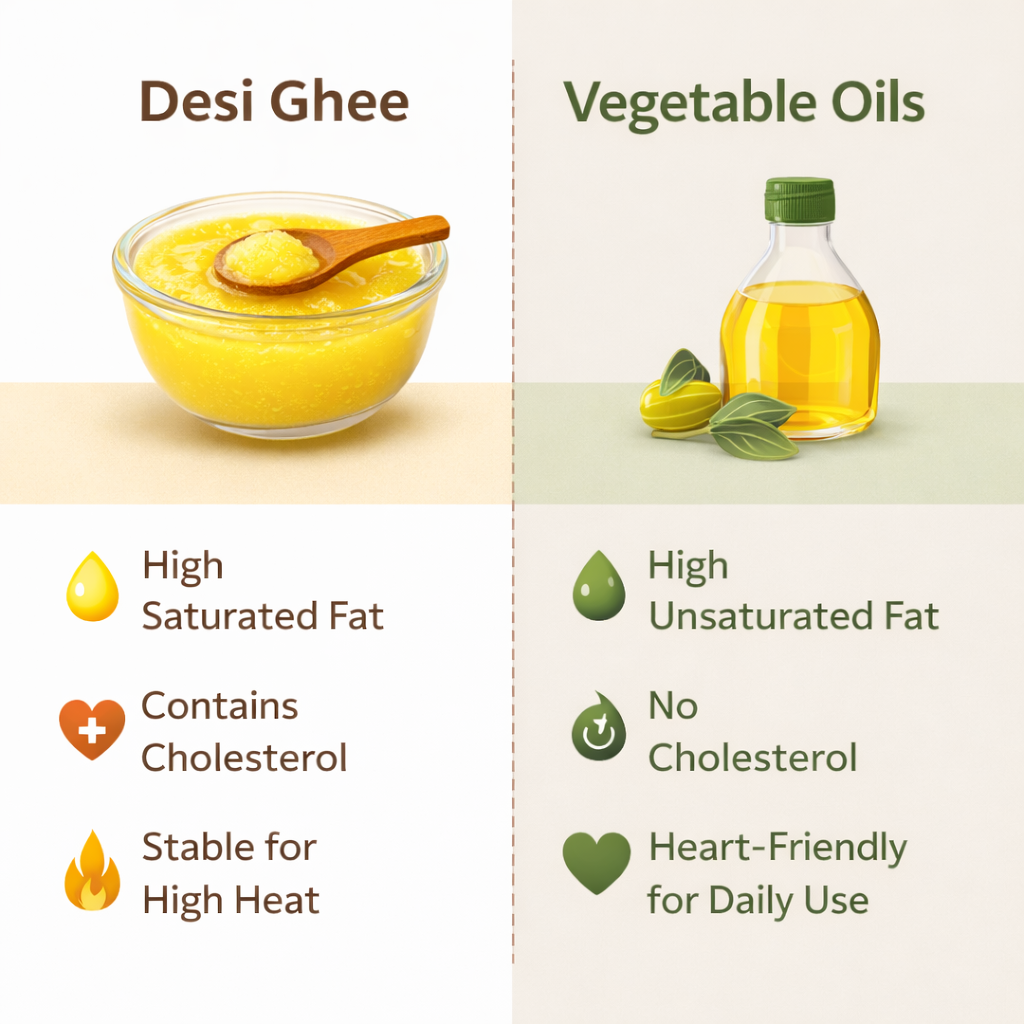
| Saturated fat | High | Low |
| Unsaturated fat | Moderate MUFA | High MUFA/PUFA |
| Cholesterol | Present | None |
| Smoke Point | High | Varies by oil |
| Cardiovascular impact | Neutral to negative in excess | Generally favorable |
Vegetable oils such as sunflower, soybean, canola, and olive oil are typically recommended for daily cooking due to their higher unsaturated fat content.
Recommendations for Practical Use:
- Use desi ghee sparingly for flavor rather than bulk cooking
- Combine ghee with vegetable oils in recipes
- Individuals with heart disease or high cholesterol should limit their intake
- Focus on the overall dietary pattern rather than a single fat source
Final Conclusion: Desi Ghee Health Guide,
This Desi Ghee Health Guide highlights that desi ghee is neither a miracle food nor a dietary villain.
It is a traditional, fat-rich ingredient high in saturated fatty acids, offering flavor, stability, and cultural value. However, modern nutritional evidence supports moderation and balance.
When used occasionally and combined with unsaturated vegetable oils, desi ghee can fit into a healthy diet. Excessive daily consumption, on the other hand, may increase cardiovascular risk.
Informed choices, portion control, and dietary diversity remain the foundation of good health.