


Oils for Toddler Health: Why Dietary Facts Matter in Infancy:
Oils for toddler health play a crucial role in providing concentrated energy that growing infants and toddlers need. Moreover, fats supply essential fatty acids (EFAs) such as linoleic acid (LA) & alpha linoleic acid (ALA).
Next, the body uses these building blocks to form cell membranes and support rapid brain growth.
In addition, some fats are converted into longer-chain Omega-3s, such as DHA, although conversion in young children remains limited.
Therefore, caregivers must choose oils that supply EFAs while minimising harmful oxidation products. Importantly, balanced fat intake supports weight gain, thermoregulation, and micronutrient absorption, particularly fat-soluble vitamins A, D, E, and K.
Choosing the right oils for toddler health:
Firstly, parents commonly use olive, canola, soybean, sunflower, and coconut oils at home. Secondly, each oil offers a distinct fatty acid profile and vitamin content.
For example, olive oil supplies monounsaturated fats and polyphenols, whereas soybean and sunflower oils supply more polyunsaturated fatty acids.
Additionally, refined oils reduce off-flavors and contaminants, while cold-pressed oils retain more antioxidants.
Consequently, choose a refined or high-quality oil for cooking and consider a finishing cold-pressed oil for Flavors and extra nutrients.
Label Terms for oils for toddler health:
- RBD (refined, bleached, deodorized): used for cooking at higher temperatures.
- Cold-pressed: used for finishing or low-heat dishes.
- High oleic: often more stable for cooking and supports oils for toddler health.
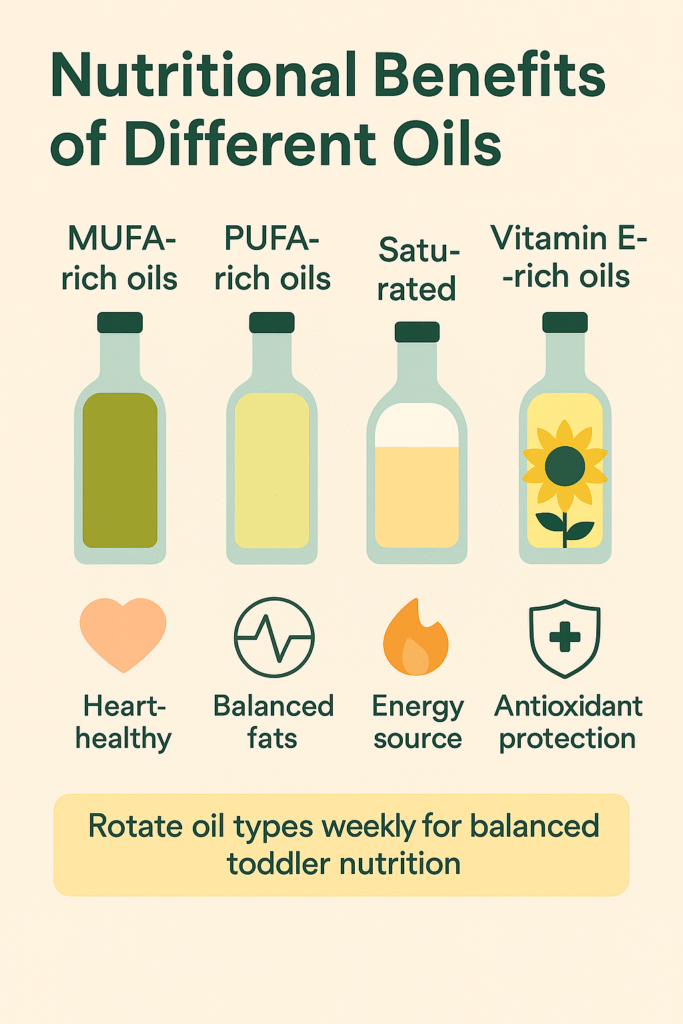
Nutritional benefits of oils for toddler health.
| Type of oil | Key Nutritional Benefits | Notes/Recommendations |
| MUFA-rich oils (Olive, high-oleic sunflower) | Improve oxidative stability and promote heart-healthy fat intake. | Firstly, use for cooking or salad dressings to enhance overall lipid balance. |
| PUFA-rich oils (soybean, Regular sunflower) | Provide essential fatty acids linoleic acid (LA) and alpha linoleic acid (ELA) | Moreover, maintain a good Omega-6 to Omega-3 ratio to reduce inflammation risk. |
| Saturated oils (coconut, palm) | Supply energy dance saturated fats for growing children. | However, use in moderation to prevent excessive saturated fat intake. |
| Vitamin-E rich oils (most vegetable oils) | Deliver to go for rules that protect lipids from oxidation during storage and digestion. | Additionally, choose fresh, well-stored oils to retain antioxidant properties. |
| Balanced oil usage | Combining different oils ensures essential fatty acid diversity and better stability. | Finally, rotate oil types for optimal nutrition and health outcomes. |
Practical Takeaway for Oils for toddler health:
Our base booking oil has good heat stability and adds a small amount of cold-pressed oil for flavour and micronutrients. This approach supports oils for toddler health while remaining practical. for males
Safety Concerns: Oils for toddler health:
Firstly, energy drinks pose a real risk, and peanut and sesame oils can trigger reactions in sensitive children.
Therefore, verify labels and choose allergen-free alternatives when needed. Secondly, adulteration and counterfeit products occasionally reach markets; Consequently, buy from Reputable brands and check batch codes.
Additionally, high-heat cooking can create oxidation products such as aldehydes and polymers. Thus, avoid reusing frying oil and limit deep-fried foods for young children.
Lastly, heavy metals and pesticide residues are rarely present in refined commercial oils, but quality control and certifications help reduce those risks.
Age-appropriate recommendations and serving sizes:
| Age / Stage | Recommended Amount | How to introduce/Use | Notes & Warning |
| ~6 months (start of complementary foods) | Begin with a half teaspoon | Mix into purees (vegetable, cereal, fruit) | Start small; Check for tolerance |
| 6-12 months | 1–2 teaspoons/day from food | Spread across meals (purees, porridge) | Monitor stools and digestion |
| 12-24 months (by age 2) | 1-2 tablespoons/day (adjust to energy needs) | Use in cooking or as finishing oil | Increase gradually based on growth and intake |
| Tolerance & safety | – | If loose stools or discomfort – reduce the amount | Consult a paediatrician if problems persist; avoid deep-fried or repeatedly reused oil |
| Purpose | – | Use oils to safely increase caloric density and aid absorption of fat–soluble vitamins. | Prefer high-quality, properly stored oils. |
How to Use Oils Safely in Infant & Toddler Meals:
First, prefer low-temperature cooking methods such as light sorting, steaming, or finishing with oil.
Additionally, add small amounts of oil to purees, porridges, or mashed vegetables to enhance vitamin absorption. Moreover, avoid deep frying and do not reuse frying oil for cooking.
Next, always store oils in cool, dark places and use airtight containers to prevent rancidity.
Finally, rotate oil types throughout the week to balance fatty acid intake and minimise repeated exposure to a single processing method.
Signs of Adverse Reactions and When to Seek Help:
- First, watch for allergy signs: hives, swelling, breathing difficulty, or persistent vomiting. Seek immediate medical attention if any of these occur.
- Next, note that mild digestive intolerance may appear as diarrhea or excessive gas; If symptoms persist, stop the oil and consult your paediatrician.
- Also, document the oil brand, exact amount given, and time of exposure. This information helps clinicians identify the cause.
- Furthermore, keep a short food-exposure diary, including date, food, oil type, and symptoms, to detect patterns and bring it to any medical visit.
- Finally, in case of severe reactions, follow emergency guidelines and seek urgent care without delay.
Evidence Summary: What Research Says (Short)
First, research supports the role of EFAs in neural development and shows the benefits of appropriate fat intake during the first two years.
Moreover, studies indicate olive and high-oleic oils deliver stable fats and beneficial bioactive compounds.
However, evidence remains limited on long-term outcomes of specific vegetable oils in infancy, so researchers call for more randomised trials and biomarker studies.
Therefore, based on recommendations on existing EFA requirements, observational data, and food safety standards, while remaining cautious about overstated claims.
Fortification Oil for Toddlers:
Firstly, fortifying oils with vitamin A or D provides an efficient public health approach to addressing deficiencies. For toddlers, fortified edible oils can help meet micronutrient targets when used consistently.
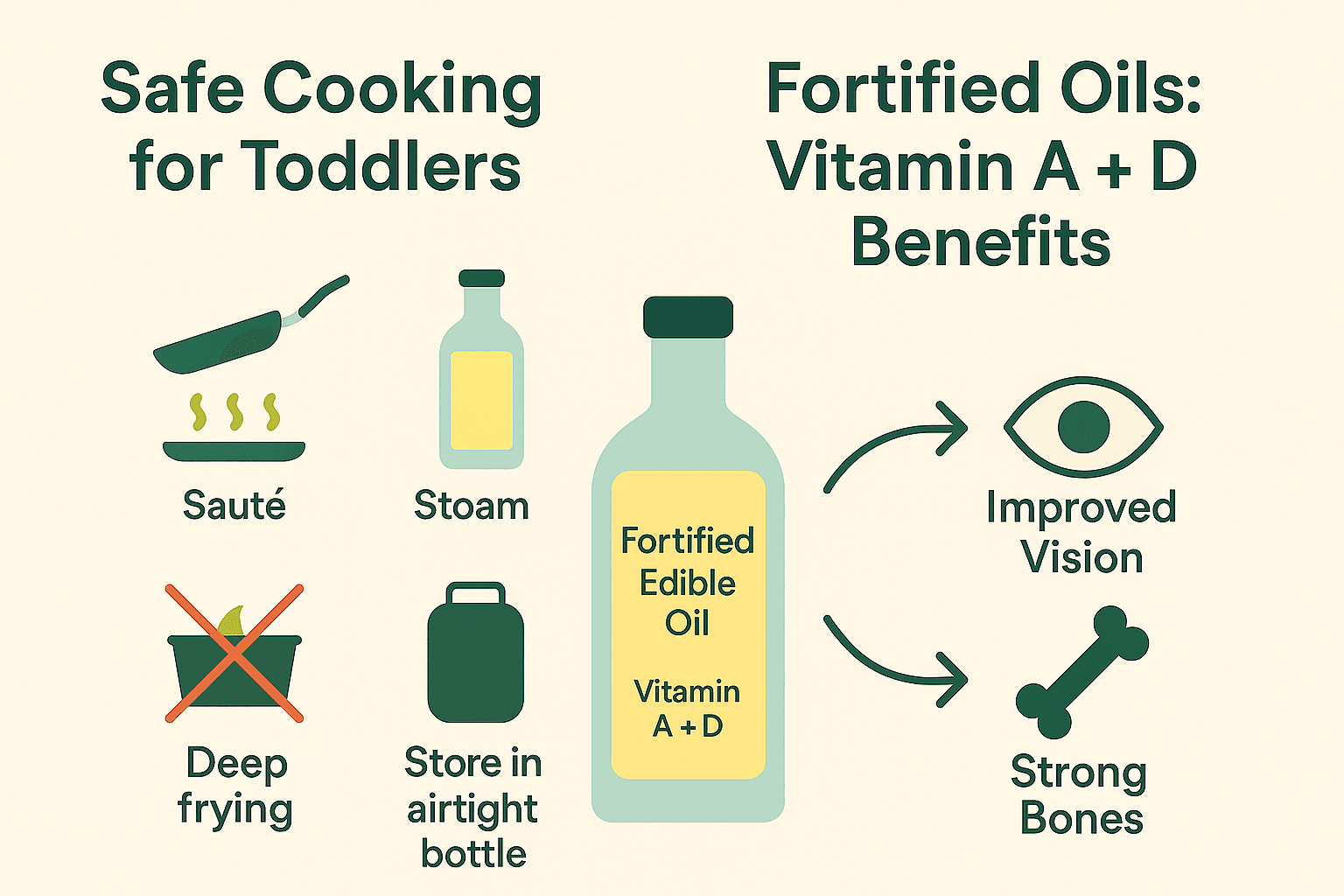
Moreover, choose commercially fortified products that list dosage and stability data. Additionally, caregivers should follow paediatric guidance because excess fat-soluble vitamins can accumulate.
Therefore, fortification presents a valuable option in regions with documented deficiencies, but it requires targeted programs and quality-assured products to support toddler health.
Research Snapshot: Oils for Infant and Toddler Health:
Essential Fatty Acids and Neurodevelopment:
- Firstly, infants and toddlers need reliable sources of essential fatty acids (LA and ALA) to support rapid brain and visual development.
- Moreover, conversion of ALA to long-chain Omega-3s (DHA) is limited in young children, so diets should include oils that supply EFAs and, where appropriate, convert ALA to long-chain Omega-3s.
- Therefore, introducing small, age-appropriate servings of soybean, canola, or high-oleic oils alongside very complementary foods can support growth without overloading the infant’s digestive system.
Cooking methods, oxidation, and fortification:
- However, high temperature frying and repeatedly reused oil produce oxidised lipids (for example, Aldehydes) that experimental studies have linked to potential health risks for children.
- Consequently, favour low-heat methods steaming, light sautéing), finish foods with a teaspoon of oil rather than deep frying, and – when public health needs justify it-use certified fortified oils, vitamin A/D from reputable suppliers to improve micronutrient intake safely.
Practical Recipes and Meal Ideas (Quick Wins):
Firstly, try a simple avocado-banana puree with 1 teaspoon of olive oil for infants starting solids.
Secondly, for toddlers, make a vegetable porridge finished with 1 teaspoon of high-oleic sunflower oil to add calories and vitamin E.
Next, offers soft finger foods lightly tossed in canola oil for balanced fats. Moreover, rotate oils across meals and introduce new oils solely to spot intolerance.
Finally, maintain portion control and keep fried foods as occasional treats only.
FAQ’s Parents Ask About Oils for Babies and Toddlers:
Can I use sesame oil for my 8-month-old?
First, avoid sesame if there is a family or personal allergy risk; otherwise, introduce cautiously & watch for reactions.
Is olive oil better than canola for my toddler?
Moreover, olive oil provides MUFAs and polyphenols; canola offers a favourable Omega-6:Omega-3 ratio. Therefore, alternate both for balance.
How much oil should a 1-year-old eat?
Generally, start with 1 teaspoon added to meals & scale to 1-2 tablespoons per day based on energy needs and diet diversity.
Practical Recommendations and Final Takeaway:
Firstly, prioritise high-quality, reputable oils and introduce them gradually.
Moreover, use refined, heat-stable oils for cooking and reserve cold-pressed oils for finishing.
Next, limit deep-fried foods and never reuse frying oil for toddler meals. Additionally, consider fortified oils only when products follow regulatory standards and a health program supports them.
Finally, remember that simple practices, such as rotation, moderation, and safe storage, promote oils for toddler health while delivering the energy and nutrients young children need.
Disclaimer: The information in this article is for general educational purposes only and is not a substitute for professional medical advice, diagnosis, or treatment. Always consult a qualified healthcare provider or pediatrician before making any changes to your or your child’s diet, oil intake, or lifestyle.



Leave a Comment